Congress leader dubs proposed BC reservation in local body polls eyewash
Source Entity
India Latest News: Top National Headlines Today & Breaking News | The Hindu
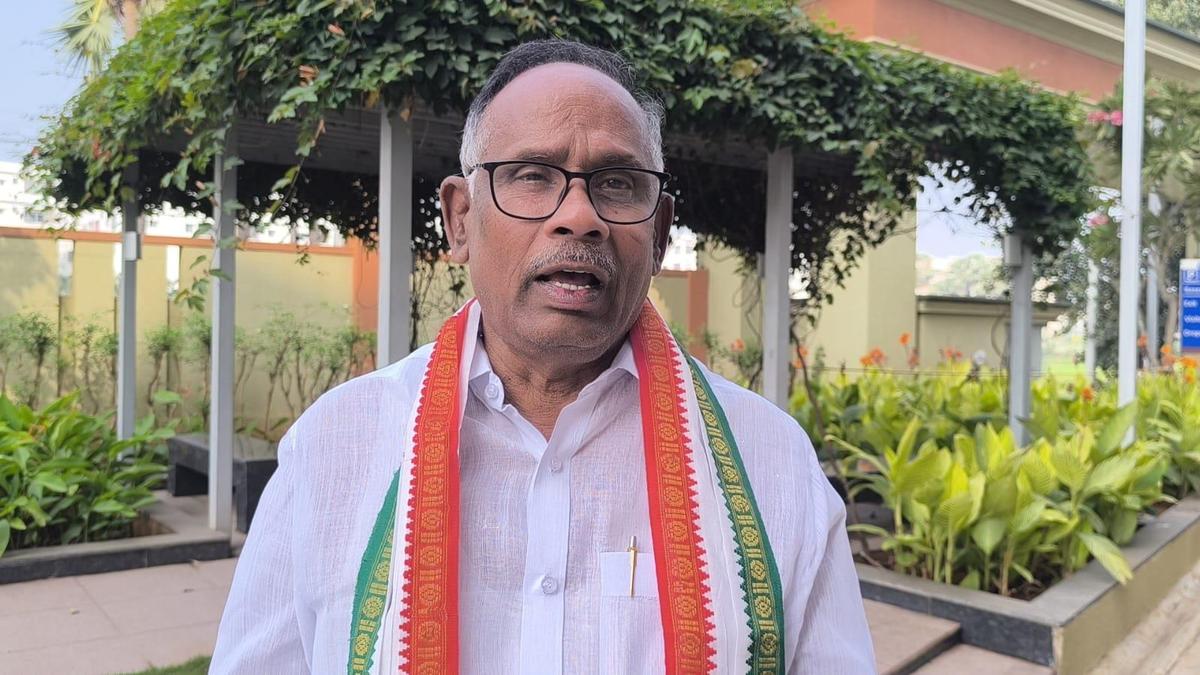
Andhra Pradesh Congress leader Kolanukonda Shivaji has criticized the government's 34% BC reservation proposal as an 'eyewash'. He argues that the timeline is insufficient to complete the necessary legal and constitutional procedures before local body elections.
The Controversy Over BC Reservation in Andhra Pradesh
Andhra Pradesh Congress Committee (APCC) vice-president Kolanukonda Shivaji has launched a sharp critique against the state’s coalition government regarding its recent proposal to implement a 34% reservation for Backward Classes (BCs) in local body elections. Speaking at the Andhra Ratna Bhavan, Shivaji dismissed the government's celebratory stance, labeling the announcement as a mere 'eyewash' intended for political optics rather than genuine legislative progress.
The Procedural Bottleneck
At the heart of the critique lies the complex web of constitutional and legal requirements necessary to enact such a significant policy shift. Shivaji highlighted that the government’s timeline is fundamentally flawed. To implement this reservation quota legally, the state must navigate a series of rigorous steps, including conducting a comprehensive caste survey, receiving a formal report from a Dedicated Commission, drafting and passing an amendment Bill, and securing an ordinance.
Constitutional and Judicial Hurdles
Beyond the state-level legislative processes, the path to implementation is further complicated by the need for Governor’s recommendations and Presidential assent. Historically, local body reservation policies in India have faced intense scrutiny from the judiciary. The Supreme Court has established clear directives, often requiring empirical data to justify reservation percentages that might otherwise exceed constitutional caps. Shivaji expressed deep skepticism that this entire process—from data collection to judicial clearance—could be achieved in a mere two-month window.
Implications of the 'Eyewash' Claim
By labeling the move an 'eyewash,' the Congress leadership is signaling that the government's current strategy may be a performative gesture designed to appease the BC voter base ahead of upcoming electoral cycles. If the legal framework is not finalized with precision, any attempt to hold elections under the proposed quota system could be easily challenged and stayed by the High Court or the Supreme Court, potentially leading to significant delays or the cancellation of the polls altogether.
Future Trends in Local Governance
This dispute underscores a broader trend in Indian politics, where local body elections are increasingly becoming battlegrounds for caste-based political mobilization. As political parties vie for the support of Backward Classes, the pressure to deliver immediate policy results often clashes with the slow, deliberate pace of the legal system. The outcome of this specific contention in Andhra Pradesh will likely serve as a case study for how state governments balance urgent electoral promises with the constitutional necessity of empirical legal justification.
Conclusion
In summary, the skepticism voiced by Kolanukonda Shivaji draws attention to the critical gap between political rhetoric and the administrative reality of implementing reservations. Unless the government can provide a concrete, legally sound roadmap that satisfies the stringent requirements of the courts, the proposal for 34% BC reservation remains trapped in a state of constitutional uncertainty, leaving the future of the local body elections in a state of suspended animation.
Verification Required?