Tejashwi Yadav detained as RJD protests AK-47 firing, student crackdown
Source Entity
Himanshu Harsh
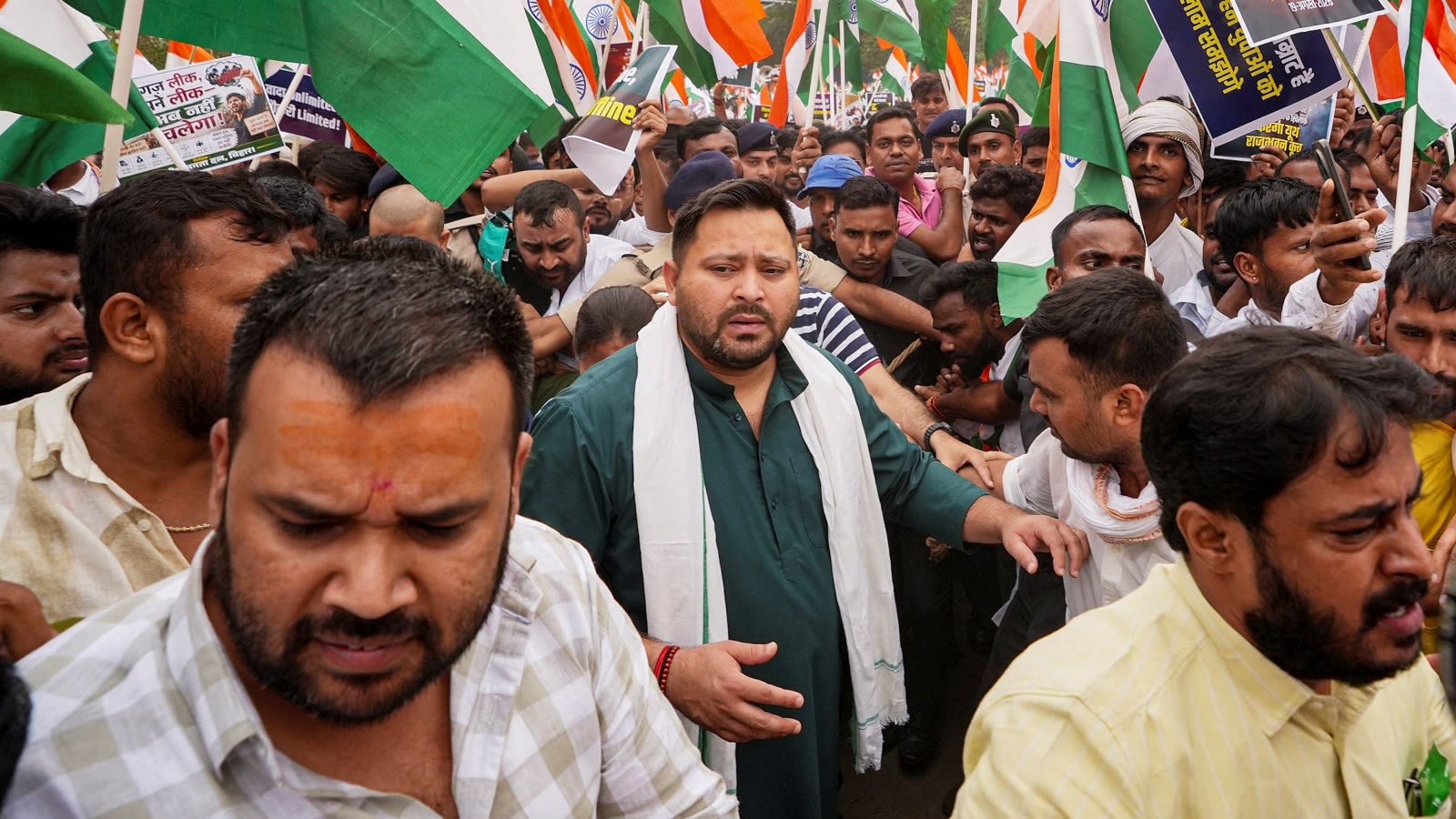
RJD leader Tejashwi Yadav and MP Misa Bharti were detained in Patna while leading a protest against NEET paper leaks and police violence. The march, which faced water cannons, highlighted growing youth unrest over unemployment and the controversial use of force against students.
Political Unrest in Bihar: RJD Leaders Detained Amid NEET Protests
Escalating Tensions in Patna
The political climate in Bihar reached a boiling point on August 19, 2026, as prominent Rashtriya Janata Dal (RJD) leaders, including Leader of Opposition Tejashwi Yadav and MP Misa Bharti, were detained by Patna police. The detention occurred during a protest march toward the Lok Bhawan, where party members sought to highlight systemic failures in governance, specifically regarding the handling of student agitation and national examination integrity.
The Catalyst: NEET Paper Leaks and Police Conduct
At the heart of the unrest is the fallout from the alleged NEET question paper leak that occurred in Bihar last month. The RJD’s demonstration served as a platform to voice deep-seated grievances regarding the state's handling of the crisis. Protesters specifically targeted the government's response to student agitation, which included controversial police actions that many opposition figures have characterized as excessive and anti-democratic.
The Symbolism of the AK-47
A particularly contentious element of the protests involved the reported use of an AK-47 assault rifle during a student demonstration in the Siwan district last month. This incident has become a focal point of the RJD’s critique of the current administration. During the Patna march, supporters carried toy replicas of the weapon to protest the militarization of police responses against peaceful student agitators, signaling a shift in how the opposition frames the current government's approach to youth dissent.
Police Intervention and Public Reaction
The march, which commenced at J.P. Golumbar near Gandhi Maidan, was met with significant resistance from local authorities. Police utilized barricades and water cannons to disperse the crowds near the Income Tax chouraha. The detention of Tejashwi Yadav and Misa Bharti, who were subsequently removed in police vehicles, has amplified the discourse surrounding the government's intolerance for public dissent and its management of law and order.
Broader Implications for Bihar’s Youth
The slogans chanted by protesters—specifically, the assertion that the future of the nation rests on addressing the needs of Gen-Z—underscore a broader demographic shift in Bihar's political landscape. The combination of the unemployment crisis and the recurring failure of standardized testing systems has created a volatile environment. The RJD is positioning itself as the primary voice for this disenfranchised youth cohort, arguing that the state’s current trajectory threatens the future of an entire generation.
Future Trends and Political Outlook
As the fallout from the August 19 detentions continues to unfold, the incident is likely to serve as a catalyst for further political mobilization. The state government’s decision to transfer officials following the initial protests, combined with the current crackdown, suggests a deepening divide between the ruling coalition and the opposition. Moving forward, the effectiveness of the RJD’s strategy to leverage the NEET scandal will depend on its ability to maintain sustained pressure on the government while navigating the legal and physical barriers imposed by state authorities.
Multiple Citing Sources