Apple launches new Mac mini with M6, M5 Pro chips, Mac Studio with M5 Max, M5 Ultra in India: Price, features
Source Entity
Latest News: Todays Latest News Headlines from India & World | Hindustan Times | Hindustan Times
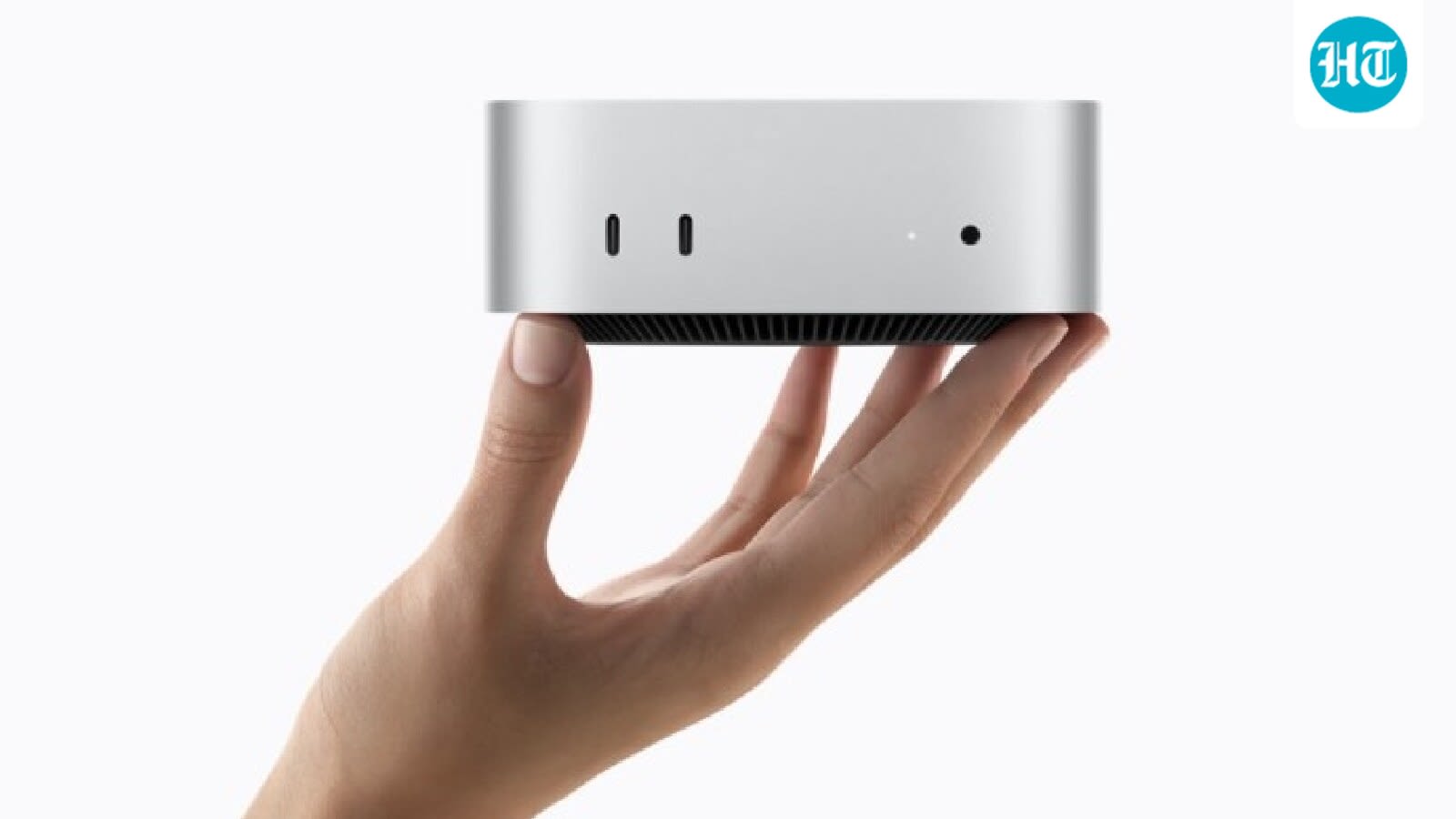
Apple has unveiled its next-generation M5 Ultra and M6 processors, marking a significant leap in AI compute performance. These chips power updated Mac Studio and Mac Mini models, featuring advanced 2nm architecture and quad-die designs.
The Next Frontier of Apple Silicon
Apple has officially signaled a new era in desktop computing with the unveiling of the M5 Ultra and M6 processors. Announced on August 25, 2026, this hardware refresh for the Mac Mini and Mac Studio lines represents a strategic pivot toward localized, high-performance artificial intelligence. By integrating these chips into its signature compact desktop form factors, Apple is positioning itself to dominate both the professional workstation market and the burgeoning sector of local AI development.
The M5 Ultra: A Quad-Die Powerhouse
The M5 Ultra stands as the centerpiece of Apple’s current performance narrative. By fusing two dual-die M5 Max chips, Apple has created its first-ever quad-die architecture. This design choice is not merely an incremental upgrade; it is a fundamental shift in how Apple handles heavy compute workloads. With an up-to-36 core CPU, an 80-core GPU, and a massive 1.2 TB/s unified memory bandwidth—a 50% increase over its predecessor, the M3 Ultra—the M5 Ultra is engineered specifically for the rigors of 3D rendering, complex visual effects, and running frontier-level AI models directly on the device.
The M6: Ushering in the 2nm Era
Parallel to the workstation-grade M5 Ultra, Apple has introduced the M6 chip, marking the company’s transition to state-of-the-art 2-nanometer process technology. The M6 serves as the heart of the new Mac Mini, featuring a 12-core CPU and GPU, paired with a sophisticated dual 16-core Neural Engine. This move to 2nm architecture is critical for modern computing, as it allows for greater energy efficiency and transistor density, which are essential for maintaining the Mac Mini's compact footprint while significantly boosting AI-driven tasks.
Redefining Local AI Workflows
The broader implication of this release is Apple's aggressive push to make on-device AI accessible and performant. The new Mac Studio, powered by the M5 Ultra, boasts performance metrics up to 4.3x faster for AI tasks compared to previous generations. By offering up to 512GB of unified memory and substantial bandwidth increases, Apple is catering to developers who require high-speed local processing for large language models and other compute-intensive applications, effectively bringing data-center-level power to the professional desktop.
Future Trends and Market Positioning
Looking ahead, these releases suggest that Apple’s hardware strategy is inextricably linked to the rapid evolution of artificial intelligence. By prioritizing neural acceleration and memory bandwidth, Apple is building a moat around its ecosystem, ensuring that its hardware is the preferred choice for AI-focused workflows. The ability to perform complex, private AI computations locally, rather than relying on cloud-based infrastructure, is likely to become a key differentiator for Apple in both the professional and consumer markets.
Conclusion
In summary, the launch of the M5 Ultra and M6 processors marks a defining moment for Apple’s silicon journey. Through a combination of record-breaking quad-die architecture and the adoption of 2nm fabrication technology, Apple has successfully bridged the gap between everyday consumer utility and extreme professional productivity. As AI continues to permeate every facet of software development and creative work, these new Mac models provide the essential infrastructure to support the next generation of computing demands.
Verification Required?