Scientists built a 'rainbow on a chip' that could help 6G carry more signals
Source Entity
TOI TECH DESK
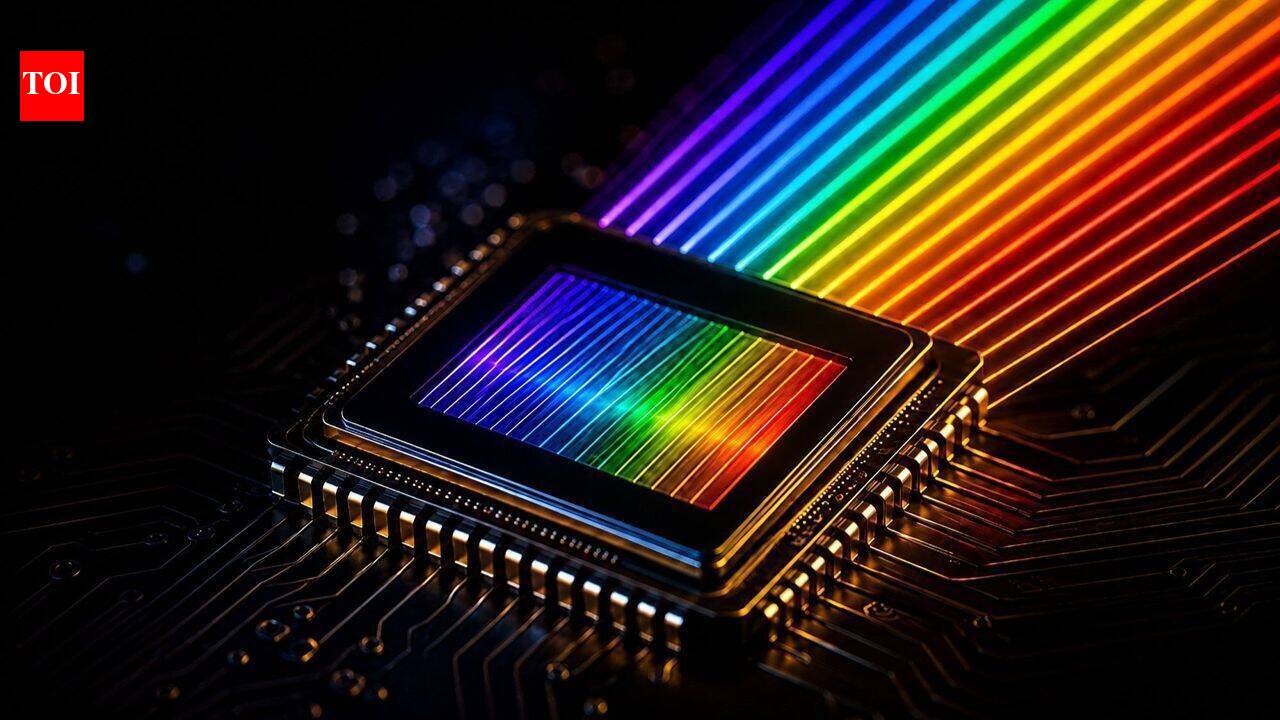
Researchers have developed a 'rainbow on a chip' microcomb technology capable of generating stable light frequencies for 6G networks. This innovation promises higher data capacity and supports advanced applications in quantum timing, radar, and astronomical research.
The Dawn of 'Rainbow on a Chip' Technology
In a significant leap for telecommunications and precision engineering, scientists have successfully developed a "rainbow on a chip" system. This microchip functions by generating multiple stable light frequencies simultaneously, effectively creating a "rainbow" of light that can be manipulated for various high-tech applications. By converting these optical frequencies into millimetre waves, the research team has unlocked a potential pathway to significantly enhance the capacity and speed of future 6G networks.
Solving the Data Hunger Crisis
The global demand for data is currently outpacing the capabilities of existing infrastructure. As consumers and industries push for higher resolution streaming, instantaneous connectivity, and more robust cloud computing, current networks are approaching their theoretical limits. Millimetre waves, which are central to this new microcomb technology, represent the next frontier in mobile communication. By providing a wider spectrum of bandwidth, these waves allow for the simultaneous transmission of significantly more signals than current 4G or 5G standards, effectively addressing the world’s increasing "data hunger."
Beyond Telecommunications: Quantum and Scientific Applications
While the primary headline focuses on 6G, the potential of the "rainbow on a chip" extends far beyond the smartphone in your pocket. The stability of the light frequencies generated by this microcomb allows for extremely precise timing, which is a fundamental requirement for quantum applications. Furthermore, the technology holds promise for radar systems and high-end spectroscopy. These tools could revolutionize how scientists analyze materials and conduct astronomical measurements, providing a new level of accuracy in observing the universe.
Engineering Hurdles and Real-World Implementation
Despite the breakthrough, the transition from a laboratory setting to a commercial product is not immediate. The researchers have acknowledged that there are significant engineering challenges to overcome before this technology can be integrated into real-world systems. Scaling the production of these microcombs while maintaining their extreme precision remains a primary hurdle. Additionally, the infrastructure required to support millimetre-wave transmission for 6G will require substantial investment and hardware updates.
Future Outlook and Strategic Significance
The development of this microchip signifies a shift toward integrated photonics, where light is used to process information rather than just transmit it. As we look toward the next decade of digital evolution, the ability to pack more signal capacity onto a single chip will be a critical strategic advantage for nations and tech companies alike. While the technology is still in the developmental phase, its success could define the backbone of 6G architecture and expand the horizons of scientific measurement for years to come.