‘Don't threaten them’: Arvind Kejriwal slams NTA over warning to NEET students
Source Entity
Latest News: Today's Latest News Headlines from India & World | Hindustan Times | Hindustan Times
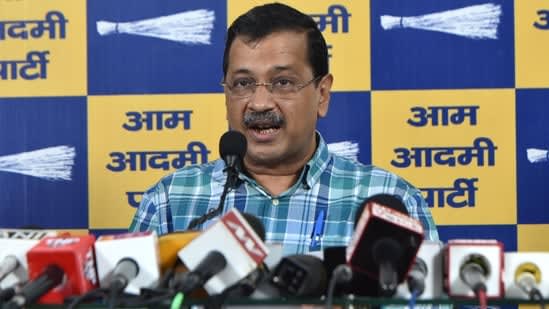
Arvind Kejriwal has criticized the National Testing Agency (NTA) for warning NEET candidates that submitting fake or AI-generated OMR sheets could lead to legal action. He urged the agency to prioritize student grievances over threats.
Political Tension Over NEET Scrutiny: Kejriwal vs. NTA
The ongoing controversy surrounding the National Eligibility cum Entrance Test (NEET) has taken a sharp political turn as Aam Aadmi Party (AAP) national convenor and former Delhi Chief Minister Arvind Kejriwal has publicly condemned the National Testing Agency (NTA). The friction arose following an official advisory issued by the NTA, which cautioned students and parents against the submission of fraudulent documents. Kejriwal's intervention highlights a growing divide between administrative enforcement and student advocacy in the high-stakes environment of Indian competitive examinations.
The NTA's Crackdown on Fraudulent Submissions
At the center of this dispute is the NTA's effort to maintain the integrity of its scrutiny process. According to a post on X (formerly Twitter), the agency revealed that it has been closely monitoring complaints related to OMR sheets. The NTA explicitly stated that several submissions intended for scrutiny were found to be fake or AI-generated. To deter further malpractice, the agency warned that any individual submitting forged documents could face severe legal action. This move suggests that the NTA is grappling with a new wave of technological fraud, where generative AI is potentially being used to fabricate evidence to challenge exam results.
Kejriwal's Critique of the 'Threat' Culture
Arvind Kejriwal has framed the NTA's warning not as a necessary safeguard, but as an attempt to intimidate students who are already under immense pressure. By urging the agency not to "threaten" candidates, Kejriwal is positioning himself as a defender of the youth against an overbearing state apparatus. His argument centers on the premise that the NTA should be focusing on providing transparent answers and resolving genuine student concerns rather than utilizing legal threats to silence those seeking clarity on their performance.
The Broader Context of Competitive Exam Anxiety
To understand the intensity of this clash, one must look at the broader historical context of entrance exams in India. NEET is one of the most competitive exams in the world, where a single mark can determine a student's professional future. In recent years, the process has been marred by allegations of paper leaks, grace mark controversies, and technical glitches. When an agency like the NTA warns against "AI-generated" sheets, it acknowledges a climate of desperation and distrust where some may resort to fraud, but it also risks alienating the vast majority of honest students who are genuinely seeking rectification.
The Technological Dimension: AI and Academic Integrity
The mention of "AI-generated OMR sheets" is a significant detail that points toward a shift in how academic disputes are handled. As AI tools become more accessible, the ability to simulate official documents increases, creating a cat-and-mouse game between testing agencies and fraudsters. The NTA's vigilance is a response to this evolving threat; however, the lack of a nuanced communication strategy has allowed political opponents to characterize these security measures as harassment. This intersection of technology and education is likely to become a recurring theme in future national examinations.
Political Implications for the AAP and Central Agencies
This confrontation is not merely about OMR sheets; it is a strategic political move by the AAP. By championing the cause of students, Kejriwal continues to challenge the efficacy and fairness of central government-led institutions. This narrative aligns with the party's historical focus on education reform and its tendency to clash with central agencies. By framing the NTA as an agency that threatens rather than helps, Kejriwal aims to consolidate support among the youth and parent demographics, who often feel marginalized by the bureaucracy of national testing bodies.
Conclusion and Future Outlook
In summary, the conflict between Arvind Kejriwal and the NTA underscores a deeper crisis of trust in India's examination system. While the NTA is justified in protecting the sanctity of its data from AI-driven forgery, the manner in which it communicates these warnings can be perceived as hostile. Moving forward, it is likely that the demand for more transparent scrutiny processes will grow. Unless the NTA can balance its security protocols with an empathetic approach to student grievances, the issue will remain a fertile ground for political contention and potential legal battles.
Verification Required?