40 years ago August 27, 1986: Five killed in Pakistan violence
Source Entity
The Indian Express
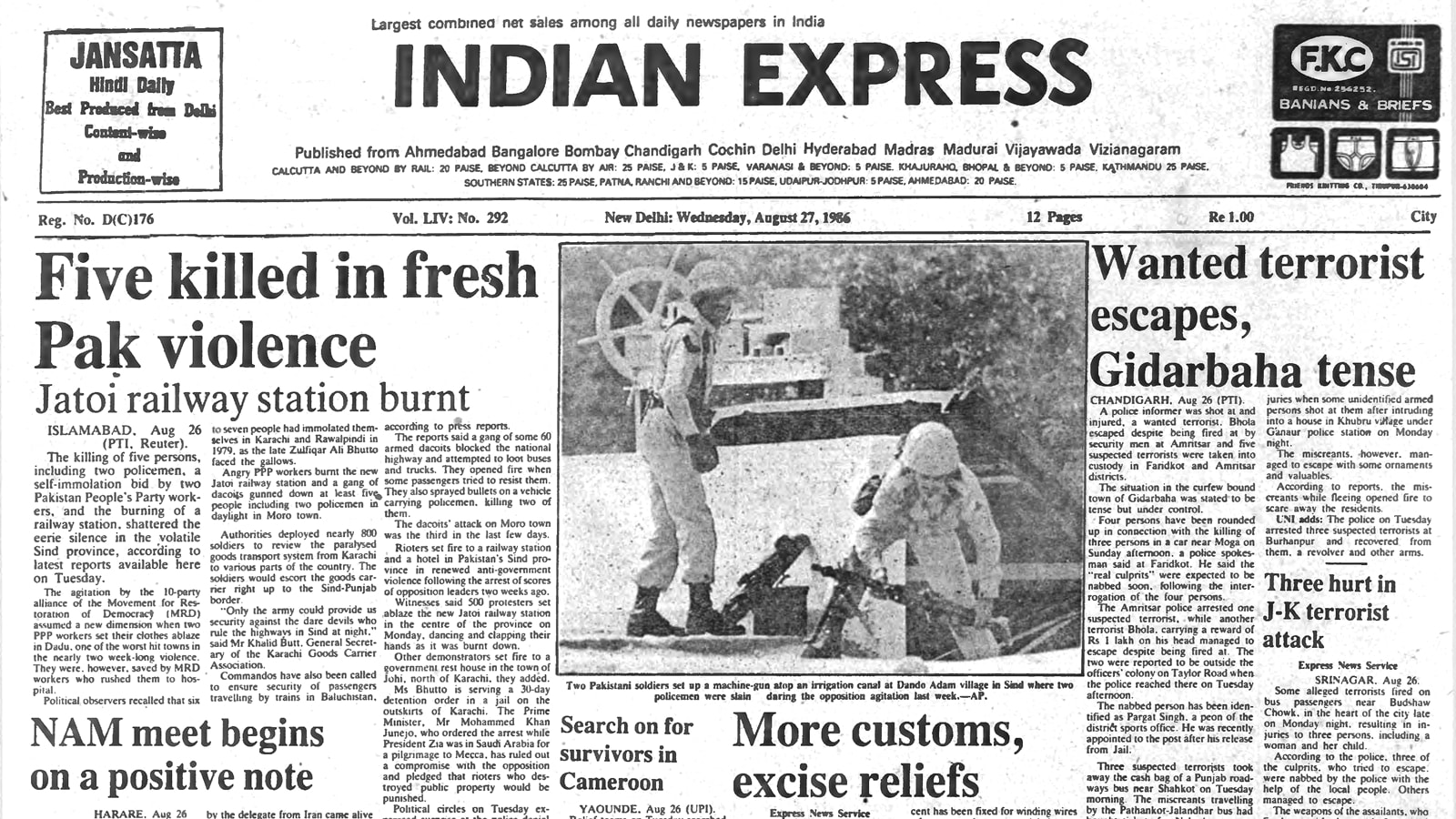
On August 27, 1986, Pakistan's Sindh province faced severe civil unrest led by the MRD alliance, while Cameroon dealt with a catastrophic volcanic gas disaster. Both events marked significant, albeit unrelated, humanitarian crises during a tumultuous period in 1986.
A Day of Global Turmoil: August 27, 1986
On August 27, 1986, the international community faced two distinct, harrowing crises that tested the resilience of both Pakistan and Cameroon. These events, occurring thousands of miles apart, underscore the volatility of the mid-1980s, a decade characterized by intense political agitation and unpredictable natural disasters that challenged government infrastructure and emergency response capabilities.
The Political Crisis in Pakistan's Sindh Province
The situation in Pakistan was defined by the Movement for the Restoration of Democracy (MRD), a 10-party alliance actively opposing the military government of the time. The violence in the Sindh province reached a fever pitch, resulting in the deaths of five individuals, including two policemen. The unrest was further punctuated by radical acts of protest, specifically the self-immolation attempts by two Pakistan People’s Party (PPP) workers in Dadu. This escalation highlighted the desperation felt by opposition members as they sought to challenge the established political order through civil disobedience.
Escalation and Civil Unrest
The burning of a railway station served as a grim indicator of how the protests had devolved into widespread civil disorder. The "eerie silence" mentioned in reports was shattered by these violent outbursts, marking the culmination of nearly two weeks of sustained agitation. The involvement of the PPP, a major political force, signaled that the movement had moved beyond mere political rhetoric into a dangerous phase of structural destruction and direct confrontation with state authorities.
The Catastrophe at Lake Nyos
Simultaneously, in western Cameroon, a different kind of horror was unfolding. A volcanic lake released a massive cloud of toxic gas, claiming the lives of at least 2,000 people. The devastation was so absolute that observers likened the scene to the aftermath of a "neutron bomb," where physical structures remained intact while life was extinguished instantly. This event remains one of the most significant natural disasters in African history, exposing the inherent dangers of living near volcanic geography.
Emergency Response and Political Accountability
In the wake of the Cameroon disaster, President Paul Biya faced the daunting task of managing a humanitarian crisis of unprecedented scale. As relief teams searched for survivors, the government had to grapple with the realization that the death toll was likely to climb. This tragedy forced a re-evaluation of geological monitoring in the region, as authorities struggled to comprehend the sudden limnic eruption that turned a quiet lake into a source of lethal carbon dioxide.
Historical Legacy and Conclusion
These events from August 1986 serve as a reminder of the fragility of social stability and the constant threat posed by natural phenomena. Whether through the lens of political upheaval in Pakistan or environmental catastrophe in Cameroon, the day serves as a historical case study in crisis management. Both nations were forced to confront their internal vulnerabilities, leaving a lasting impact on how their respective governments approached public safety and political dissent in the years that followed.