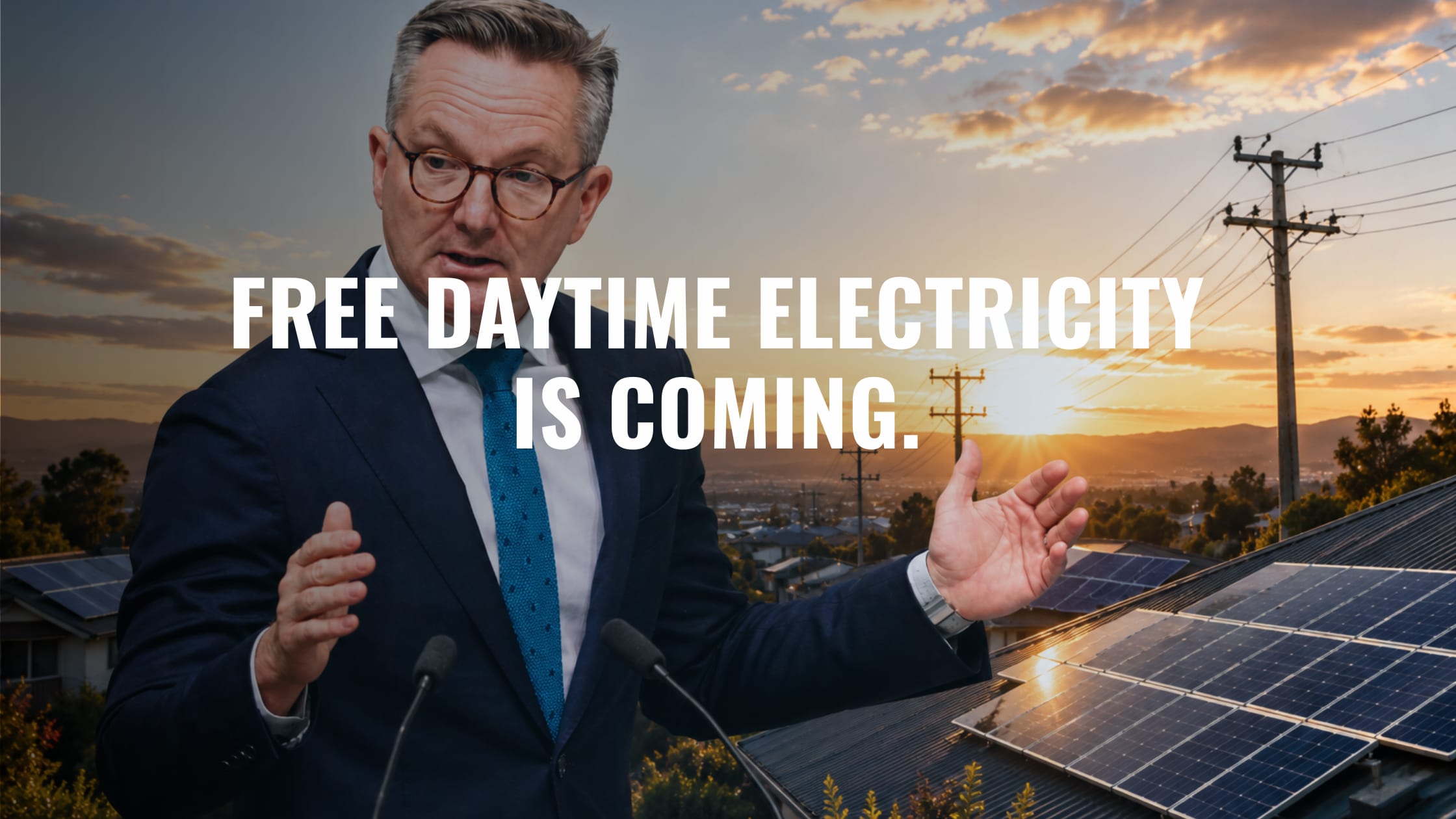
Australia is offering free daytime electricity
Source Entity
Hacker News
<a href="https://news.ycombinator.com/item?id=48902320">Comments</a>
The Economics of Abundance: Analyzing Australia's Free Daytime Electricity
Australia is currently witnessing a paradigm shift in energy consumption, where the traditional model of paying for power is being inverted during daylight hours. The emergence of "free" or even negatively priced electricity is not a promotional giveaway from the government, but rather a systemic result of the country's aggressive adoption of rooftop solar photovoltaics (PV). As millions of households generate more power than they can consume, the National Electricity Market (NEM) occasionally faces a surplus that exceeds demand, forcing wholesale prices to drop below zero to incentivize consumption.
The Solar Surge and Market Dynamics
Australia has one of the highest per-capita rates of rooftop solar installation in the world. This decentralized energy production creates a massive spike in supply between 10 AM and 3 PM. When the total energy generated by these residential systems, combined with large-scale solar farms, outweighs the total load of the grid, the wholesale price of electricity can turn negative. In a negative pricing environment, generators are effectively paid to take power off the grid or are forced to pay others to take their excess energy to avoid destabilizing the network infrastructure. For consumers on wholesale-linked plans, this translates to "free" electricity or credits for running heavy appliances during the day.
The Technical Challenge: The 'Duck Curve'
This phenomenon is a textbook example of the "Duck Curve," a graph showing the timing and capacity of net load on the grid. During the day, the net load drops significantly (the belly of the duck) because solar is doing the heavy lifting. However, as the sun sets, solar production vanishes just as residential demand peaks (the neck of the duck), creating a steep ramp-up requirement for traditional gas or coal plants. The offering of free daytime electricity is a strategic attempt to "flatten the duck" by encouraging users to shift their energy-intensive tasks—such as running dishwashers, dryers, or charging electric vehicles (EVs)—into the midday window.
Broader Economic and Behavioral Implications
The shift toward free daytime power is driving a revolution in smart home technology and consumer behavior. We are seeing a rise in "demand-side response" where smart appliances automatically trigger based on price signals. This transition transforms the consumer from a passive payer into an active market participant. Furthermore, this trend is accelerating the business case for residential battery storage. When electricity is free or negative, homeowners can charge their batteries for zero cost, then utilize that stored energy during the expensive evening peak or sell it back to the grid, creating a new revenue stream for the average household.
Future Trends: Virtual Power Plants (VPPs)
Looking forward, the occurrence of free daytime electricity will likely catalyze the growth of Virtual Power Plants (VPPs). VPPs aggregate thousands of small-scale batteries and solar arrays into a single, controllable network that can act like a traditional power plant. By coordinating the charging of thousands of batteries during these free daytime windows, VPP operators can stabilize the grid on a massive scale, reducing the need for carbon-intensive "peaker" plants. This represents a fundamental transition from a centralized energy hierarchy to a democratic, distributed energy ecosystem.
Conclusion
Australia's experiment with free daytime electricity is a fascinating intersection of climate policy, market economics, and technological adoption. While it presents significant challenges for grid stability and the profitability of traditional utility companies, it offers a blueprint for a sustainable future. By leveraging the surplus of renewable energy, Australia is proving that the transition to green energy can provide direct, tangible financial benefits to the end consumer while paving the way for a more resilient and decentralized power grid.