Bloodshed in Balochistan: Why Pakistan’s resource-rich province remains in conflict
Source Entity
Yashee
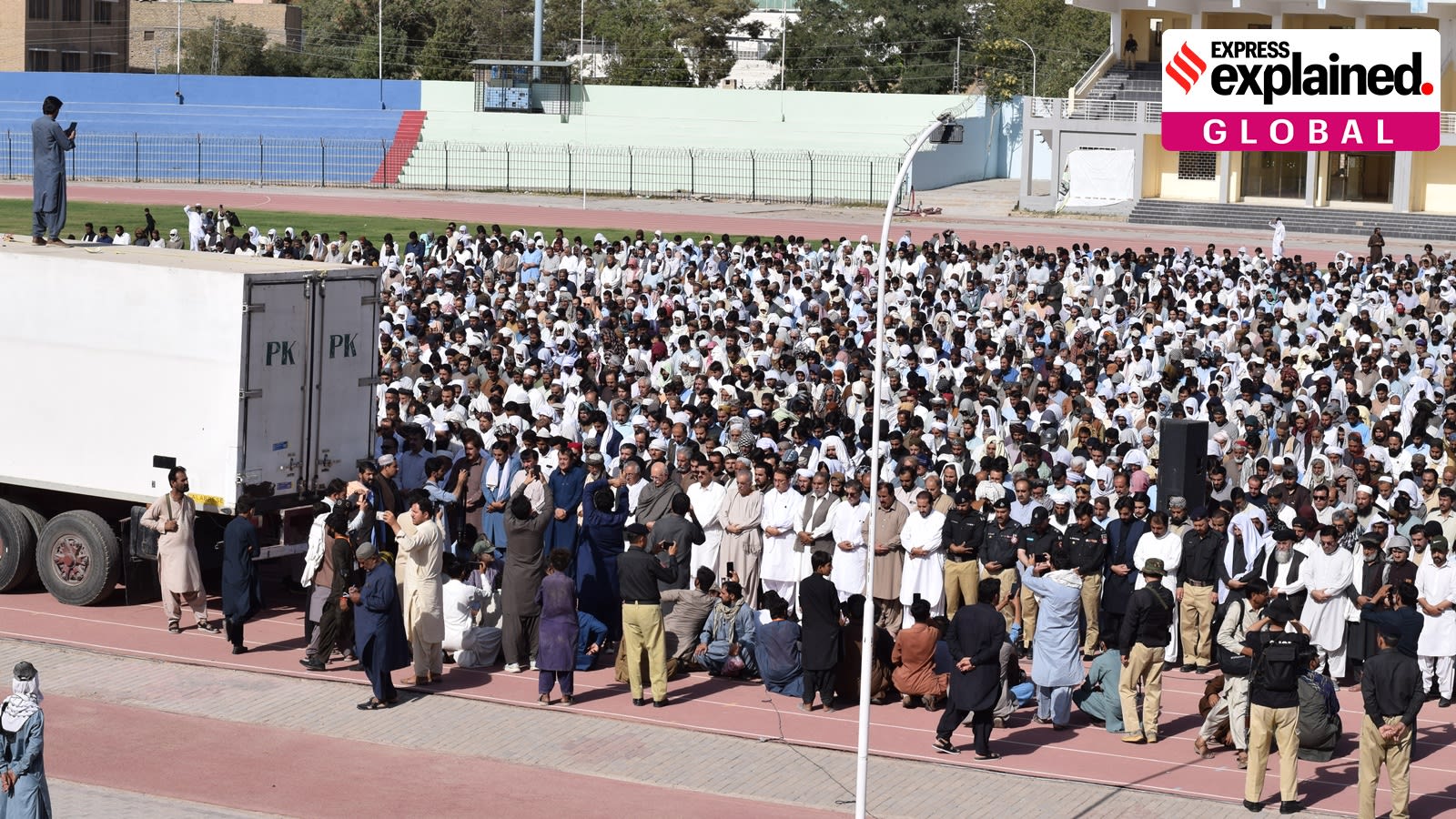
Family members of 27 policemen killed in Balochistan ended a 10-day protest after the government agreed to a judicial inquiry into recent militant attacks. In response, Pakistan launched 'Operation Shaban,' claiming to have killed 129 terrorists since July 5.
The Cycle of Violence in Balochistan: Analysis of Recent Escalations
The province of Balochistan has once again become the epicenter of intense volatility, highlighted by a heartbreaking standoff where the families of 27 fallen policemen refused to bury their dead for ten days. This protest serves as a visceral manifestation of the deep-seated grievances and the lack of trust between the local citizenry and the state apparatus. The resolution of the sit-in, contingent upon the government's agreement to establish a judicial commission, underscores a critical demand for accountability and transparency in the face of escalating militant violence.
Targeted Attacks and the Demand for Justice
The current crisis was triggered by two devastating attacks: one in Hanna Urak on July 5, which claimed the lives of five civilians, and a subsequent attack in Ziarat on July 6, where 27 policemen were killed. These incidents, allegedly carried out by Baloch militants, highlight the precarious security situation in the region. The fact that families had to resort to a prolonged sit-in to secure a judicial investigation suggests a systemic failure in the immediate aftermath of such tragedies, where the state's initial response is often viewed as insufficient or purely kinetic rather than investigative.
Operation Shaban: The State's Kinetic Response
In direct response to the killing of security personnel, the Pakistani authorities launched 'Operation Shaban.' According to official claims, this operation has resulted in the deaths of 129 individuals labeled as "terrorists" since July 5. While the state frames this as a necessary counter-terrorism measure to restore order, such operations often operate within a contentious environment of state repression. The disparity between the number of state casualties and the claimed number of militants killed often leads to debates regarding the precision of these operations and the potential for collateral damage within the local population.
The Socio-Economic and Historical Root Causes
To understand why Balochistan remains a flashpoint, one must look at its identity as a resource-rich province. The region is home to vast mineral wealth and strategic coastlines, yet it often feels marginalized in terms of economic development and political representation. This disconnect between the province's wealth and the poverty of its people has historically fueled militancy and a sense of alienation. The recurring cycle of bloodshed is not merely a security issue but a symptom of a long-standing struggle over resource control and regional autonomy.
Geopolitical Tensions and International Implications
The conflict in Balochistan is further complicated by international dynamics. Pakistan has frequently accused India of fomenting instability and supporting militant groups within the province to undermine its sovereignty. This geopolitical narrative adds a layer of complexity to the internal strife, transforming a provincial struggle into a broader regional rivalry. Furthermore, Balochistan's strategic position bordering Iran makes it a critical zone for cross-border security, where instability can easily spill over, affecting regional diplomacy and security cooperation.
Conclusion: The Path Forward
While the establishment of a judicial commission may provide temporary relief to the grieving families, it does not address the structural causes of the insurgency. The reliance on military operations like 'Operation Shaban' may provide short-term tactical gains, but without a comprehensive political dialogue and a fair distribution of the province's resources, the cycle of militancy and repression is likely to persist. The future of Balochistan depends on whether the state can transition from a purely security-centric approach to one rooted in justice, development, and genuine political inclusion.