EAM downplays Pakistan-Turkey-Saudi defence pact: ‘What has it done amid live military situations in these countries?’
Source Entity
Latest News: Todays Latest News Headlines from India & World | Hindustan Times | Hindustan Times
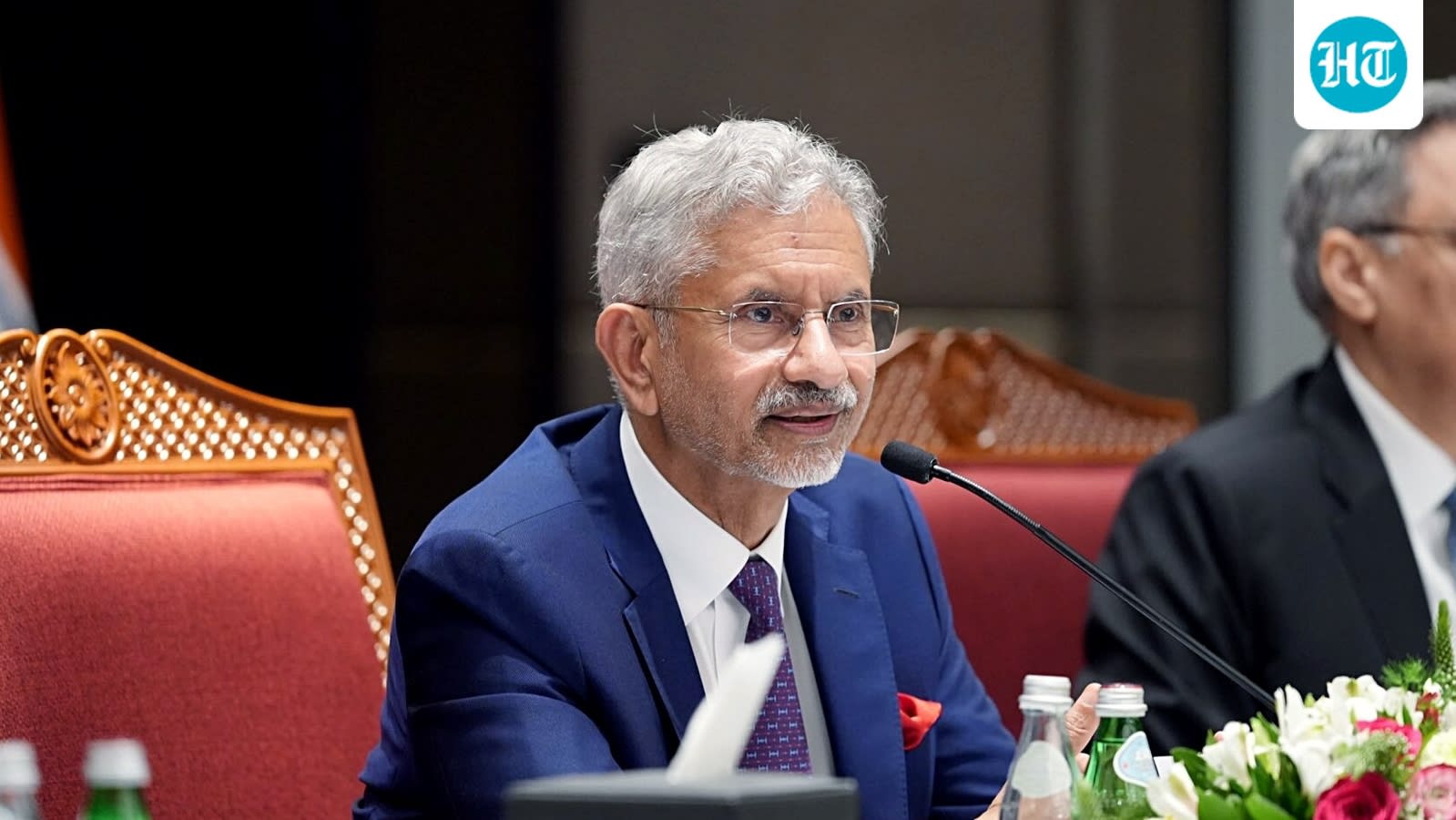
Bangladesh is considering joining the 'Mecca Joint Defence Agreement,' a nascent military pact between Saudi Arabia, Pakistan, and Turkey. While Dhaka views this as a strategic move for economic and security diversification, India remains cautious, closely monitoring the implications for regional stability.
The Emergence of the Mecca Joint Defence Agreement
The recent signing of the 'Mecca Joint Defence Agreement' on August 7 by Saudi Arabia, Pakistan, and Turkey marks a potential turning point in geopolitical alignments across the Islamic world. Often colloquially referred to as an 'Islamic NATO,' the pact establishes a framework for collective deterrence, where an armed attack against one member is treated as an attack against all. This development reflects a desire among the signatories to create a unified security architecture, with Pakistan’s leadership explicitly expressing a wish to expand the coalition beyond its initial three members.
Bangladesh’s Strategic Pivot
Bangladesh has emerged as a key candidate for potential expansion. Recent statements from junior ministers in Dhaka indicate that the government is actively evaluating the pact, guided by national interest and the necessity to diversify its international relations. For Bangladesh, this is not merely a military consideration; the calculus involves a complex intersection of national security, the protection of vital remittance flows, energy cooperation, and the pursuit of foreign direct investment. By exploring this alignment, Dhaka is signaling a nuanced shift in its foreign policy, seeking to balance its existing global partnerships with new, regional security frameworks.
India’s Security Calculus
India has responded to these developments with measured caution. External Affairs Minister S. Jaishankar has emphasized that while the pact is being monitored, its practical efficacy remains unproven. India’s stance is defined by a pragmatic security calculus: the government is observing how the signatories—particularly those perceived as not well-disposed toward New Delhi—manage their own current military challenges. The Indian government maintains that any development involving regional actors will be factored into its broader security strategy, reflecting a 'wait and see' approach as the alliance evolves.
Geopolitical Implications and Regional Stability
The prospect of an 'Islamic NATO' naturally raises questions about the future of regional stability. Proponents argue that such a pact could bury historical differences among Islamic nations, fostering a stronger, more unified bloc. However, critics and observers note the inherent complexities of such an alliance, particularly given the diverse and sometimes conflicting strategic interests of the involved nations. The effectiveness of collective deterrence in a region characterized by disparate military capabilities and ongoing 'live military situations' remains the central point of international scrutiny.
Future Trends and Conclusion
As Bangladesh continues to evaluate its position, the international community will be watching to see if this alliance moves toward concrete integration or remains a symbolic framework. Future trends will likely depend on whether the pact can demonstrate tangible benefits for its members beyond rhetoric. For Dhaka, the decision will ultimately hinge on whether the benefits of regional security and economic investment outweigh the potential complications of joining a bloc that faces significant geopolitical scrutiny from neighboring powers like India. The evolution of this pact will undoubtedly remain a focal point of South Asian and Middle Eastern diplomacy in the coming years.
Verification Required?