Barapullah Phase-III gridlock: Traffic Police ask PWD to redesign merger point
Source Entity
Latest News: Todays Latest News Headlines from India & World | Hindustan Times | Hindustan Times
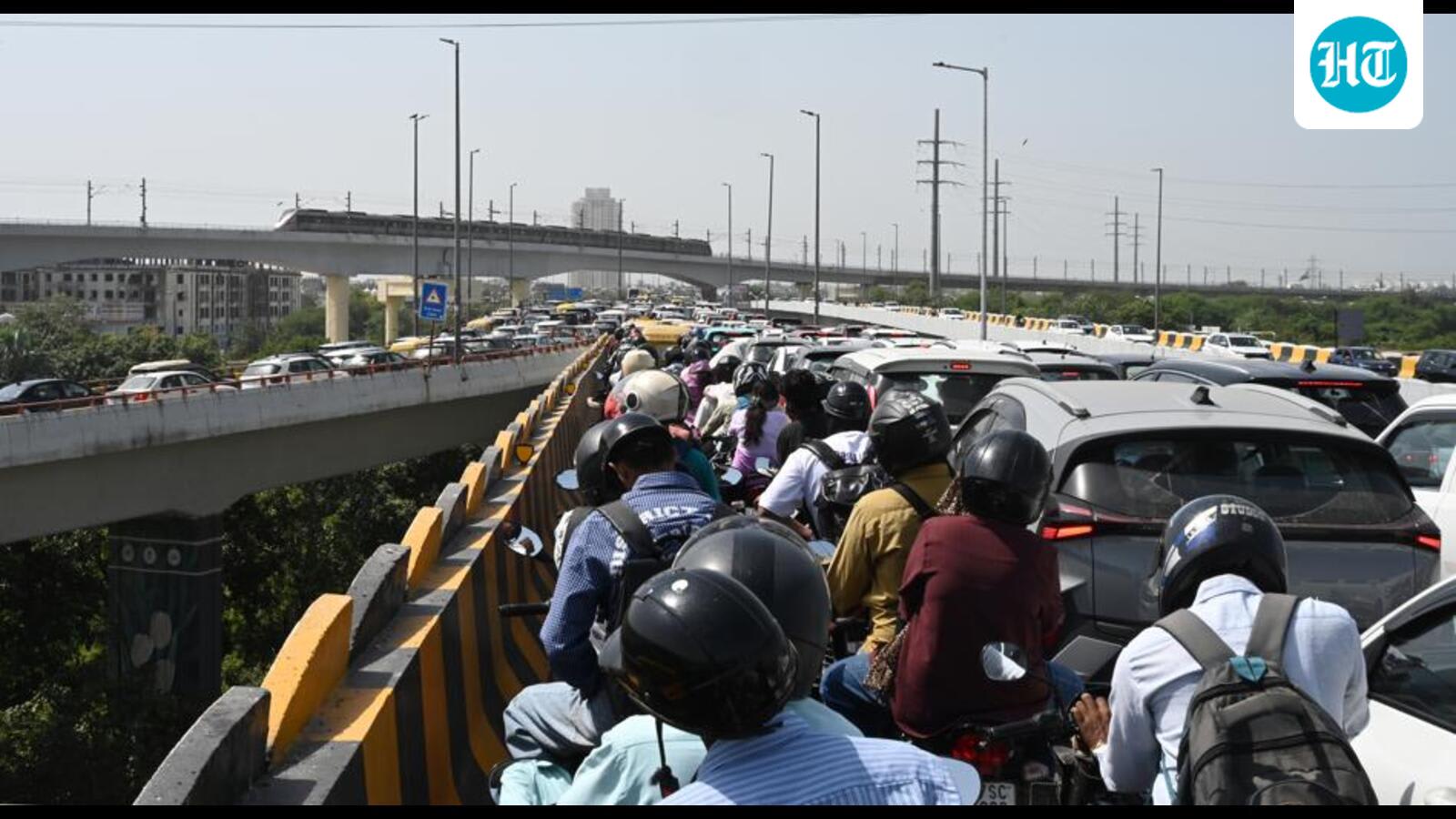
The Delhi Traffic Police have requested the PWD to redesign the Barapullah Phase-III merger point due to severe congestion. A drone survey revealed that merging multiple lanes into a single corridor is causing significant bottlenecks.
Traffic Chaos on Barapullah Phase-III: A Structural Crisis
The recent inauguration of the Barapullah Phase-III flyover, intended to serve as a vital arterial link in Delhi’s transit network, has instead become a site of significant logistical failure. Following its opening, motorists reported extreme delays, with an eight-kilometer commute from Safdarjung Hospital to Sarai Kale Khan ballooning to over an hour. This immediate gridlock has prompted the Delhi Traffic Police to formally intervene, urging the Public Works Department (PWD) to fundamentally redesign the merger point near Sundial Park.
The Physics of Bottlenecks
At the heart of the issue is a fundamental mismatch between traffic volume and road capacity. A drone survey conducted by the Delhi Traffic Police identified a critical design flaw: two three-lane roads are being funneled into a single three-lane corridor. This creates a classic 'bottleneck' effect where the physical space cannot accommodate the volume of vehicles, forcing a sudden, forced merge. As traffic flow adheres to the principles of fluid dynamics, the abrupt termination of lanes creates shockwaves of braking that propagate backward, leading to the observed gridlock.
Infrastructure Planning Deficiencies
This incident highlights a recurring challenge in urban infrastructure development within metropolitan areas like Delhi. The failure to adequately model the integration of new spurs with existing corridors often stems from siloed planning processes. When a new infrastructure project, such as this eight-kilometer expansion, is executed without a holistic view of the downstream impact, the resulting congestion can negate the time-saving benefits the project was meant to provide. The Sundial Park merger point serves as a case study for why post-construction traffic flow analysis is as critical as the initial engineering schematics.
The Role of Regulatory Oversight
The intervention by the Delhi Traffic Police is a necessary regulatory step to force accountability in public works. By utilizing drone technology to map the flow, the police have provided objective, data-driven evidence that the current configuration is failing. This move suggests a shift toward more evidence-based urban management, where law enforcement agencies act as a check on civil engineering projects that do not perform as expected under real-world conditions.
Future Implications and Remediation
Looking ahead, the PWD faces the daunting task of retrofitting an already operational flyover to address these design inadequacies. This will likely involve costly and disruptive construction work to smooth out the transition points. If the city aims to prevent similar occurrences in future phases of the Barapullah corridor, it must adopt more rigorous traffic simulation modeling during the design phase. Without a significant redesign, the Barapullah Phase-III project will remain a symbol of poor synchronization between infrastructure expansion and the realities of urban traffic density.
Conclusion
The situation at the Barapullah Phase-III merger point is a clear indicator that road capacity is not merely about adding lanes, but about the seamless integration of traffic flow. The transition from the new flyover to the existing corridor requires a sophisticated geometric solution that respects the volume of traffic. Until the PWD addresses these design flaws, the residents of Delhi will continue to experience the frustration of a project that, while physically complete, is functionally inadequate.
Verification Required?