‘Misogynistic’: MP High Court flags appellate judge’s view on woman’s role in litigation
Source Entity
Ashish Shaji
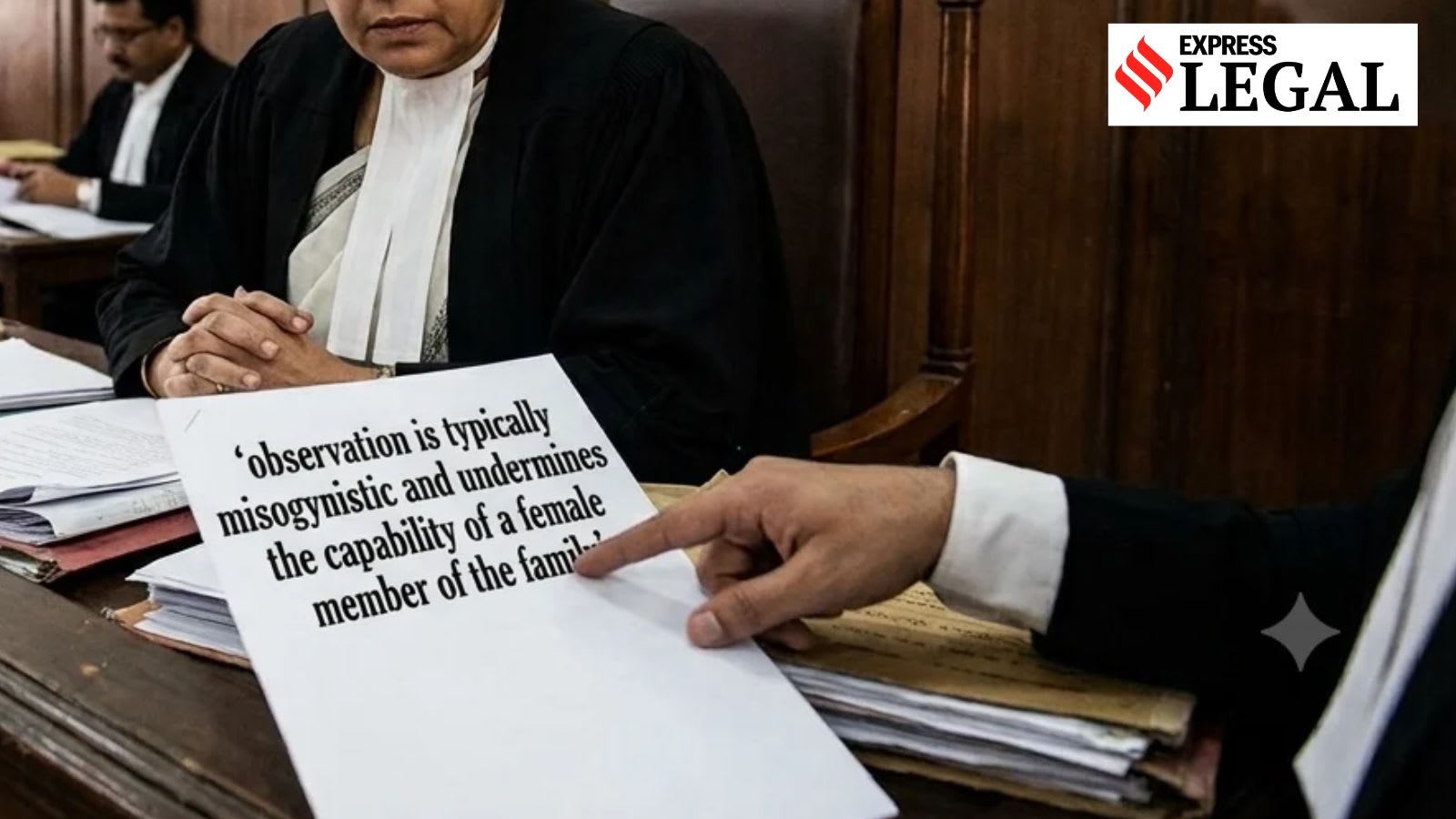
The Madhya Pradesh High Court has condemned an appellate court's gender-biased ruling that suggested elderly men cannot rely on younger women for litigation support. Justice Anuradha Shukla overturned the decision, emphasizing that such views undermine women's agency and perpetuate harmful stereotypes.
Judicial Scrutiny of Gender Bias in Indian Courts
The Madhya Pradesh High Court recently delivered a significant critique regarding the persistence of patriarchal norms within the lower judiciary. In a property dispute case, Justice Anuradha Shukla addressed an appellate court’s decision that had effectively dismissed the involvement of a female family member in legal proceedings based on the assumption that elderly male relatives would not rely on a younger woman for such tasks. By labeling this observation as "misogynistic" and "gender-biased," the High Court has signaled a zero-tolerance policy toward archaic judicial reasoning that diminishes the autonomy of women.
Challenging Subconscious Bias
At the heart of this legal conflict was the dismissal of a case grounded in the belief that familial power dynamics preclude women from acting as primary agents in litigation. The High Court’s intervention is essential because it highlights how subconscious bias can manifest in legal rulings, potentially denying justice to litigants based on gendered expectations rather than legal merit. Justice Shukla’s ruling serves as a corrective measure, reinforcing that the law must remain objective and free from stereotypical assumptions about household roles.
The Impact on Legal Agency
By stating that the appellate court’s reasoning undermines the capability of female family members, the High Court is advocating for a more equitable legal landscape. In many Indian family property disputes, women have historically been sidelined or treated as secondary actors. This ruling reinforces the legal status of women as capable, independent participants in family legal matters, ensuring that their contributions—or their capacity to represent their families—are not dismissed due to the gender of the individual performing the action.
Historical Context and Legal Evolution
This incident reflects a broader movement within the Indian judiciary to shed colonial-era and traditionalist attitudes that have long influenced lower court proceedings. As societal roles evolve, the legal system is increasingly pressured to align with constitutional principles of equality. The High Court’s decision is not merely a procedural correction; it is a normative statement that the judiciary must evolve alongside contemporary society, where women are active participants in managing familial affairs, including complex property litigation.
Implications for Future Litigation
Looking forward, this judgment sets a critical precedent for appellate courts across the state. By explicitly defining the lower court's reasoning as "misogynistic," the Madhya Pradesh High Court has created a deterrent against similar future remarks. Legal professionals and judicial officers are now on notice that gender-biased assumptions, when written into judgments, will be subject to public and judicial scrutiny. This shift is likely to encourage a more rigorous, fact-based approach to evaluating the validity of legal representation within family disputes.
Conclusion: A Step Toward Equality
The intervention by Justice Anuradha Shukla serves as a vital reminder that the courtroom must be a space where equality is upheld, not where traditional prejudices are codified. By overturning the appellate court’s rejection, the High Court has protected the rights of the female litigant and reaffirmed the principle that gender should have no bearing on the validity of one's legal actions. This case serves as a landmark example of how judicial oversight can effectively dismantle systemic bias in the pursuit of justice.