Crew unaware of risks before Bayesian yacht accident, say investigators
Source Entity
BBC News
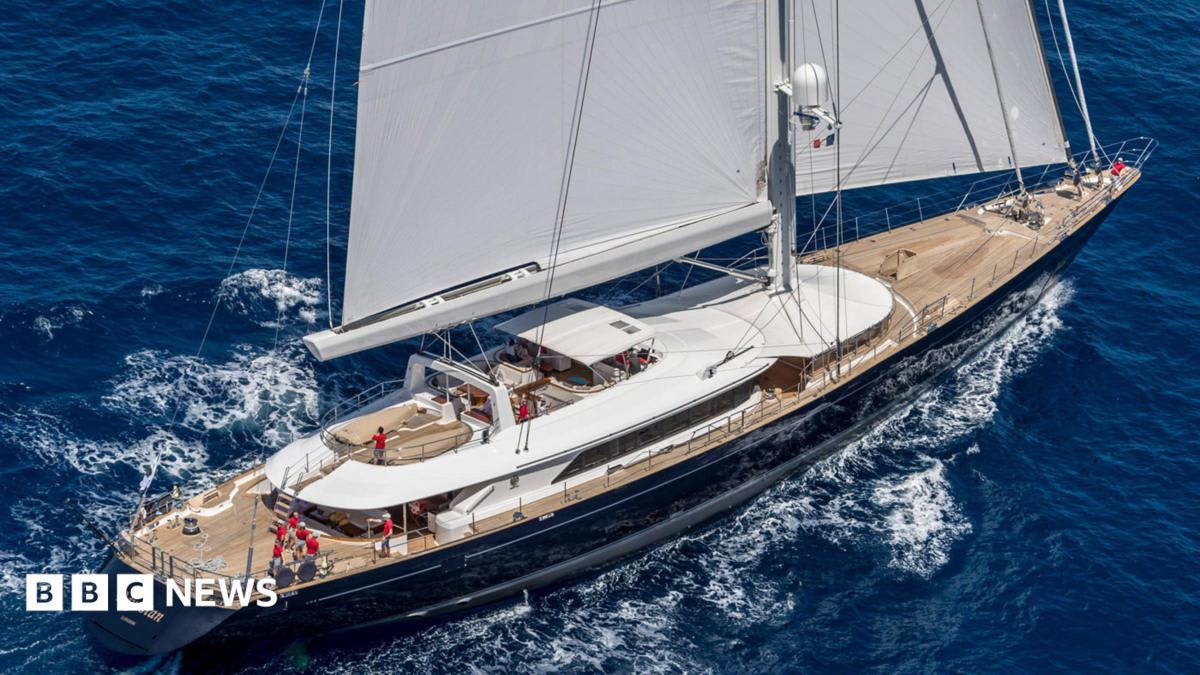
Investigators have concluded that the crew of the Bayesian yacht were unaware of the extreme weather risks before the vessel sank off Sicily. The sudden, intense wind speeds far exceeded forecasts, rendering the yacht vulnerable to an irrecoverable knockdown.
The Tragic Sinking of the Bayesian: An Investigative Overview
On the early morning of August 19, 2024, the luxury yacht Bayesian was anchored off the coast of Porticello, Sicily, when it was struck by a catastrophic weather event. The incident resulted in the tragic loss of seven lives, including prominent British technology entrepreneur Mike Lynch. The subsequent investigation by the Marine Accident Investigation Branch (MAIB) has begun to shed light on the mechanics of this disaster, pointing toward a convergence of extreme environmental conditions and a lack of situational awareness regarding the vessel’s structural vulnerability.
Unforeseen Meteorological Escalation
The fundamental catalyst for the tragedy was a rapid and unpredictable atmospheric shift. While the Bayesian was anchored, a thunderstorm front descended upon the area with localized intensity that caught all onboard by surprise. Data indicates that wind speeds surged from a manageable 8 knots to a destructive 70 knots (approximately 80mph) within a matter of minutes. Crucially, the prevailing weather forecast had only anticipated gusts reaching 27 knots, leaving the crew with no advanced warning of the true scale of the incoming gale.
Vulnerability of the Vessel
According to the MAIB report, the Bayesian was particularly susceptible to such extreme conditions due to its configuration at the time of the incident. With no sails deployed, the yacht remained stationary, yet its design made it inherently vulnerable to high-force winds striking its beam—the widest point of the ship. Expert analysis commissioned by the MAIB confirms that the vessel lacked the necessary stability threshold to withstand the sudden lateral pressure exerted by the 70-knot winds.
The Physics of the Knockdown
The investigation highlights a critical concept in maritime stability: the "angle of vanishing stability." The study determined that this angle for the Bayesian was 73 degrees. Once the yacht was subjected to the extreme winds and tipped sideways beyond this specific threshold, the process became physically irrecoverable. This means that once the vessel reached that critical tilt, it was mathematically and physically impossible for the yacht to right itself, leading to the rapid sinking that claimed the lives of those on board.
Implications and Future Safety Trends
This disaster serves as a sobering reminder of the unpredictability of Mediterranean weather patterns and the limitations of current maritime safety technology. The fact that the crew was entirely unaware of the impending threat underscores a potential gap in real-time meteorological monitoring for private vessels. Moving forward, this case will likely set a new precedent for maritime safety regulations, potentially forcing a re-evaluation of stability standards for large yachts and the protocols required for anchoring during volatile weather conditions.
Conclusion
The Bayesian tragedy was the result of a "perfect storm" where extreme, unforecasted weather met the physical limitations of the vessel's design. As investigators continue to analyze the wreckage and the timeline of the crew's actions, the focus remains on ensuring that such a rapid, irrecoverable knockdown scenario can be prevented in the future. The loss of Mike Lynch and others serves as a catalyst for a broader industry-wide review of how superyachts manage risk in the face of increasingly erratic global weather patterns.