40 years ago, Rajiv Gandhi condemned terrorism — and the Pakistan PM echoed his sentiment
Source Entity
The Indian Express
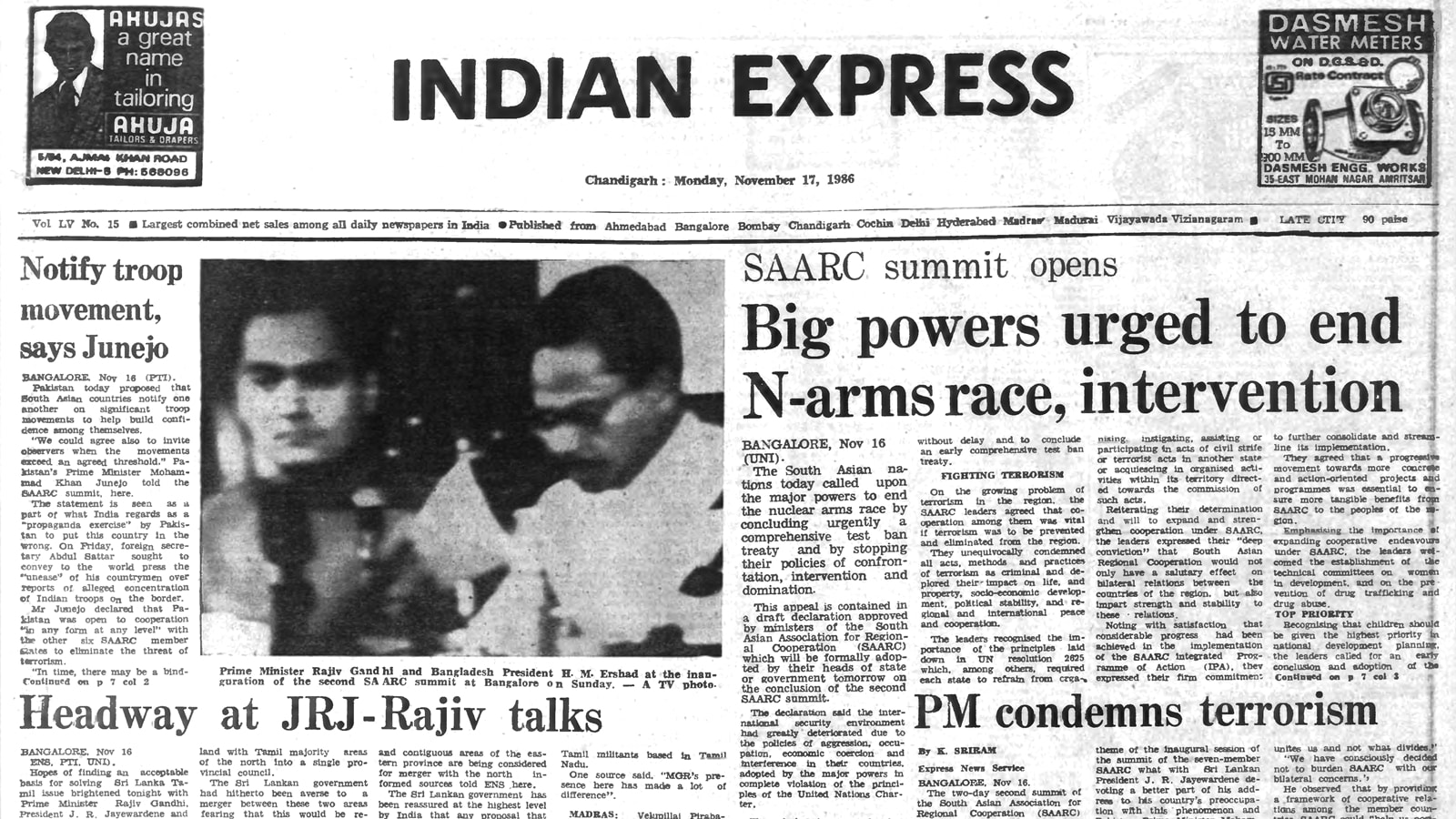
Forty years ago, the second SAARC summit in Bangalore saw leaders like Rajiv Gandhi and J.R. Jayewardene unite against regional terrorism. The summit established a critical precedent for member states to deny sanctuary to militant groups.
The Bangalore Consensus: A Historical Retrospective on SAARC and Terrorism
Forty years ago, the political landscape of South Asia was defined by a moment of rare diplomatic alignment during the second summit of the South Asian Association for Regional Cooperation (SAARC) in Bangalore. Inaugurated by Prime Minister Rajiv Gandhi, the summit served as a pivotal platform where regional leaders confronted the burgeoning threat of terrorism, seeking to establish a collective security framework that transcended national borders.
The Mandate Against Cross-Border Threats
In his opening address at the Vidhana Soudha, Prime Minister Rajiv Gandhi articulated a clear and firm directive for the member states: the region must not become a sanctuary or a launching pad for terrorism. This declaration was not merely rhetorical; it was an attempt to codify a regional norm where member states would refrain from providing aid, comfort, or logistical support to militant factions. By emphasizing that territorial integrity must not be exploited by non-state actors, Gandhi sought to turn SAARC into a bastion of regional stability rather than a mere forum for economic dialogue.
Multilateral Alignment and Shared Concerns
The gravity of the situation was underscored by the active participation of other regional heads of state, most notably Sri Lankan President J.R. Jayewardene. Jayewardene utilized the summit floor to highlight the existential threat terrorism posed to his nation, effectively aligning the Sri Lankan experience with the broader regional anxieties shared by India. This convergence of interests demonstrated that terrorism was recognized by all participants as a transnational challenge that required a unified, rather than a fragmented, response.
The Diplomacy of Consensus
Following his election as the chairman of SAARC by acclamation, Rajiv Gandhi’s leadership style at the Bangalore summit emphasized the necessity of political will. The summit functioned as a litmus test for the viability of South Asian cooperation. By making terrorism the dominant theme of the inaugural session, the leaders moved beyond the standard diplomatic pleasantries, forcing a direct confrontation with the realities that threatened to destabilize the subcontinent.
Legacy and Broader Implications
Reflecting on this event four decades later, the Bangalore summit stands as a historical reference point for the limitations and aspirations of regional cooperation. While the vision of a terror-free region remains a work in progress, the rhetoric established in 1986 set a standard for diplomatic discourse. The demand that states deny safe harbor to terrorists remains a foundational principle in international relations, and the SAARC summit provided an early, high-level venue where these principles were debated by the architects of South Asian policy.
Conclusion: Assessing the Long-term Impact
The second SAARC summit remains a significant case study in how regional organizations attempt to address security dilemmas. By prioritizing the condemnation of terrorism, the Bangalore summit underscored that economic and cultural integration in South Asia is inextricably linked to regional security. The historical record of this event serves as a reminder of the persistent challenges that continue to shape the diplomatic relationship between the nations of the subcontinent today.