Bessent's call to upsize Fed foreign lending facility may not be risk-free
Source Entity
Yahoo Finance
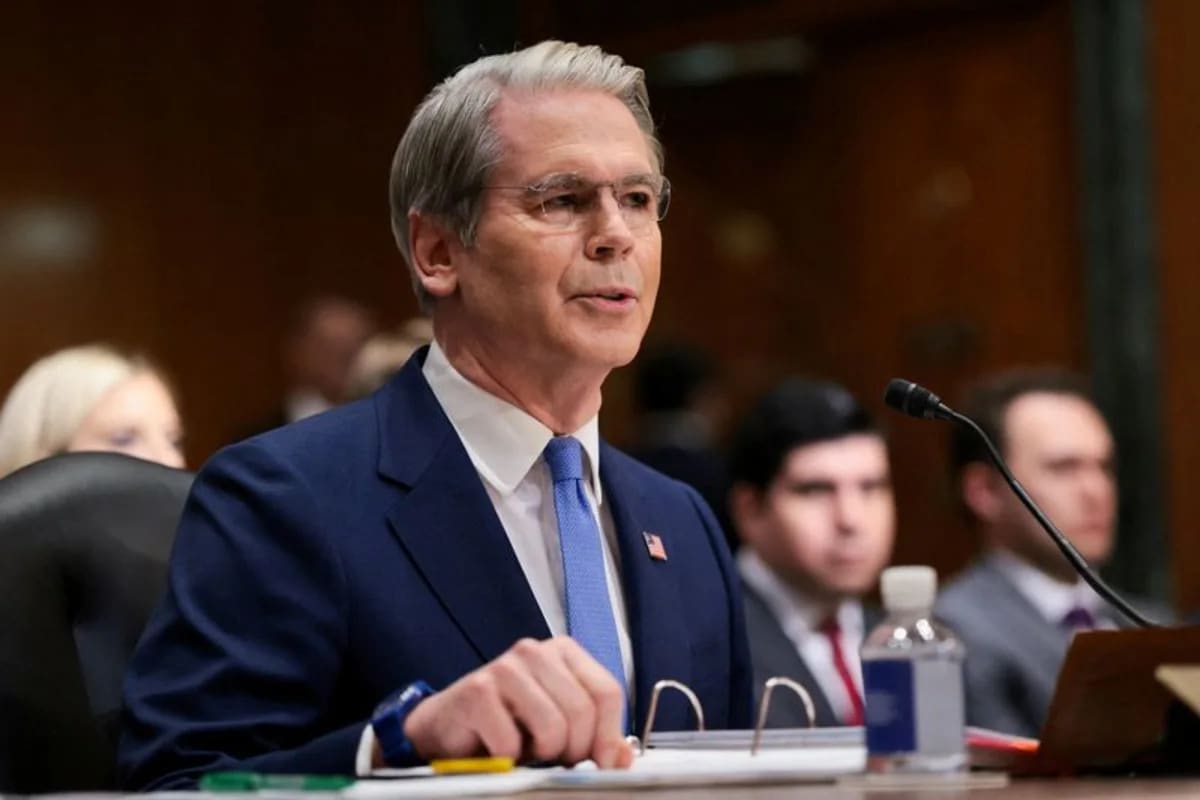
U.S. Treasury Secretary Scott Bessent has proposed expanding the Federal Reserve's foreign repo facility to assist allies like Japan in currency stabilization. However, analysts warn that this could invite market volatility and test the policy resolve of central banks.
The Strategic Implications of Expanding the FIMA Repo Facility
U.S. Treasury Secretary Scott Bessent has recently proposed an expansion of the Federal Reserve’s Foreign and International Monetary Authorities (FIMA) repo facility, a move aimed at providing greater liquidity to official foreign accounts. While ostensibly designed to assist nations like Japan in bolstering their domestic currencies during periods of volatility, the proposal has sparked significant debate regarding the potential systemic risks involved in such a policy shift.
Understanding the FIMA Repo Mechanism
The FIMA repo facility currently serves as a vital safety valve for the global financial system, allowing foreign central banks and monetary authorities to access up to $60 billion in short-term U.S. dollar liquidity. By pledging U.S. Treasuries as collateral, these entities can navigate temporary liquidity crunches without having to engage in fire sales of their bond holdings, which could otherwise destabilize the global market for government debt.
The Risk of Market Speculation
A primary concern among market analysts is that an expanded facility could inadvertently encourage speculative behavior. If the market perceives that the Federal Reserve is effectively backing currency interventions, traders may be emboldened to test the resolve of both Washington and Tokyo. By providing an additional buffer, the Fed could be seen as providing a 'backstop' that invites currency speculators to challenge the central banks, potentially leading to increased volatility rather than the intended stability.
Institutional Hurdles and FOMC Dynamics
It is crucial to note that any expansion or removal of the current $60 billion cap is far from a certainty. Such a decision rests with the Federal Open Market Committee (FOMC), which requires a majority vote from its 12 members. The Fed has historically been protective of its independence and its balance sheet, and there is no guarantee that the committee will view the needs of foreign currency intervention as a sufficient justification for altering the scope of a facility that was never originally designed for such purposes.
Broader Economic Context
The proposal highlights the complex intersection of U.S. domestic monetary policy and global economic stability. As the U.S. dollar remains the world's primary reserve currency, the Federal Reserve’s tools are often viewed as global public goods. However, using these tools to facilitate currency intervention for other nations risks entangling the Fed in political and economic disputes that lie outside its traditional mandate of controlling domestic inflation and maximizing employment.
Conclusion: A Delicate Balancing Act
Ultimately, while Bessent’s proposal aims to enhance the 'firepower' available to allies, the potential costs—ranging from moral hazard in currency markets to institutional friction within the Federal Reserve—are significant. The coming months will likely see intense scrutiny from economists and central bank watchers as they evaluate whether the benefits of such an expansion outweigh the inherent risks of market manipulation and the potential erosion of the Fed’s policy autonomy.