Bessent warns Zelenskyy to 'be very careful' about claims U.S. is throttling Starlink
Source Entity
US Top News and Analysis
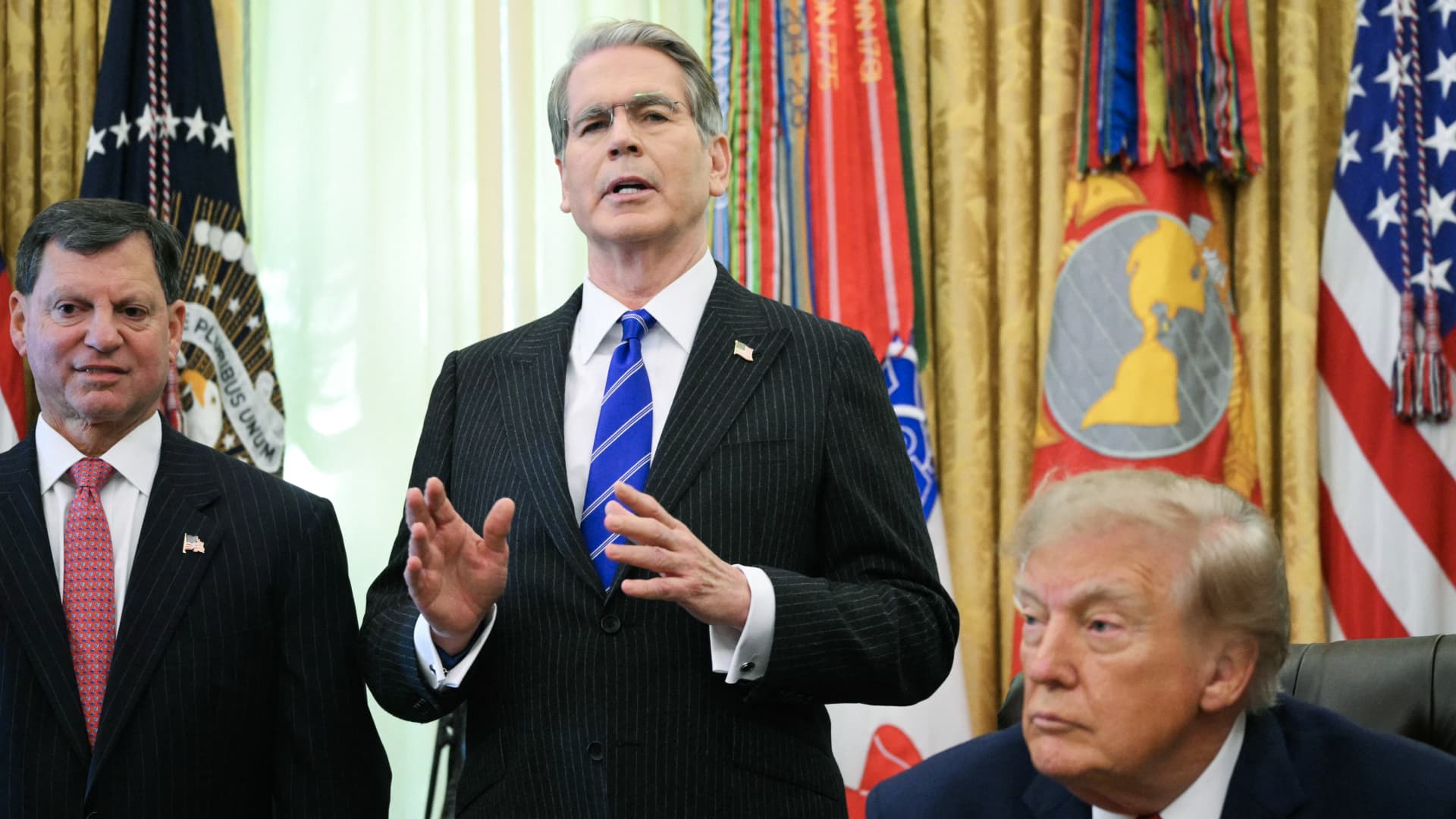
Treasury Secretary Scott Bessent has warned President Zelenskyy against publicly accusing the U.S. of throttling Starlink services. This tension arises as Ukraine faces connectivity issues that impact its defensive capabilities against Russian forces.
Tensions Rise Over Starlink Connectivity in Ukraine
Recent reports indicate a deepening diplomatic friction between the United States and Ukraine regarding the operational status of Starlink, the satellite internet service provided by Elon Musk’s SpaceX. President Volodymyr Zelenskyy has publicly expressed concerns that the U.S. government may be responsible for intentional slowdowns in service, claiming that Ukraine was even 'blocked' from receiving U.S. intelligence for a period. This disruption has come at a critical juncture, as the hindered connectivity directly impacts Ukraine's tactical ability to respond to ongoing Russian assaults.
The Warning from the Treasury
In response to these public allegations, U.S. Treasury Secretary Scott Bessent issued a stern advisory to the Ukrainian leadership. Bessent, speaking in the context of broader administrative priorities—including the recent announcement of 'Trump accounts' for investment savings—warned President Zelenskyy to 'be very careful' regarding his public rhetoric concerning U.S. support. This warning underscores the fragile nature of international military aid and the political sensitivity surrounding the supply of civilian-led technology like Starlink in active combat zones.
The Strategic Importance of Starlink
Starlink has evolved from a commercial venture into a cornerstone of Ukraine’s defense infrastructure. Its high-speed, low-latency satellite coverage provides essential communication channels for military coordination, drone operations, and real-time intelligence gathering. When this system experiences instability, it creates a vacuum in operational command and control, leaving Ukrainian forces vulnerable to Russian maneuvers. The dependency on a private company's technology for national security remains a unique and highly debated aspect of this conflict.
Diplomatic Implications
Zelenskyy’s willingness to publicly challenge the U.S. government on service accessibility highlights the mounting pressure on the Ukrainian administration. By suggesting that the U.S. is 'throttling' or withholding intelligence, Zelenskyy is signaling a loss of confidence in the current support apparatus. However, Secretary Bessent’s rebuke suggests that the U.S. executive branch expects a higher degree of diplomatic discretion, even when technology failures occur, to avoid undermining the public perception of the U.S.-Ukraine alliance.
Future Trends and Conclusion
Looking forward, the reliability of Starlink will continue to be a barometer for the relationship between the U.S. and Ukraine. If connectivity issues persist, the strain between Kyiv and Washington is likely to intensify, potentially leading to a shift in how battlefield technology is managed and governed. The administration’s focus on domestic policy, such as the implementation of investment savings accounts for children, contrasts sharply with the high-stakes geopolitical drama playing out in the Oval Office. Ultimately, both nations must navigate these technical and rhetorical challenges to maintain the unified front necessary to address the ongoing security threats in the region.