In 2025, an Arizona researcher spent two weeks in Biosphere 2 with 144 dwarf peas; harvesting them on Day 8 enabled a CO2 comparison
Source Entity
Latest News: Todays Latest News Headlines from India & World | Hindustan Times
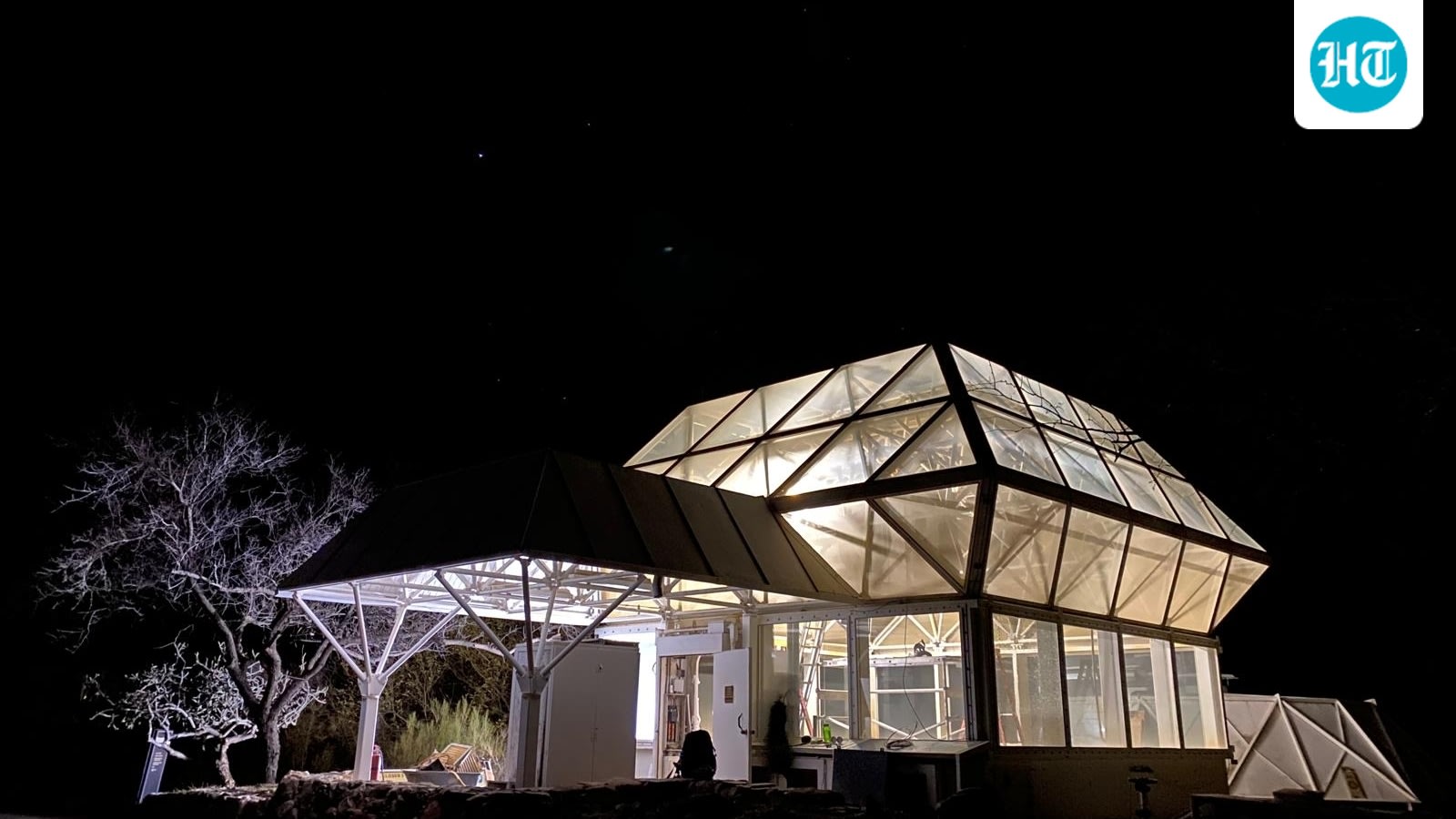
Researchers at Arizona's Biosphere 2 are exploring plant-human respiratory dynamics and climate-driven forest mortality. These studies highlight both the potential of closed-loop life support systems and the accelerating threat of drought-induced tree death.
Ecological Resilience and Life Support: Insights from Biosphere 2
Recent scientific inquiries at the University of Arizona’s Biosphere 2 have yielded critical data regarding both the sustainability of closed-loop habitats and the vulnerability of forest ecosystems to climate change. By conducting experiments within the Space Analog for the Moon and Mars (SAM), researchers are bridging the gap between planetary exploration requirements and terrestrial climate science.
Breathing Together: Human-Plant Respiratory Dynamics
In October 2025, researcher Mattias Beach conducted a two-week experiment within a sealed habitat to evaluate the symbiotic potential between humans and plants. By living alongside 144 dwarf pea plants for one week and subsequently spending a week without them, Beach sought to measure the efficacy of botanical CO2 absorption. This study is pivotal for understanding how closed environments—such as future lunar or Martian bases—might rely on biological systems to regulate air quality and maintain a breathable atmosphere for human occupants.
The Mechanics of Forest Die-off
Concurrent research at Biosphere 2 has focused on the physiological response of piñon pines to environmental stressors. Building upon foundational work by Henry Adams and colleagues, recent efforts have quantified the impact of rising temperatures on drought-stressed vegetation. By depriving twenty mature piñon pines of water under elevated temperature conditions, researchers observed that these trees died 28% faster than their counterparts in standard drought conditions.
Metabolic Exhaustion and Carbon Depletion
The accelerated mortality observed in the piñon pine study points to a specific metabolic failure: drought-stressed trees in warmer environments consume their stored carbon reserves at a significantly higher rate. This metabolic exhaustion effectively leaves the trees without the resources necessary to survive prolonged dry periods, transforming moderate drought into a lethal event.
Broader Implications for Climate Modeling
The implications of this research are profound for global forest management and climate projections. The data indicates that even minor temperature increases can drastically exacerbate the effects of water scarcity. Researchers project that such conditions could lead to forest die-offs occurring five times more frequently than previously anticipated. While these findings currently focus on piñon pines, they serve as a warning sign for other species adapted to arid environments.
Conclusion: Integrating Experimental Data
Whether exploring the viability of life support systems for space travel or analyzing the fragility of our own terrestrial forests, the experiments at Biosphere 2 highlight the complex interplay between biological organisms and their environments. By isolating variables like CO2 absorption and thermal stress, scientists are refining our ability to predict, and potentially mitigate, the long-term consequences of a changing climate on both artificial and natural ecosystems.
Verification Required?