Congress rejects Shah’s Vande Mataram charge, calls it a ‘political diversion’
Source Entity
India Latest News: Top National Headlines Today & Breaking News | The Hindu
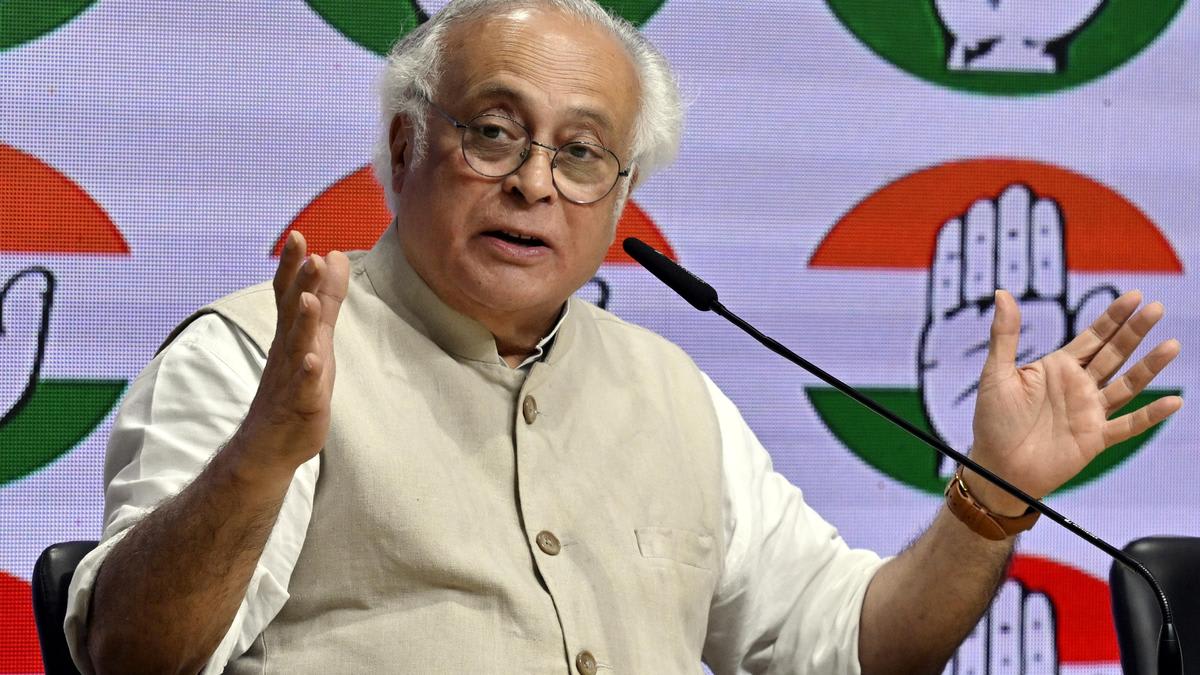
A political controversy erupted after the BJP alleged that Sonia Gandhi interrupted the full rendition of Vande Mataram during an Independence Day event. The Congress party categorically denied the accusation, clarifying that Gandhi was merely requesting a chair for party president Mallikarjun Kharge.
The Vande Mataram Controversy: A Political Clash of Narratives
On August 15, 2026, a fresh political skirmish emerged between the Bharatiya Janata Party (BJP) and the Indian National Congress. The focal point of the dispute was the rendition of the national song, Vande Mataram, during the Congress party's official Independence Day commemoration at Indira Bhawan. The BJP alleged that former Congress President Sonia Gandhi attempted to interrupt or object to the full version of the song, framing the incident as a sign of ideological incompatibility with nationalistic sentiments.
The BJP’s Accusation and Rhetorical Framing
BJP national general secretary (organisation) B L Santhosh spearheaded the party’s criticism, sharing video footage on social media platform X. The BJP’s narrative suggests that the Congress leadership—specifically Sonia Gandhi and party president Mallikarjun Kharge—displayed discomfort during the singing of the anthem. By invoking the phrase "certain mindsets never change from pre-1947 to post-1947," the BJP sought to cast the Congress as being historically detached from symbols of Indian nationalism, effectively positioning the incident as a litmus test for patriotism in the current political climate.
The Congress Counter-Narrative
In immediate response, the Congress party issued a categorical rejection of these claims. According to the party, the video footage was misinterpreted by the BJP to serve a partisan agenda. The Congress asserted that Sonia Gandhi’s interaction with her colleagues was not an objection to the music, but a practical request for a chair for Mallikarjun Kharge. Given that the party president had been standing for a significant duration, the Congress maintains that the gesture was one of logistical concern rather than ideological opposition.
The Intersection of Symbolism and Political Optics
This incident highlights the intense scrutiny surrounding symbolic acts in Indian politics, particularly on significant national days like Independence Day. Vande Mataram holds a place of immense historical significance, having served as a rallying cry during the struggle for independence. Because of its weight, any perceived lack of enthusiasm or interruption during its performance often becomes a flashpoint for political polarization. In this context, both parties are leveraging the event to define their respective brands—the BJP as the defender of traditional nationalistic fervor and the Congress as a party unfairly maligned by manufactured controversies.
Broader Implications for Political Discourse
As the digital age allows for the rapid circulation of short, decontextualized video clips, political actors are increasingly relying on such content to shape public perception. The speed at which the BJP escalated this attack, and the subsequent defensive posture of the Congress, indicates a trend where every public movement of high-profile leaders is subjected to intense forensic analysis. This incident serves as a case study in how political narratives are constructed and contested in real-time, often leaving the public to navigate conflicting versions of the truth.
Conclusion
The clash over the Vande Mataram rendition reflects the ongoing struggle between India’s major political forces to claim ownership of national icons. While the BJP views the incident as evidence of an ideological divide, the Congress views it as a strategic misrepresentation of a mundane moment. Ultimately, the event underscores the fragile nature of political decorum in an era where symbols are frequently weaponized, and the interpretation of reality remains deeply divided along partisan lines.
Multiple Citing Sources
Verification Required?