Former V-P Hamid Ansari’s remarks exposed ‘Muslim League-Maoist character’ of Congress, says BJP
Source Entity
India Latest News: Top National Headlines Today & Breaking News | The Hindu
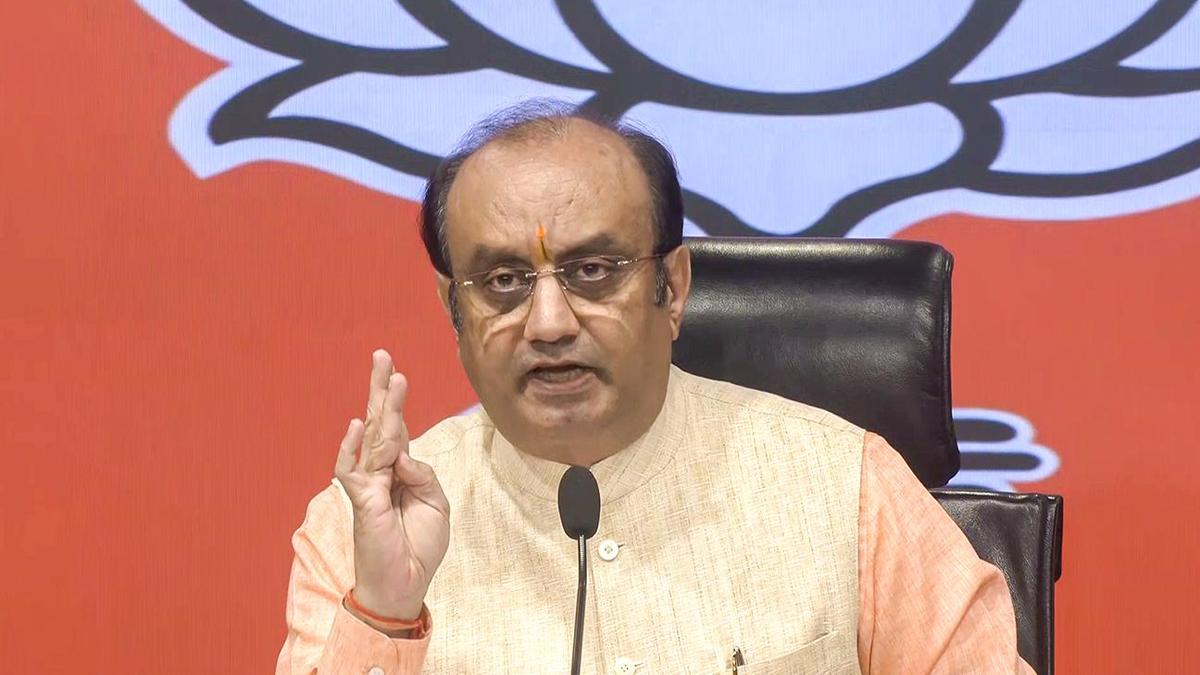
The BJP has criticized former Vice-President Hamid Ansari for quoting A.G. Noorani's views on Jawaharlal Nehru's stance regarding Hindu right-wing communalism. The party labeled these remarks as an exposure of the Congress party's alleged 'Muslim League-Maoist character.'
Political Firestorm Over Historical Interpretations
Recent remarks made by former Vice-President Hamid Ansari during an event commemorating the late constitutional expert A.G. Noorani have ignited a sharp political confrontation. The controversy centers on Mr. Ansari’s decision to cite Noorani’s book, The RSS: A Menace to India, while articulating the historical perspective of India’s first Prime Minister, Jawaharlal Nehru. According to Mr. Ansari, Nehru viewed Hindu right-wing communalism as a more significant threat to the nation than communism, a sentiment that has drawn immediate and fierce condemnation from the Bharatiya Janata Party (BJP).
The BJP’s Rebuttal and Ideological Framing
The BJP, represented by national spokesperson Sudhanshu Trivedi, responded to these comments by characterizing them as an inadvertent exposure of the Congress party's underlying ideological alignment. By framing the discourse as a manifestation of a "Muslim League-Maoist character," the BJP is attempting to link historical Congress policies with contemporary anxieties regarding national security and identity politics. This rhetoric serves to reinforce the BJP's long-standing narrative that the Congress party is historically compromised by its perceived appeasement of divisive elements.
Contextualizing the Nehruvian Perspective
To understand the gravity of this debate, one must look at the historical context of Nehru’s governance. Nehru’s secularist framework often pitted his administration against ideologies he deemed exclusionary or communal. By invoking these past views, Mr. Ansari has reopened a debate on the foundational principles of the Indian state. The BJP’s reaction suggests that these historical interpretations are not merely academic but remain potent tools for current political mobilization, where the legacy of the Congress is constantly under scrutiny.
The Role of Constitutional Experts in Political Discourse
The involvement of A.G. Noorani’s work in this debate highlights the intersection of legal scholarship and partisan politics. Noorani, known for his critical stance on the RSS, provided a intellectual framework that the BJP has long sought to discredit. When a figure of Mr. Ansari’s stature cites such literature, it provides a platform for those views to enter the mainstream, thereby compelling the ruling party to counteract the narrative through aggressive political messaging and public press conferences.
Broader Implications and Future Trends
This incident underscores the increasing polarization surrounding the interpretation of Indian history. As the nation moves forward, the battle over historical narrative is likely to intensify, with both the BJP and the Congress using historical figures as proxies for contemporary ideological conflicts. This trend suggests that academic commemorations and literary discussions will continue to be flashpoints for national political debates, as both sides seek to define the 'true' identity of India through the lens of its past leaders and thinkers.
Conclusion
In summary, the exchange between the BJP and the former Vice-President reflects a deeper, ongoing struggle to define the ideological trajectory of the country. By labeling the opposition's historical references as a "Muslim League-Maoist" alignment, the BJP is hardening its stance against the Congress, ensuring that history remains a central pillar of its electoral and political strategy. The controversy proves that in the current climate, even historical analysis is subject to the immediate demands of political combat.
Verification Required?