'SIR decision unanimous': EC plays down report of internal disagreement over roll revision
Source Entity
ROHITASHWA RANJAN
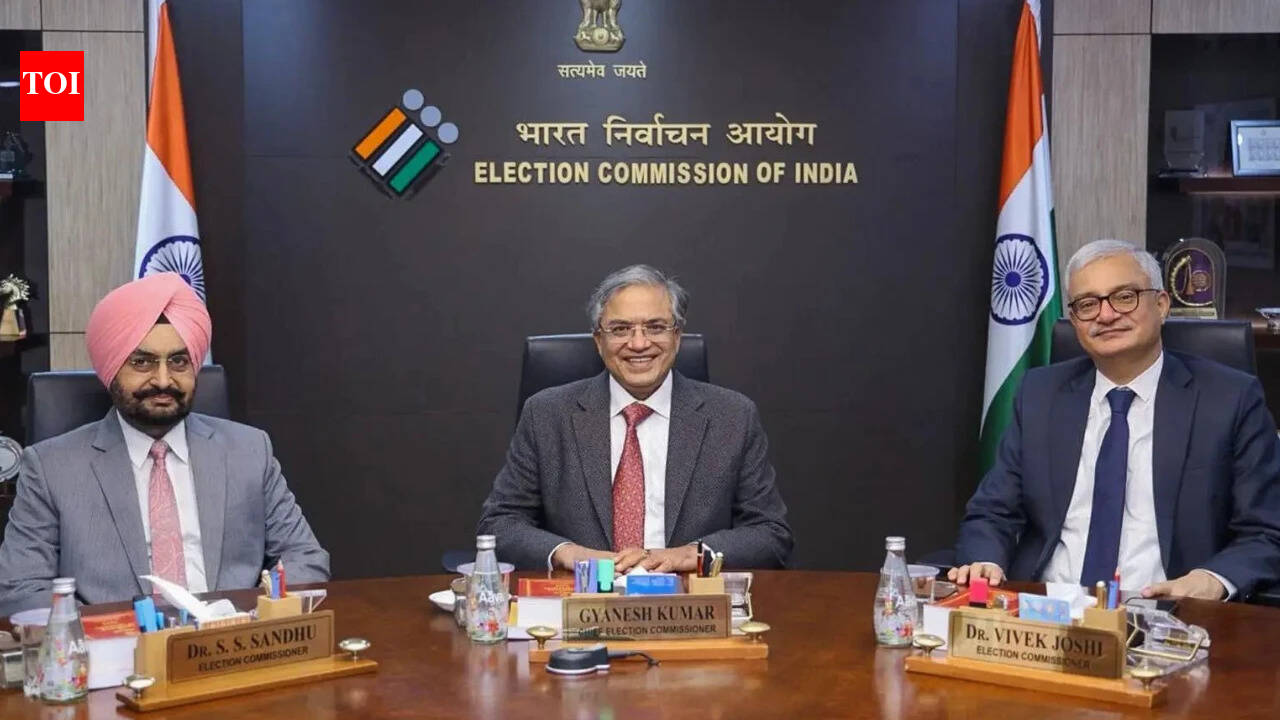
The Supreme Court has questioned the Election Commission of India over machine-generated notices sent to 33 lakh Delhi voters citing 'logical discrepancies'. The court urged for more transparency and refinement in the Special Intensive Revision (SIR) process after the Aam Aadmi Party raised concerns.
Judicial Scrutiny of Delhi's Electoral Roll Process
The Supreme Court of India has recently intervened in the administrative processes governing the Special Intensive Revision (SIR) of electoral rolls in Delhi. A three-judge bench, led by Chief Justice Surya Kant and including Justices Joymalya Bagchi and V. Mohana, expressed significant reservations regarding the Election Commission of India’s (ECI) issuance of notices to over 33 lakh voters. The court pointedly questioned whether these notices, which cite 'logical discrepancies' or 'no mapping' as grounds for review, are being issued in a mechanical, machine-generated manner lacking human oversight.
The Scope of the Controversy
At the heart of the matter is the draft electoral roll, which has seen the exclusion of approximately 47 lakh names. The Aam Aadmi Party (AAP) has been at the forefront of challenging this process, questioning the validity and transparency of the SIR exercise. The court’s intervention highlights a critical tension between the need for an accurate, updated voter database and the fundamental right of citizens to be included in the electoral process without facing arbitrary bureaucratic hurdles.
Concerns Over 'Machine-Generated' Notices
Justice Joymalya Bagchi emphasized that the notices appear to lack the necessary 'application of mind' required for such a significant civic action. The court questioned the ECI’s counsel, senior advocate Dama Seshadri Naidu, on whether recipients are even provided with clear, actionable information regarding the specific discrepancies they are expected to correct. The petitioners argue that the term 'logical discrepancies' remains poorly defined, leaving voters in a state of confusion and potentially disenfranchised.
Implications for Voter Integrity
While the ECI maintains that the issuance of a notice does not equate to the immediate deletion of a voter's name, the scale of these notices—affecting 33 lakh individuals—poses a significant logistical and psychological burden on the electorate. The court’s suggestion that the ECI implement 'additional filters' underscores the necessity for a more refined approach that prevents mass exclusion based on automated errors in data mapping.
Future Trends in Election Administration
This judicial intervention serves as a reminder of the delicate balance between technological efficiency and administrative accountability. As electoral bodies increasingly rely on automated systems to manage vast datasets, the risk of 'mechanical' errors grows. Moving forward, the ECI will likely be required to provide greater transparency in how voter data is cross-referenced and to ensure that the criteria for 'logical discrepancies' are communicated clearly to the public to maintain faith in the democratic process.
Conclusion
The Supreme Court’s focus on the procedural fairness of the SIR process is a vital check on administrative power. By demanding that the ECI address the mechanical nature of these notices, the court is reinforcing the principle that the integrity of the electoral roll must be maintained through transparent, human-verified processes rather than automated algorithms that may inadvertently disenfranchise millions.
Multiple Citing Sources