'Go to your MLA': BJP legislator's response to water crisis sparks protest
Source Entity
P NAVEEN
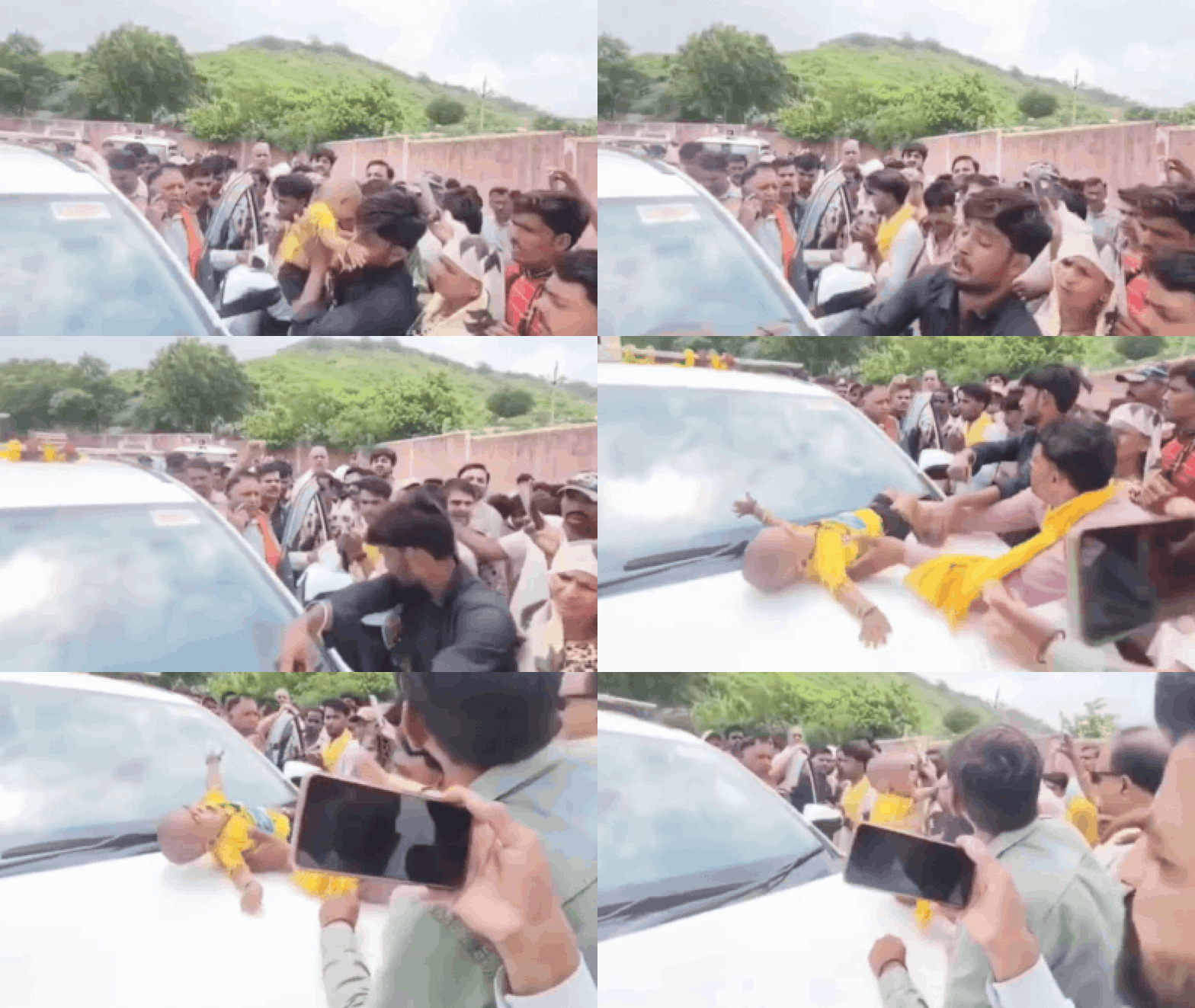
A BJP MLA in Madhya Pradesh faced public backlash after refusing to address water and power grievances because the residents were not his voters. The situation escalated into a protest where villagers placed a child on his vehicle's bonnet, with the footage gaining viral attention.
Political Accountability and Public Grievances: The Shivpuri Incident
Recent events in the Shivpuri district of Madhya Pradesh have brought to light a significant disconnect between elected representatives and the public. During a 'Jan Chaupal'—a public grievance meeting—BJP MLA Ramesh Khatik reportedly dismissed the concerns of villagers from Nanakpur and Barkhadi. His refusal to address their urgent pleas for water and electricity, predicated on the claim that they were not his constituents, highlights a growing tension regarding the duties of public officials versus the partisan nature of local governance.
The Anatomy of the Protest
The situation escalated when the villagers, frustrated by the legislator’s dismissive attitude, resorted to a highly visible form of protest. By placing a young child on the bonnet of the MLA’s parked vehicle, the protesters sought to force an interaction that had been denied to them through traditional administrative channels. This act of civil disobedience serves as a stark indicator of the desperation felt by communities struggling with basic infrastructure deficits like water and electricity shortages.
The Role of Social Media in Modern Dissent
The incident has gained significant traction on social media, with video footage of the child on the vehicle’s bonnet circulating widely. In the digital age, such visuals act as powerful catalysts for public discourse. The viral nature of this video not only amplifies the specific grievances of the Nanakpur and Barkhadi residents but also invites broader scrutiny of how elected officials conduct themselves during public outreach programs.
Theoretical Implications of 'Voter-Centric' Governance
At the core of this controversy lies the problematic notion that an elected representative’s responsibility is limited strictly to their own voting base. In a democratic framework, once an individual is elected, they are generally expected to serve the broader public interest within their region. By prioritizing electoral boundaries over the basic human needs of neighboring citizens, the MLA’s stance has sparked a debate on the ethical obligations of politicians during official public forums.
Future Trends in Civic Engagement
This incident is symptomatic of a larger trend where citizens are increasingly bypassing traditional hierarchies to demand accountability. As infrastructure crises like water shortages become more acute, we can expect to see more dramatic, visual forms of protest designed to bypass the 'gatekeeping' of local politicians. For political parties, this underscores the necessity of professionalizing grievance redressal systems to prevent local issues from spiraling into reputational damage on a national scale.
Conclusion
The confrontation between the villagers and the MLA serves as a critical case study in the breakdown of communication between the state and its citizens. While the protest was born out of frustration over utility shortages, it has evolved into a commentary on political empathy. Moving forward, the effectiveness of 'Jan Chaupals' will likely be judged by their ability to resolve issues rather than merely providing a platform for political posturing.