Shiv Sena (UBT)'s Chaturvedi urges Centre to 'ease out' education minister
Source Entity
TOI NEWS DESK
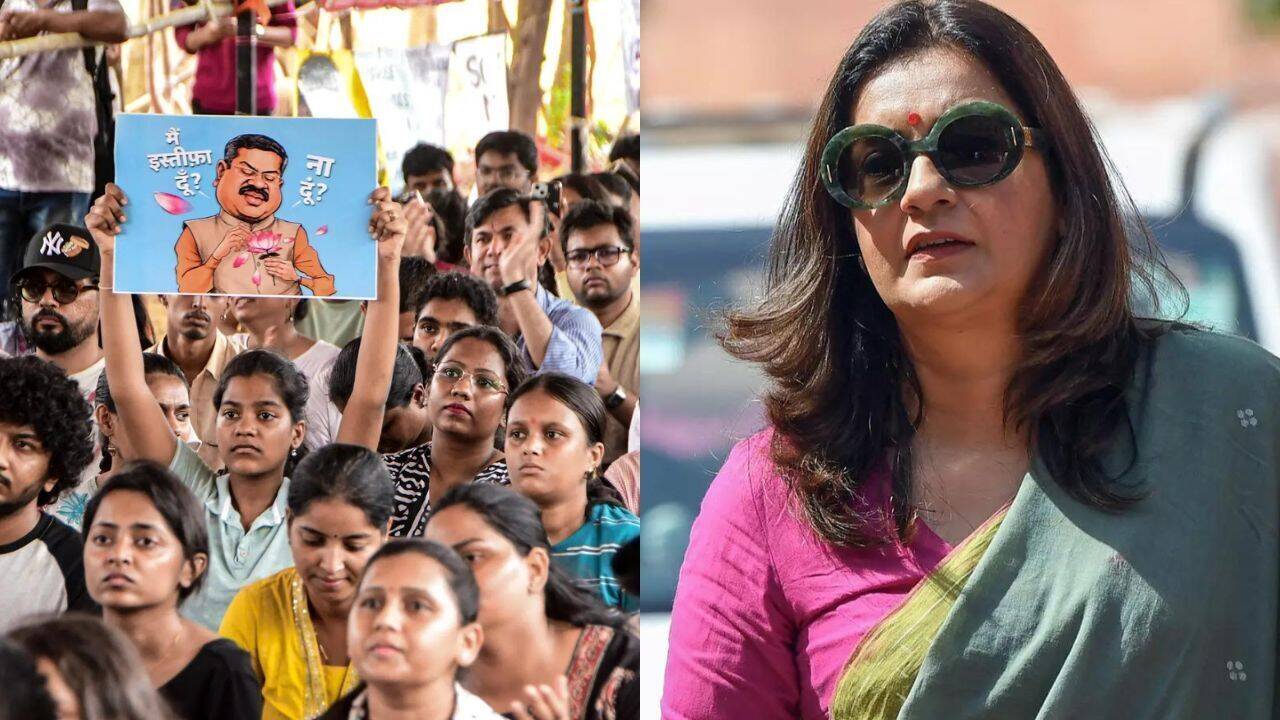
Activist Sonam Wangchuk and AISA student leaders are currently on an indefinite hunger strike at Jantar Mantar, facing critical health risks after 20 days. Despite medical warnings of potential organ failure, the protesters remain resolute in their demands, planning a march to Parliament on July 20.
The Escalating Crisis at Jantar Mantar
The ongoing protest at Jantar Mantar has reached a perilous juncture as activist Sonam Wangchuk and three student leaders from the All India Students' Association (AISA)—Manish, Neha, and Aameen—enter their third week of an indefinite hunger strike. The situation has drawn significant public attention, not only due to the stature of the individuals involved but because of the rapidly deteriorating health of the participants. Medical professionals attending to the protesters have issued grave warnings, noting that Wangchuk has lost over 9.5 kilograms and that the student activists are exhibiting signs of severe physiological stress, including dangerously low blood sugar levels.
Medical Risks and Humanitarian Concerns
The medical consensus surrounding the protest site is increasingly dire. Doctors monitoring the hunger strikers have highlighted the transition from simple malnutrition to the risk of systemic organ failure. For the AISA activists, particularly Neha, a PhD scholar at Jawaharlal Nehru University, the physical toll has been compounded by prolonged exposure and exhaustion. While Wangchuk remains "mentally alert" despite his physical decline, medical reports suggest his body has begun consuming muscle tissue for energy, a physiological precursor to critical organ damage that has prompted the Delhi High Court to intervene, mandating regular health monitoring by both Union and Delhi government authorities.
Political Demands and Institutional Friction
At the heart of these protests lies a deep-seated frustration with government accountability. The AISA-led contingent is explicitly demanding the resignation of Union Education Minister Dharmendra Pradhan, citing widespread exam leaks and systemic irregularities in the national education infrastructure. This movement, operating under the banner of the Cockroach Janta Party (CJP), uses the hunger strike as a symbolic tool to contrast what they term the "hunger for power" within the government against the physical hunger of those protesting for systemic reform. The involvement of figures like Arvind Kejriwal, who visited the site to express solidarity, underscores the broader political polarization surrounding these demands.
The July 20 Deadline: A Strategic Focal Point
Sonam Wangchuk’s stated resolve to "stay alive till July 20 at any cost" provides a specific temporal anchor for this protest. This date is not arbitrary; it coincides with the opening of the Parliament’s monsoon session and a planned peaceful march by the CJP. By linking his personal survival to this milestone, Wangchuk is attempting to maximize political pressure on the central government, forcing a response before the legislative assembly convenes. This tactic shifts the narrative from a localized hunger strike to a potential national flashpoint.
Broader Implications and Future Trends
The current standoff reflects a growing trend in Indian civil society where high-stakes, non-violent protest is used as a final recourse against institutional deadlock. Historically, hunger strikes have been potent instruments for sparking national discourse, though they carry inherent risks of tragedy. If the government fails to engage with the protesters' demands before the July 20 march, the situation could escalate into a significant civil rights challenge. The intervention of the Delhi High Court highlights the judiciary's role in attempting to mediate between the state’s political stance and the fundamental right to protest, setting a precedent for how future dissent might be managed in the capital.
Multiple Citing Sources