Canada sinks retired Boeing 737 off Vancouver Island to create artificial reef
Source Entity
TOI WORLD DESK
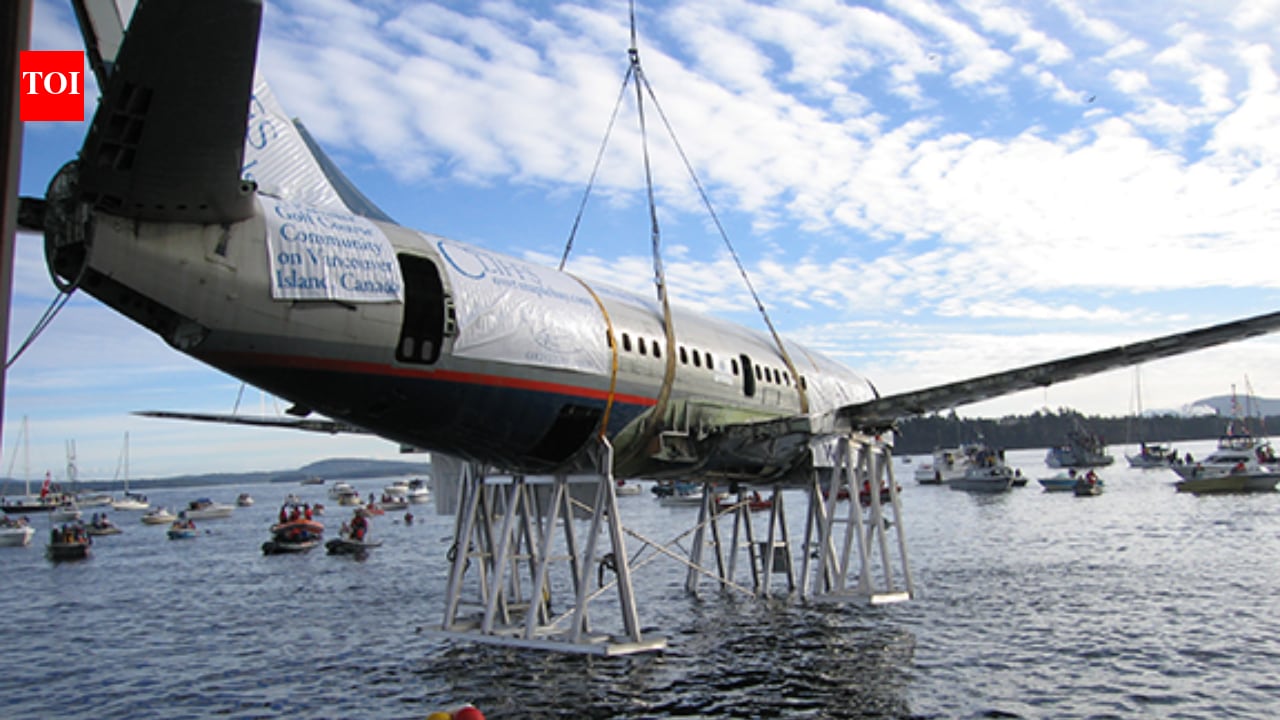
A retired Boeing 737, decommissioned by Air Canada, was sunk off the coast of Vancouver Island in 2006 to create an artificial reef. Named Xihuw, the site now hosts over a hundred marine species, successfully repurposing industrial waste into a thriving underwater ecosystem.
The Transformation of Flight into Marine Habitat
In a unique convergence of aviation history and marine biology, a retired Boeing 737 aircraft has found a second life beneath the waves off the coast of Chemainus, British Columbia. Originally part of the Canadian Airlines fleet, the jet was decommissioned due to age and structural concerns, eventually being donated by Qwest Airparts of Memphis to the Artificial Reef Society of British Columbia (ARSBC). After a meticulous cleaning process to ensure no environmental contaminants remained, the aircraft was submerged on January 14, 2006, marking the birth of an unconventional conservation project.
Ecological Restoration and Biodiversity
The site, appropriately named 'Xihuw'—the Hul'qumi'num word for the red sea urchins that historically thrived in these waters—has become a beacon for marine biodiversity. Located at a depth of nearly 90 feet, the 100-foot-long airframe provides a complex physical structure that mimics natural reef formations. This structural complexity is vital for marine life, offering protection from currents and predators, which allows a diverse range of species to establish stable populations in an area that might otherwise be barren.
Colonization by Marine Life
Over the nearly two decades it has spent underwater, the fuselage and wings of the Boeing 737 have been reclaimed by the ocean. The site now supports over a hundred different marine species, transforming the metal shell into a living, breathing ecosystem. Among the most notable inhabitants are cloud sponges, plumose anemones, and feather stars, which attach to the aircraft's surfaces. Additionally, the site has attracted octopuses and, fittingly, the red sea urchins that inspired its name, proving that industrial materials can serve as successful substrates for marine growth when properly prepared.
The Role of Artificial Reefs in Environmental Policy
The success of the Xihuw Reef highlights the growing importance of artificial reefs as a tool for marine conservation and ecosystem management. By repurposing decommissioned industrial assets, organizations like the ARSBC can create habitats that alleviate pressure on natural reefs while simultaneously solving the issue of aircraft disposal. This methodology provides a blueprint for how structural waste can be diverted from landfills and repurposed to support ecological restoration.
Long-term Implications and Future Trends
As global awareness regarding ocean health increases, projects like the Xihuw Reef offer a compelling look at the future of environmental engineering. The ability of the aircraft to sustain a thriving ecosystem nearly 20 years post-submersion demonstrates the durability and long-term viability of using such structures for habitat enhancement. Moving forward, such initiatives may become more standardized, provided they continue to meet stringent environmental safety standards, ultimately serving as a bridge between human technological advancement and the preservation of natural marine biodiversity.