The big reason Boeing’s stock is falling so hard after earnings
Source Entity
Claudia Assis
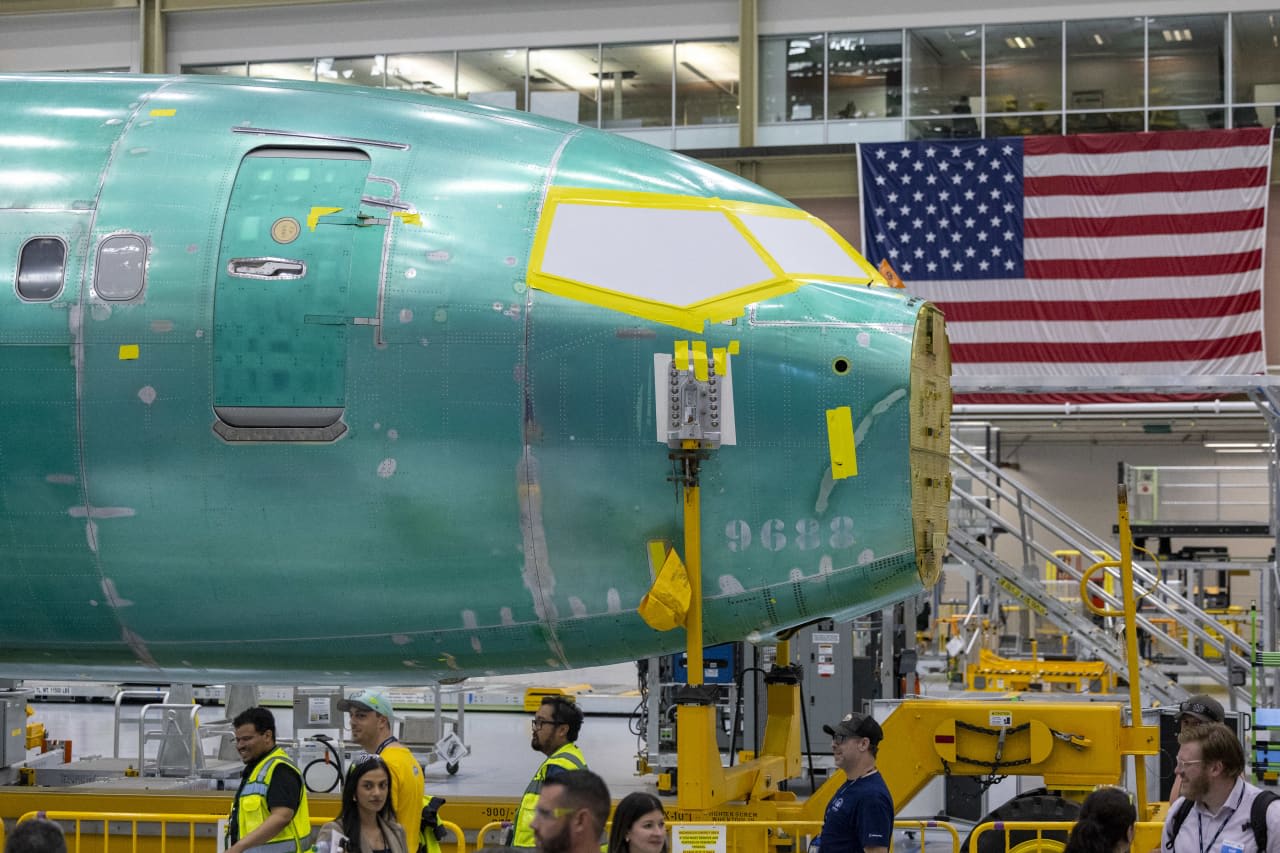
Boeing faces significant investor skepticism as it reports quarterly earnings amid production delays for the 737 Max. The company struggles to balance recovery efforts with the need to meet delivery targets after years of manufacturing crises.
Boeing's Financial Crossroads: Production Hurdles and Investor Sentiment
Boeing stands at a critical juncture as it prepares to report its latest quarterly earnings. Investors and market analysts are fixated on the company's ability to stabilize its production lines, particularly regarding the 737 Max program. The recent disclosure that Boeing will fall short of its 737 Max delivery targets has cast a long shadow over the company’s broader turnaround strategy, leading to significant downward pressure on its stock price.
The Production Bottleneck
At the core of the current crisis is the challenge of scaling manufacturing operations. Following years of safety and quality control issues, Boeing has been under intense pressure to demonstrate operational consistency. The company’s new North Line assembly line in Everett, Washington, represents a significant investment in capacity, yet the inability to meet delivery quotas suggests that structural or supply chain inefficiencies remain. For Wall Street, these production delays are not merely logistical setbacks; they are indicators of whether Boeing can effectively execute its recovery roadmap.
Financial Performance vs. Market Expectations
While Wall Street is anticipating a smaller net loss compared to the $5.34 billion deficit reported in the same period of 2025, the market is looking past basic top-line figures. The focus has shifted toward the company’s cash flow and its ability to ramp up deliveries to airlines. A smaller loss is viewed as a baseline expectation, but investors are demanding tangible proof that Boeing can move beyond its history of manufacturing crises and return to a stable, profitable cadence.
The 737 Max and Long-Term Viability
The 737 Max remains the linchpin of Boeing's commercial aviation strategy. Any deviation from delivery schedules directly impacts the balance sheets of global airlines that rely on these aircraft for their fleet modernization plans. Consequently, Boeing's failure to meet these targets ripples through the entire aviation ecosystem, eroding trust among key stakeholders and complicating the company’s efforts to regain its market position against competitors.
Future Outlook and Strategic Implications
Looking ahead, Boeing must address the fundamental disconnect between its production goals and its current delivery reality. If the company cannot demonstrate a clear path to increasing output in the coming months, it risks a sustained loss of investor confidence. The path to recovery requires not just the physical assembly of aircraft, but a rigorous commitment to operational excellence that can withstand the scrutiny of both regulators and the financial markets. The upcoming earnings briefing will be a definitive test of leadership's ability to communicate a credible, achievable future for the aerospace giant.
Verification Required?