Show HN: Bor – Open-source policy management for Linux desktops
Source Entity
Hacker News
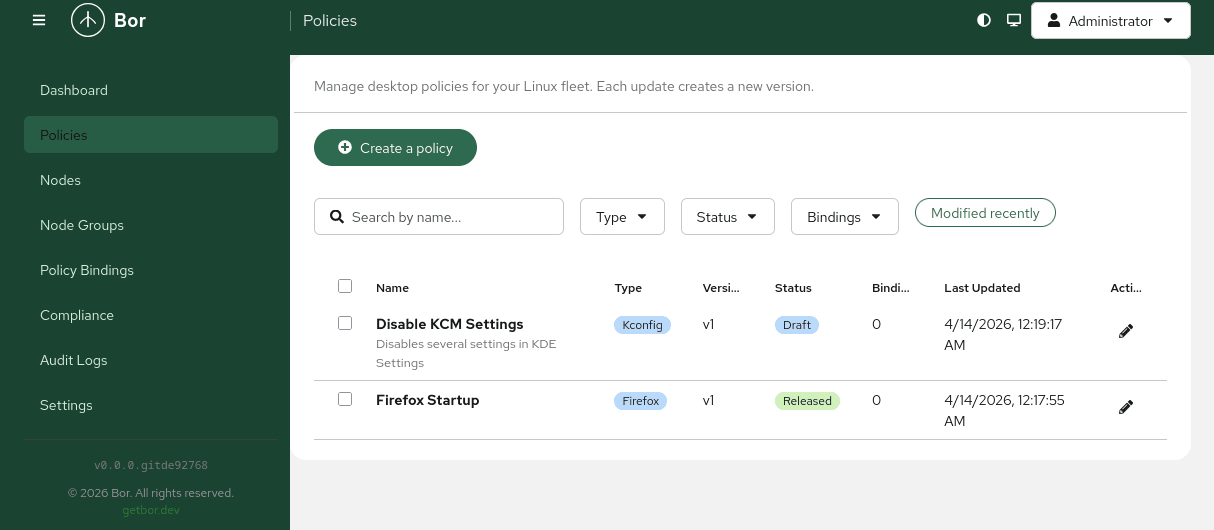
Bor v0.8.0 has been released, introducing centralized policy management for Linux desktops including support for Thunderbird, Edge, and Firewalld. The update features a redesigned web UI and enhanced security mechanisms for policy enforcement.
Evolution of Linux Desktop Management: The Bor v0.8.0 Update
The release of Bor v0.8.0 marks a significant milestone in the maturation of Linux desktop management tools. By expanding its policy engine to include Thunderbird, Microsoft Edge for Business, and Firewalld zones, Bor is positioning itself as a comprehensive solution for enterprise-grade Linux environments. This shift addresses a historical pain point for system administrators who struggle to maintain consistent security postures across heterogeneous desktop distributions.
Expanding the Policy Ecosystem
The integration of Thunderbird policy management is particularly noteworthy. By leveraging the same mechanism utilized by Firefox ESR, Bor allows administrators to push consistent configurations via the policies.json file. This approach is highly effective because it treats policy management as an additive process; when a policy is removed, the system intelligently reverts to its previous state, maintaining configuration integrity. Furthermore, the tool's ability to detect and enforce policies across different package formats—specifically Flatpak, RPM, and DEB—demonstrates a sophisticated understanding of the fragmented Linux packaging landscape.
Security Hardening and Tamper Protection
Security is at the heart of the v0.8.0 release, highlighted by a dedicated security hardening pass and the implementation of a 'tamper watcher.' In corporate environments, the risk of end-user configuration drift or accidental misconfiguration is high. By monitoring managed files for external edits and immediately restoring the defined policy, Bor mitigates the risk of unauthorized deviations. This proactive stance on configuration enforcement is essential for compliance-heavy industries that require strict adherence to security protocols on all endpoints.
UI Overhaul and RBAC Advancements
Beyond the backend improvements, the complete overhaul of the web UI significantly lowers the barrier to entry for IT staff. A intuitive policy editor within the web interface allows for granular control without requiring deep CLI expertise. Coupled with the introduction of finer-grained Role-Based Access Control (RBAC), organizations can now delegate administrative tasks with surgical precision, ensuring that only authorized personnel can alter critical security policies.
Broader Implications for Linux in the Enterprise
As Linux desktops continue to gain traction in professional settings, tools like Bor are becoming indispensable. Historically, Linux management was often handled through ad-hoc scripts or complex configuration management systems like Ansible or Puppet. Bor’s dedicated approach provides a more specialized, user-friendly, and lightweight alternative for desktop-specific policy enforcement. The focus on cross-distribution support suggests that Bor is scaling to meet the needs of diverse IT departments that rely on mixed-ecosystem deployments.
Future Trends and Conclusion
The trajectory of Bor suggests a future where Linux desktop administration mirrors the seamless management experiences found in Windows via Active Directory or macOS via MDM (Mobile Device Management). By focusing on standardized protocols and robust local enforcement, Bor is helping to bridge the gap between open-source flexibility and enterprise-grade stability. As version 0.8.0 continues to be adopted, we can expect further integrations and perhaps even deeper cloud-native policy synchronization features.