'List judges linked to BJP, Trinamool': Calcutta HC to Abhishek Banerjee
Source Entity
SRISHTI LAKHOTIA AND SUBRATA CHATTORAJ
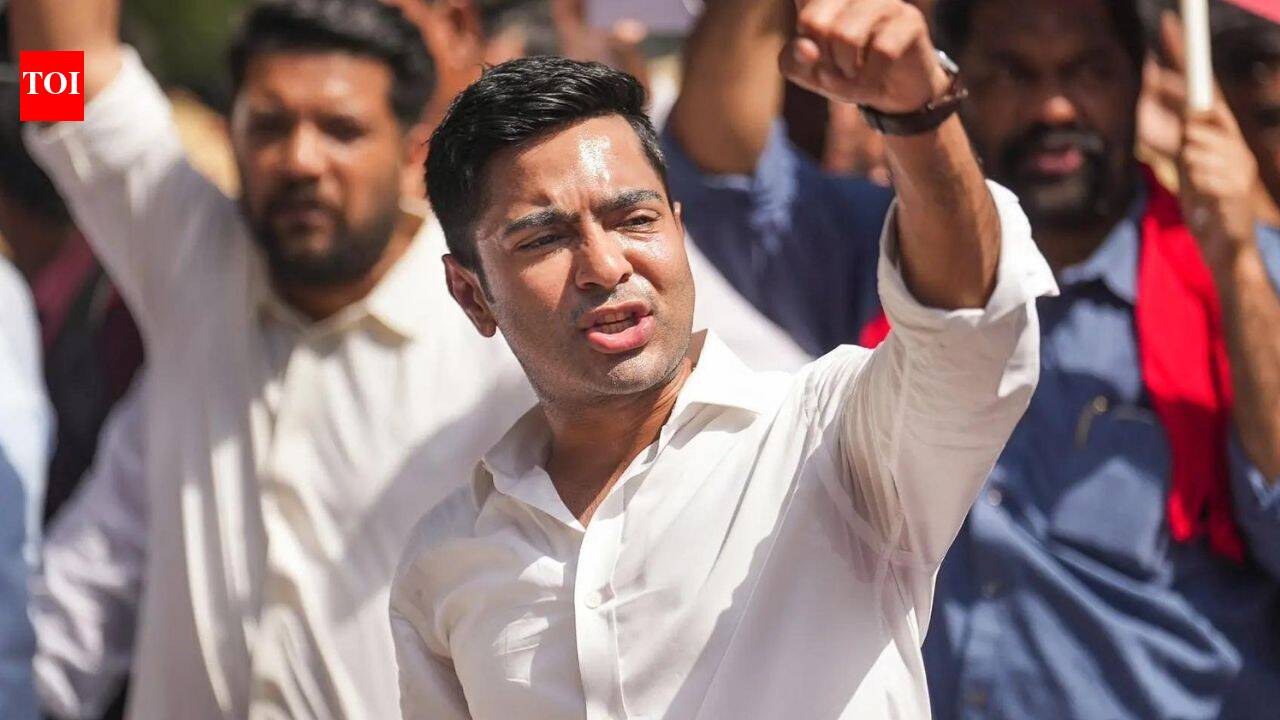
The Calcutta High Court has challenged Trinamool MP Abhishek Banerjee to identify judges he claims are biased toward political parties. This follows Banerjee's public remarks on judicial impartiality amid ongoing concerns regarding his personal security.
Judicial Scrutiny and Political Allegations
The recent directive from the Calcutta High Court marks a significant escalation in the ongoing friction between political figures and the judiciary. After Trinamool MP Abhishek Banerjee publicly suggested that certain judges within the system maintain political allegiances to either the BJP or the Trinamool Congress, the court took a firm stance. By demanding that Banerjee provide a concrete list of the judges he claims are biased, the bench has effectively shifted the burden of proof onto the MP to substantiate his allegations, moving the conversation from speculative rhetoric to legal accountability.
The Context of Political Polarization
Abhishek Banerjee’s comments occur against a backdrop of heightened political volatility following recent electoral shifts. The MP has reported facing security downgrades and multiple physical attacks, which he frames within the context of a hostile political environment. These claims of insecurity are not merely personal grievances; they represent a broader narrative of political victimization that often characterizes post-election periods in West Bengal. The intersection of these security concerns with his allegations of judicial bias underscores the deep-seated mistrust that currently permeates the region's political landscape.
Judicial Independence Under Fire
At the heart of this confrontation is the principle of judicial independence. When a high-profile politician questions the neutrality of the bench, it risks undermining public confidence in the rule of law. Justice Krishna Rao’s intervention serves as a protective measure for the institution. By challenging the MP to name names, the court is forcing a direct confrontation with the reality of his claims, signaling that unsubstantiated assertions regarding the integrity of the judicial process will not be tolerated without legal verification.
Security and State Responsibility
Beyond the judicial debate, the Calcutta High Court also addressed the tangible issue of Banerjee’s safety. Justice Krishna Rao explicitly criticized the government's handling of the security protocols surrounding the MP. This highlights a critical oversight in the state's duty to provide protection to public representatives regardless of their political affiliation. The court’s insistence on prompt action regarding these security failures suggests that while it demands accountability from Banerjee, it is equally prepared to hold the administration accountable for its failure to maintain the safety of political figures.
Broader Implications and Future Trends
This incident points toward a growing trend of political discourse leaking into the judicial sphere, where legal institutions are increasingly treated as extensions of political combat. If such accusations continue to proliferate without evidence, the judiciary may be forced to adopt more stringent measures against public figures to prevent the erosion of institutional trust. Conversely, the court's focus on the government's security failures underscores that the judiciary remains a vital check on state administrative performance, even when political rhetoric threatens to cloud the separation of powers.
Conclusion
The interaction between the Calcutta High Court and Abhishek Banerjee serves as a reminder of the delicate balance between free political expression and the necessity of maintaining institutional integrity. Whether Banerjee can substantiate his claims remains to be seen, but the court’s demand for transparency has fundamentally altered the trajectory of this dispute, moving it from the realm of political posturing to the scrutiny of the courtroom.