The World's 2,400 Castles
Source Entity
Hacker News
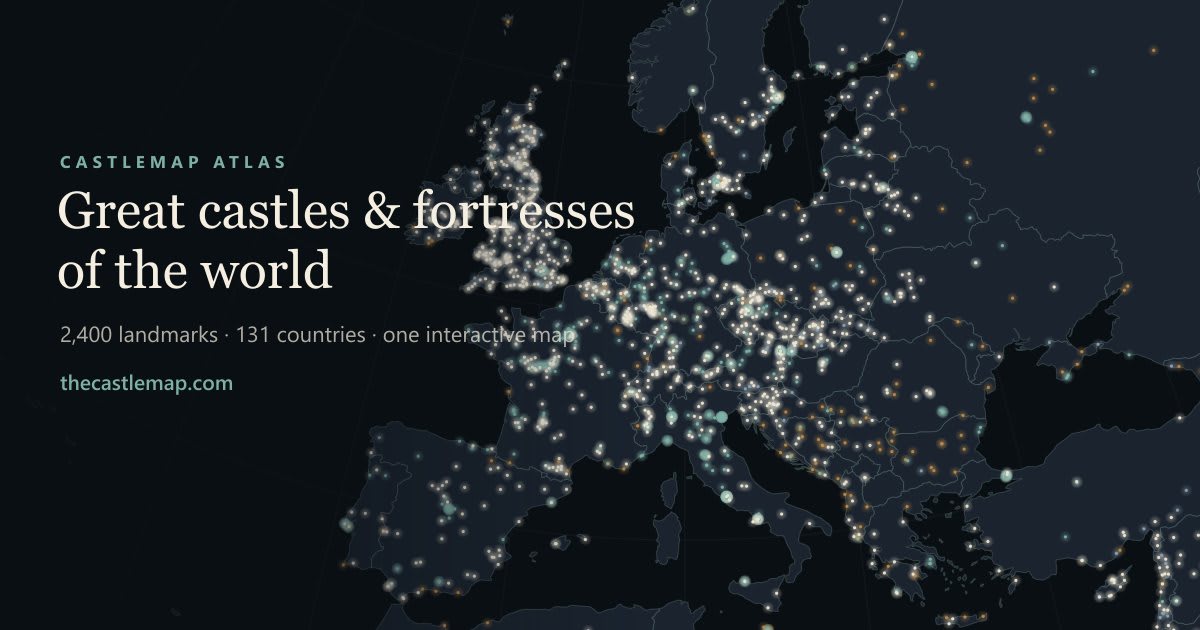
Castlemap is a comprehensive, free interactive digital tool cataloging 2,435 castles and fortresses across 129 countries. It offers an immersive night-map interface that allows users to explore global architectural history through photos and detailed facts.
Exploring Global Heritage: The Castlemap Initiative
The emergence of digital archives has fundamentally changed how historians and enthusiasts interact with global heritage. Castlemap stands out as a significant contribution to this field, providing a free, interactive map that catalogs 2,435 castles, fortresses, and palaces across 129 countries. By leveraging modern mapping technology, the platform bridges the gap between historical curiosity and geographic data, allowing users to explore the world's most iconic strongholds through a night-map interface.
A Quantitative Look at Architectural History
The data provided by Castlemap offers a unique perspective on the distribution of power and defense throughout history. With France (183), Italy (179), and Germany (176) leading the count, the map highlights the dense concentration of medieval fortifications in Western Europe. This distribution reflects centuries of feudal conflict, territorial disputes, and the evolution of monarchical power, providing a clear visual representation of where historical defensive architecture was most prevalent.
Global Breadth and Cultural Diversity
Beyond Europe, the map underscores the global nature of defensive architecture. The inclusion of Japan (101) and India (80) in the top tier of the list illustrates that the concept of the "castle" transcends Western medieval traditions. From Japanese hilltop citadels to the grand palaces and forts of the Indian subcontinent, the platform serves as a tool for comparative cultural study, showing how different civilizations addressed the necessity of fortification and royal residence.
Digital Preservation and Accessibility
In an era where physical heritage sites are increasingly vulnerable to environmental factors and urban development, digital maps like Castlemap play a vital role in preservation. By providing exact locations, high-quality photos, and detailed histories for each entry, the project ensures that these landmarks remain accessible to the public. It moves beyond a static database, offering an engaging user experience that encourages deeper research into individual historical sites.
Future Trends in Digital Mapping
As interest in "heritage tourism" grows, platforms like Castlemap are likely to become essential resources for travelers and researchers alike. The ability to zoom into specific regions and retrieve instant facts creates a streamlined workflow for planning educational journeys or verifying historical data. Future iterations of such maps might integrate augmented reality or historical timeline sliders, further enhancing the depth of information available to the public.
Conclusion
Castlemap serves as a bridge between the past and the digital present. By aggregating thousands of global landmarks into a single, user-friendly interface, it democratizes access to historical knowledge. Whether for academic interest or casual exploration, this tool provides a comprehensive snapshot of human ingenuity, power, and architecture, cementing its place as a significant digital repository for world history.