Gritt exits stealth with $34 million for robots to build solar plants—then, everything else
Source Entity
Tim Fernholz
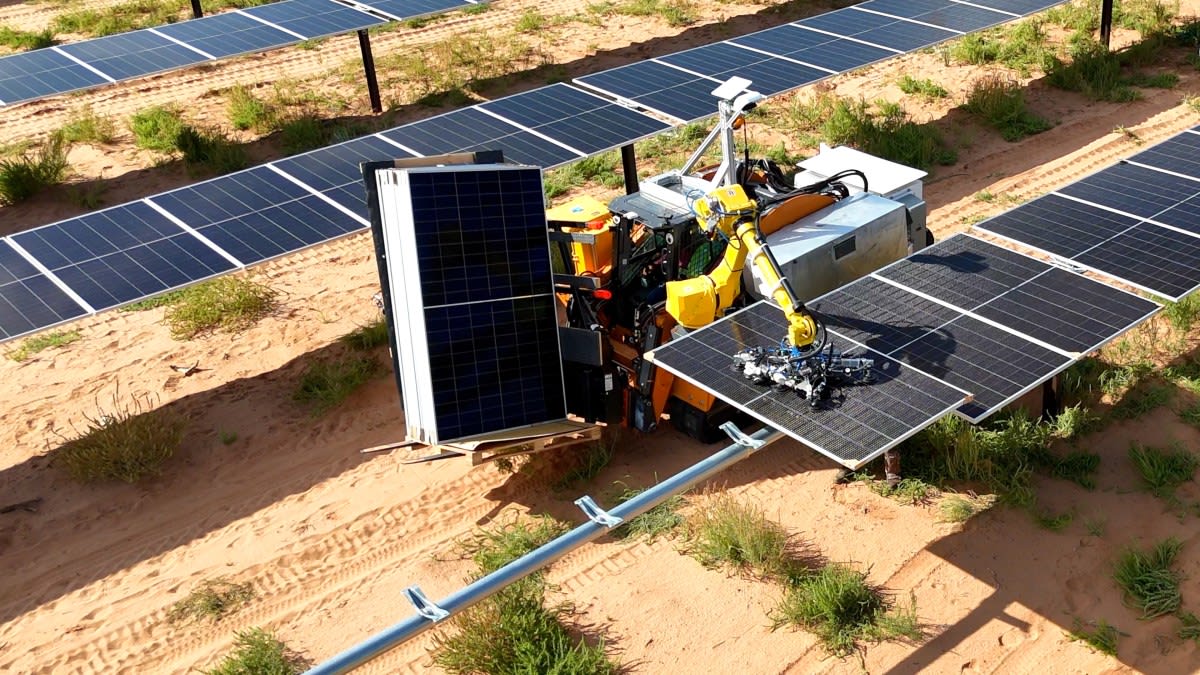
Robotics startup Gritt has emerged from stealth with $34 million in funding to automate solar farm construction. By leveraging new AI models, the company aims to solve the critical labor shortage currently hindering global renewable energy deployment.
The Robotics Revolution in Renewable Energy
As the global transition toward renewable energy accelerates, the physical infrastructure required to support this shift has become a significant bottleneck. The solar energy build-out is currently one of the most critical industrial undertakings on Earth, driven by the dual imperatives of achieving energy independence and mitigating the existential threats of climate change. However, the sheer scale of the required installations has outpaced the available human labor force, creating a structural deficit in the construction sector.
Bridging the Labor Gap with Automation
The fundamental challenge facing the solar industry is a labor market supply-demand mismatch. While the ambition to deploy vast arrays of solar panels and battery storage systems is high, the manual labor required for site preparation, installation, and assembly is increasingly difficult to source. This is where Gritt, a new startup founded by Carnegie Mellon-trained roboticists Puneet Puri and Vishal Dugar, intends to intervene. By focusing on automating the most arduous and repetitive tasks on construction sites, Gritt aims to alleviate the pressure on human crews and expedite project timelines.
The AI-Driven Shift in Robotics
Historically, industrial robotics have been relegated to highly structured environments—such as automotive assembly lines—where every movement is predictable and repetitive. Unstructured environments, like active construction sites, have long been considered too complex for traditional robotics to navigate effectively. However, the rapid advancement of the latest generation of AI models has fundamentally changed this equation. These models allow robots to process real-time environmental data, enabling them to make autonomous decisions in dynamic settings that would have previously rendered automated systems immobile.
Strategic Funding and Future Outlook
Gritt’s emergence from stealth mode, bolstered by a significant $34 million in total funding including a $26 million Series A round, signals strong investor confidence in the intersection of robotics and green infrastructure. This capital infusion is intended to scale their technology beyond niche applications, with the long-term vision of automating not just solar installations, but construction tasks across a broader range of industrial sectors. If successful, this could set a new standard for how large-scale infrastructure projects are managed.
Broader Implications and Sustainability
The success of firms like Gritt carries profound implications for the speed of the global energy transition. If the cost and time associated with solar farm construction can be reduced through robotics, the economic feasibility of renewable energy projects improves significantly. This efficiency could accelerate the timeline for countries to reach net-zero goals, effectively turning technological innovation into a primary driver of environmental policy implementation. As the company scales, its impact will be measured not just by the robots it deploys, but by the gigawatts of clean energy brought online faster than previously thought possible.