Census advanced in four poll-bound States, deferred in Manipur
Source Entity
India Latest News: Top National Headlines Today & Breaking News | The Hindu
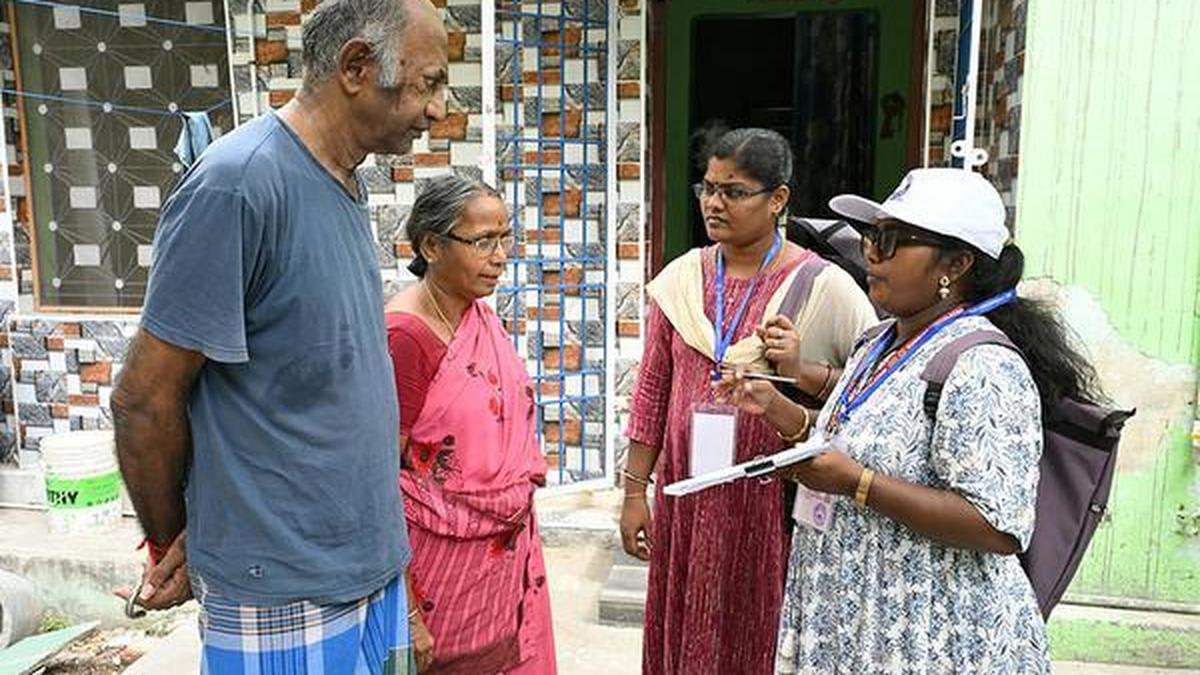
The 2027 Census has commenced in snowbound regions, with the government preponing enumeration in four poll-bound states. This has sparked opposition concerns regarding potential data misuse and its linkage to the National Population Register.
The Commencement of Census 2027: A Complex Administrative Undertaking
The initiation of the decennial headcount in India’s snowbound regions, including Ladakh, Jammu and Kashmir, Himachal Pradesh, and Uttarakhand, marks the beginning of the long-awaited 2027 Census. After a significant delay of six years, the government has begun the process of population enumeration, setting a reference date of January 5, 2027, for several states. This exercise, traditionally a statistical cornerstone for planning and resource allocation, has now entered a period of intense scrutiny due to its timing and the inclusion of new, sensitive data parameters.
Strategic Preponing in Poll-Bound States
A notable development in this cycle is the government's decision to advance the enumeration phase in Uttar Pradesh, Punjab, Goa, and Uttarakhand. By scheduling this ahead of the nationwide February 2027 timeline, the administration has introduced a self-enumeration facility available from November 16 to November 30, 2026. This tactical shift suggests an alignment between the census timeline and upcoming assembly elections, ensuring that the enumeration is completed before the electoral cycle reaches its peak intensity.
The Controversy Over Methodology and Intent
The inclusion of 40 questions in the new questionnaire, featuring an open-ended field for caste details, has become a lightning rod for political debate. For the first time in Independent India, the census will document caste data beyond the traditional Scheduled Caste and Scheduled Tribe categories. While supporters view this as essential for evidence-based policy, critics argue that the methodology is opaque, raising fears that the census is becoming a "backdoor" for the National Population Register (NPR) and broader state surveillance rather than functioning purely as a statistical tool.
Privacy Concerns and Legislative Protections
At the heart of the opposition’s charges is the potential for data integration that could compromise individual privacy. While the Census Act provides legal protection for personal information collected during the exercise, skeptics remain concerned that the granular nature of the new data could be repurposed. The debate highlights the tension between the state's need for comprehensive demographic information and the public's right to digital and personal privacy in an era where data is increasingly viewed as a tool for governance and control.
Regional Exceptions and Future Implications
The complexity of this census is further underscored by the decision to defer the exercise in Manipur indefinitely. This decision reflects the volatile regional climate and the specific demands for the National Register of Citizens (NRC) in that state. As the nation moves toward the nationwide rollout in February 2027, the success of the census will depend on the government's ability to balance its administrative objectives with the constitutional and privacy-related concerns raised by opposition parties and civil society experts.
Concluding Summary
The 2027 Census stands as a pivotal administrative event, complicated by its six-year delay and the volatile political climate of the states involved. Whether the government can successfully navigate the allegations of "nefarious purposes" and maintain the census’s integrity as a neutral, statistical instrument remains to be seen. As the enumeration progresses, the focus will remain on how the collected data is utilized and whether the safeguards provided by the Census Act will be sufficient to assuage public and political apprehension.
Multiple Citing Sources
Verification Required?