Centre committed to making villages self-reliant: Union MoS Kamlesh Paswan
Source Entity
Latest News: Today's Latest News Headlines from India & World | Hindustan Times | Hindustan Times
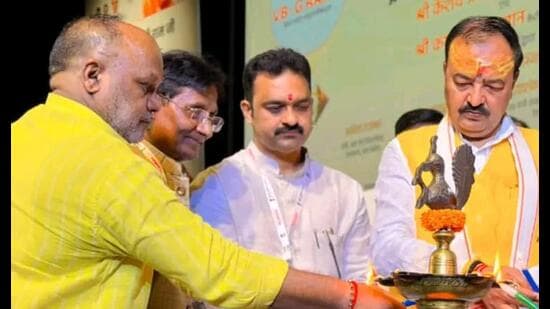
Union Minister of State for Rural Development Kamlesh Paswan and Uttar Pradesh Deputy CM Keshav Prasad Maurya reaffirmed the central government's commitment to rural self-reliance during a Panch Sammelan for village heads in Varanasi.
Strengthening the Grassroots: The Drive for Self-Reliant Villages
In a significant move to bolster rural infrastructure and governance, Union Minister of State (MoS) for Rural Development Kamlesh Paswan and Uttar Pradesh Deputy Chief Minister Keshav Prasad Maurya addressed a Panch Sammelan in Varanasi. The primary focus of the gathering was the central government's unwavering commitment to transforming Indian villages into self-reliant entities. By engaging directly with village heads (Pradhans), the government aims to bridge the gap between policy formulation at the center and execution at the grassroots level, ensuring that the vision of rural autonomy is realized through active local participation.
The Strategic Role of the Panchayati Raj System
The decision to hold this summit for village heads underscores the critical importance of the Panchayati Raj system in India's developmental trajectory. Village heads serve as the primary conduit between the state machinery and the rural populace. By empowering these local leaders with clear directives and resources, the government is employing a 'bottom-up' approach to development. This ensures that the specific needs of each village—whether they pertain to irrigation, sanitation, or primary education—are addressed based on local realities rather than generic top-down mandates. The emphasis on the Panch Sammelan suggests a push for more accountable and transparent local governance.
Conceptualizing 'Atmanirbhar Grams' (Self-Reliant Villages)
The drive for self-reliance in villages is a localized extension of the broader 'Atmanirbhar Bharat' (Self-reliant India) mission. In the context of rural development, self-reliance implies the creation of sustainable local economies where villages are not solely dependent on urban centers for employment and essential services. This involves promoting cottage industries, enhancing agricultural productivity through modern technology, and developing local markets. By fostering entrepreneurship within the village ecosystem, the government hopes to create a cycle of wealth generation and reinvestment that remains within the rural community.
The Significance of Varanasi as a Hub
Holding this event in Varanasi is strategically significant. As the parliamentary constituency of Prime Minister Narendra Modi and a cultural epicenter of India, Varanasi often serves as a blueprint for the government's urban and rural integration projects. The focus on rural development in this region sends a strong signal to other districts across Uttar Pradesh and India that the administration is prioritizing the 'last mile' of delivery. The synergy between the Union MoS and the State Deputy CM during the event further highlights the necessity of cooperative federalism, where the central and state governments align their goals to accelerate rural transformation.
Addressing the Challenge of Urban Migration
One of the deepest implications of making villages self-reliant is the potential to curb forced urban migration. For decades, the lack of economic opportunities in rural areas has led to an over-congestion of cities, straining urban infrastructure and creating socio-economic disparities. By investing in rural self-reliance, the government is attempting to make village life economically viable for the youth. If quality education, healthcare, and high-value employment are available locally, the demographic shift toward cities can be balanced, leading to a more equitable distribution of the population and resources across the country.
Future Outlook and Expected Trends
Looking forward, it is expected that this commitment will translate into increased funding for rural startups and a more aggressive rollout of digital infrastructure in remote areas. The integration of digital governance (e-Gram Swaraj) will likely play a pivotal role in monitoring the progress of the self-reliance goals. As more villages achieve autonomy in energy (via solar) and water management, the dependence on central grids will decrease, making the rural economy more resilient to external shocks. The success of this initiative will ultimately depend on the ability of village heads to implement these visions with integrity and local support.
Conclusion
The address by Kamlesh Paswan and Keshav Prasad Maurya at the Varanasi Panch Sammelan marks a concerted effort to redefine the rural landscape of India. By focusing on self-reliance, the government is not just providing aid, but is attempting to build capacity and autonomy within the village structure. This strategic pivot toward empowered local leadership and sustainable rural economies is essential for the long-term stability and growth of the Indian nation.
Verification Required?