Centre puts Delhi hospitals on alert as Sonam Wangchuk fast enters third week
Source Entity
ANUJA JAISWAL
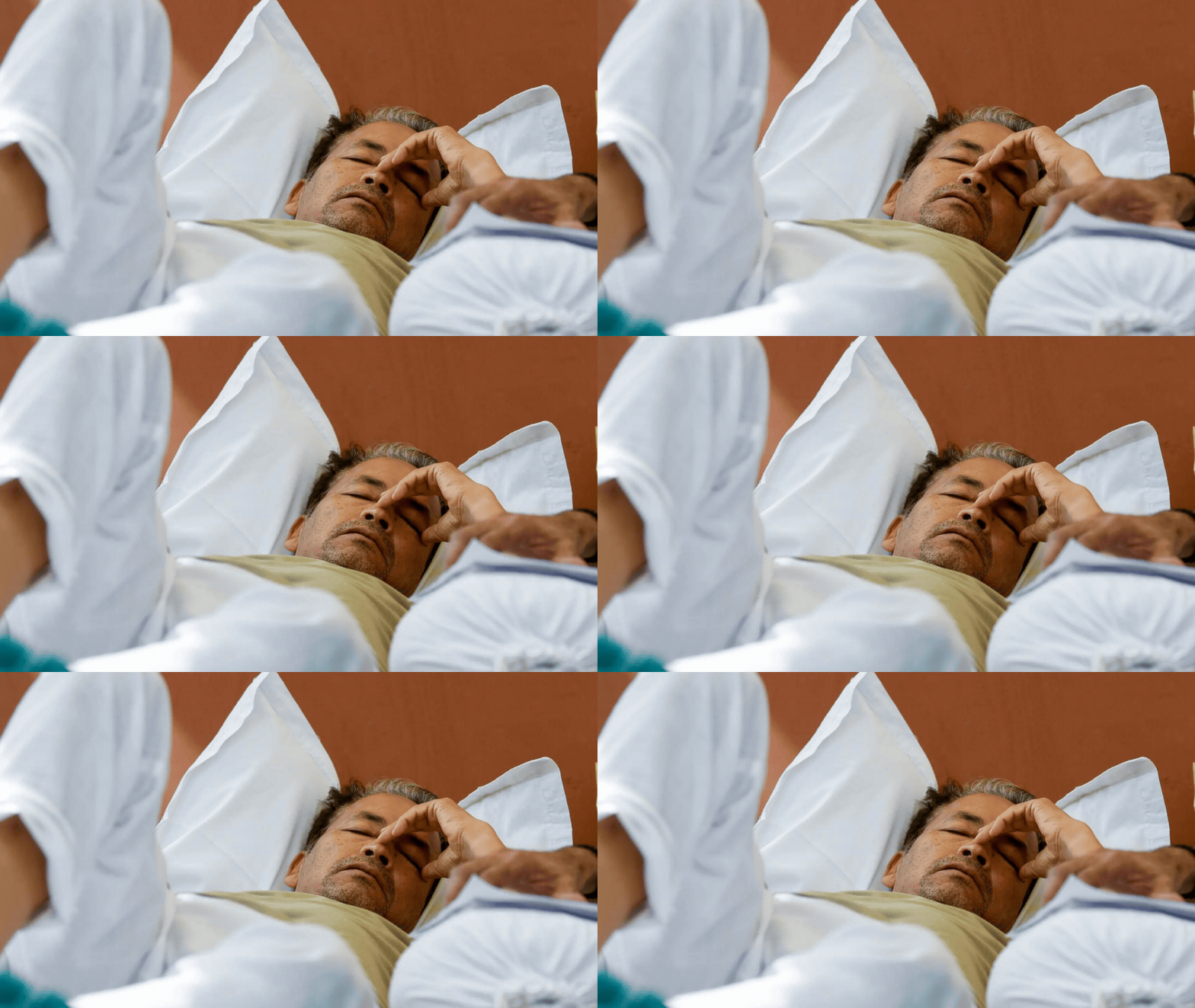
The Indian central government has placed Delhi hospitals on high alert, designating Dr Ram Manohar Lohia Hospital as the nodal facility, to monitor the health of activist Sonam Wangchuk as his hunger strike enters its third week.
Government Mobilizes Medical Response for Sonam Wangchuk's Hunger Strike
As the hunger strike led by prominent environmentalist and educator Sonam Wangchuk enters its third week, the Indian central government has implemented a rigorous medical surveillance protocol. The mobilization of central government hospitals in Delhi signifies a transition from passive monitoring to an active emergency readiness state. This move is primarily driven by the physiological risks associated with prolonged fasting, which can lead to critical organ failure and metabolic instability, necessitating a coordinated healthcare response to prevent a medical catastrophe.
Stringent Medical Monitoring Protocols
To ensure the safety of the hunger strikers, the government has mandated twice-daily health screenings. This frequency is critical because, by the third week of a fast, the body enters a state of advanced ketosis and muscle wasting, where vital signs can fluctuate rapidly. Dr Ram Manohar Lohia (RML) Hospital has been designated as the nodal facility, meaning it will serve as the primary hub for all specialized care and emergency interventions. The deployment of advanced life support (ALS) ambulances directly at the protest site further indicates that the government is preparing for potential sudden cardiac or respiratory emergencies that require immediate stabilization before transport.
Administrative Coordination and Oversight
The current medical arrangement is not merely a healthcare initiative but a coordinated administrative action involving the Delhi Police and the central ministry. The request for these measures originated from the Delhi Police, who are responsible for the security and management of the protest site. By requiring medical teams to submit daily health status reports directly to the ministry, the government is establishing a real-time feedback loop. This allows policymakers to monitor the physical condition of Wangchuk and other strikers, potentially using these health updates as a barometer for the urgency of political negotiations.
Contextual Background: The Ladakh Struggle
To understand the gravity of this medical alert, one must look at the catalyst: Sonam Wangchuk's advocacy for the people of Ladakh. Wangchuk has been a leading voice demanding the inclusion of Ladakh in the Sixth Schedule of the Indian Constitution, which would provide autonomous protections for tribal lands and cultural identity. The transition of Ladakh from a state of Jammu and Kashmir to a Union Territory in 2019 left a vacuum in local governance that activists argue must be filled with constitutional safeguards. His fast is a non-violent tool of political leverage, designed to draw national attention to the fragile ecology and political aspirations of the high-altitude region.
Broader Implications and Future Trends
The government's decision to provide high-level medical support serves a dual purpose. While it fulfills the state's humanitarian obligation to prevent loss of life during a public protest, it also mitigates the political risk of a death in custody or during a state-monitored fast, which could trigger widespread unrest. Historically, hunger strikes in India have been potent political instruments; however, the institutionalization of their medical care—as seen here with the RML Hospital designation—shows a modern administrative approach to managing high-stakes civil disobedience.
Conclusion
The placement of Delhi's medical infrastructure on alert underscores the critical juncture of Sonam Wangchuk's protest. With the nodal designation of RML Hospital and the presence of ALS ambulances, the state has built a comprehensive safety net. While these measures ensure the physical survival of the protesters, the underlying political tensions regarding Ladakh's autonomy remain unresolved, suggesting that the medical alert will persist until a political breakthrough is achieved.