Four swordsmen: How China is reshaping its fighter jet fleet
Source Entity
TOI DEFENCE DESK
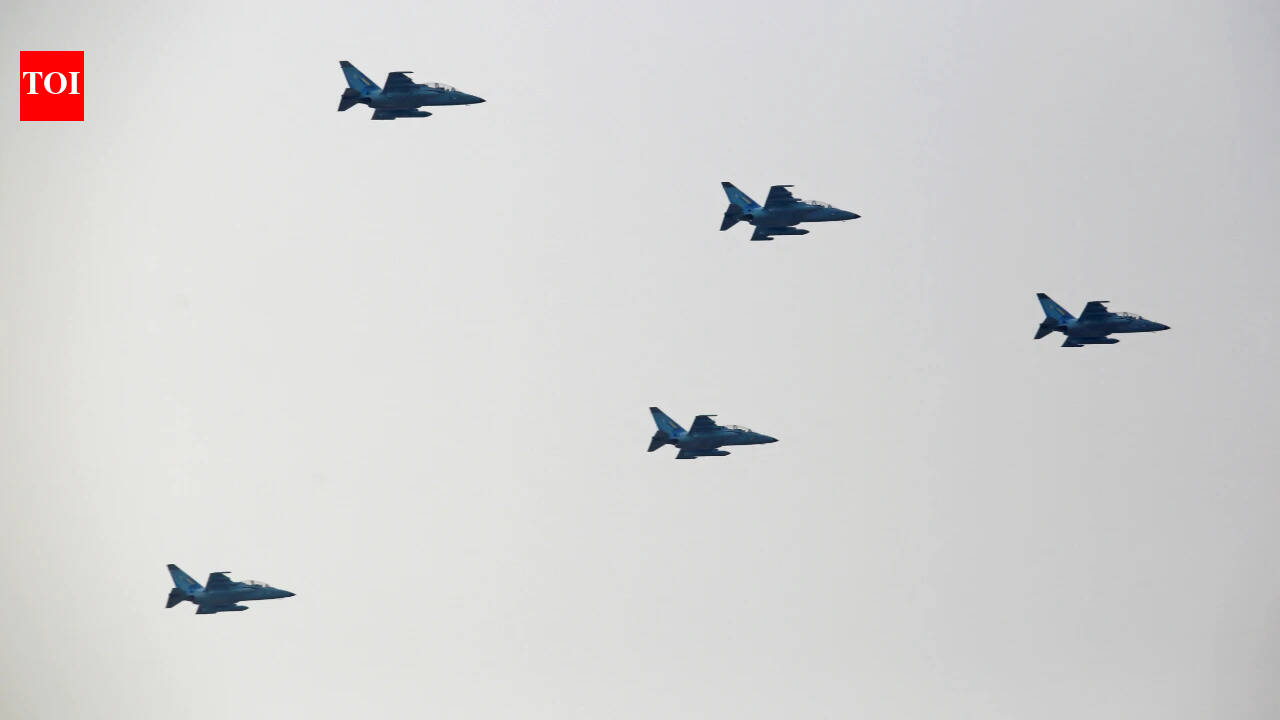
China has evolved its air force strategy by introducing the J-35A stealth fighter, forming a new 'four swordsmen' fleet alongside the J-20, J-16, and J-10C. This modernization positions China as the second nation globally to operate two distinct stealth fighter types.
The Evolution of China's Aerial Dominance: The 'Four Swordsmen'
The People's Liberation Army Air Force (PLAAF) has officially transitioned its strategic aerial posture from the established 'three swordsmen' concept to a more robust 'four swordsmen' formation. This shift, headlined by the public debut of the J-35A stealth fighter at the Zhuhai Airshow on November 12, 2024, signals a significant leap in China's military modernization. By incorporating the J-35A alongside the J-20, J-16, and J-10C, Beijing is creating a multi-layered aerial capability designed to achieve air superiority in diverse combat scenarios.
Understanding the 'Four Swordsmen' Composition
Each aircraft in this new quartet fulfills a specific tactical requirement within the PLAAF. The J-20 remains the cornerstone of China’s long-range stealth superiority, while the J-35A provides a versatile, medium-sized stealth platform that enhances the fleet’s operational flexibility. Complementing these stealth assets are the J-16, a heavy-duty multi-role strike fighter, and the J-10C, an agile, advanced fourth-generation fighter. Together, this mix allows the PLAAF to balance raw stealth capabilities with payload capacity and maneuverability.
Strategic Implications of the J-35A
The induction of the J-35A is a historic milestone, as it makes China the only country outside of the United States to operate two distinct types of stealth fighter aircraft simultaneously. This development serves as a direct response to the global push toward sixth-generation fighter technology. By fielding a dual-stealth fleet, China aims to mitigate technological risks, ensure operational redundancy, and challenge the traditional air superiority models that have dominated regional security dynamics for decades.
Modernization and Global Competition
The evolution of the 'four swordsmen' strategy is deeply rooted in the broader geopolitical competition currently unfolding in the Indo-Pacific. As nations race to integrate artificial intelligence, advanced sensor fusion, and long-range precision weaponry into their air wings, China’s ability to mass-produce and deploy these four platforms reflects a maturing domestic aerospace industrial base. This modernization effort is not merely about numerical expansion but about creating a sophisticated, interconnected air combat system capable of contesting sophisticated defense networks.
Future Trends in Aerial Warfare
Looking forward, the 'four swordsmen' framework suggests that the PLAAF is preparing for a future defined by high-intensity, integrated warfare. The integration of the J-35A into the broader fleet architecture indicates that China is likely focusing on seamless interoperability between its legacy and next-generation platforms. As the global focus shifts toward sixth-generation fighters, China’s current strategy provides a scalable blueprint that could influence regional air doctrine and force development among neighboring nations for years to come.