China's industrial profit growth moderates as exports cushion uneven recovery
Source Entity
Yahoo Finance
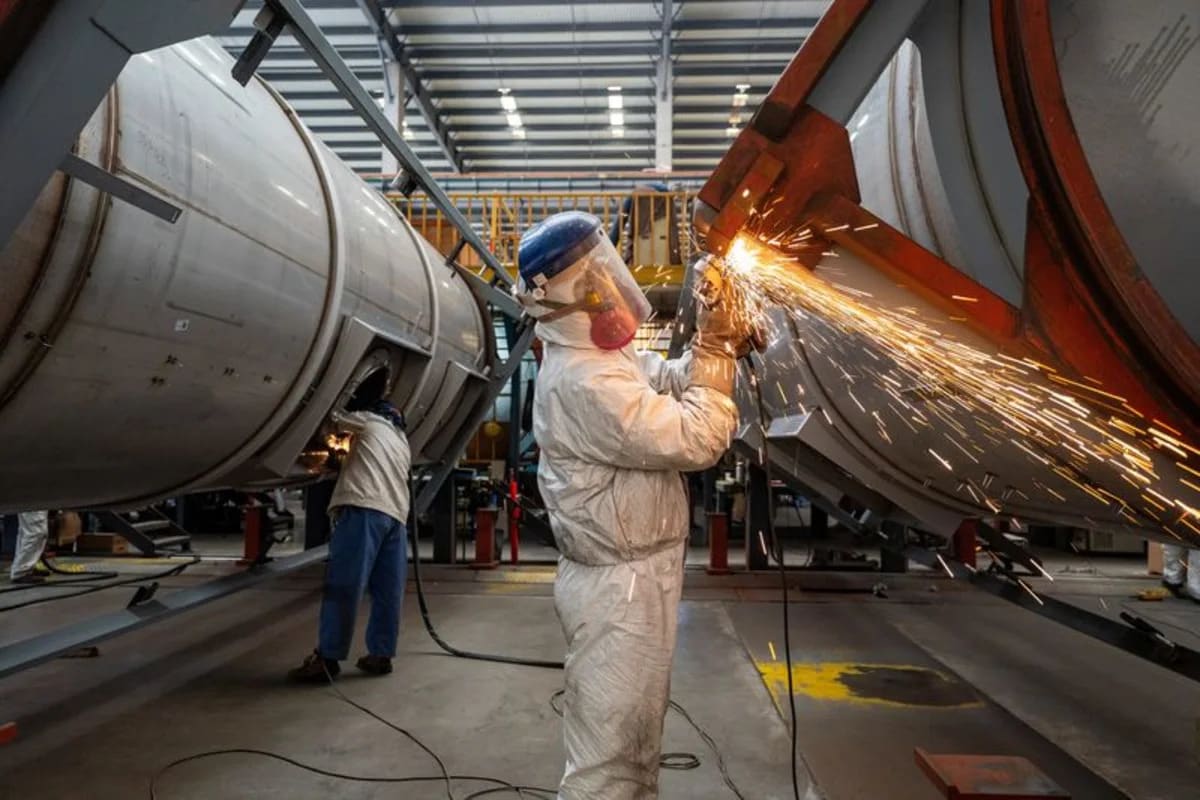
China's industrial profits showed moderated growth in June as resilient exports balanced weak domestic demand. The data highlights an uneven economic recovery, prompting calls for further policy intervention to address structural imbalances.
China’s Industrial Sector: A Tale of Two Economies
Recent data from Beijing indicates that profits for China’s industrial firms grew by 15.1% in June, a notable deceleration from the 21.1% growth recorded in May. While this still represents a solid expansion, the downward trend underscores the precarious nature of the nation’s post-pandemic recovery. The discrepancy between industrial output and broader economic health highlights an increasingly bifurcated landscape where global demand sustains production, but local stability remains elusive.
The Export Engine vs. Domestic Drag
The fundamental narrative driving China’s economic performance is the heavy reliance on exports and industrial production to offset domestic stagnation. While international demand for Chinese goods remains robust, providing a crucial cushion for the world’s second-largest economy, this export-led growth is insufficient to compensate for the deep-seated malaise in local consumption. The persistent weakness in the property sector, a traditional pillar of Chinese growth, continues to act as a significant anchor on overall GDP.
Structural Imbalances and Second-Quarter Slump
This uneven recovery is clearly reflected in the second-quarter growth figures, which hit their slowest pace in over three years. The structural imbalances—characterized by high industrial productivity contrasted with low consumer confidence—have created a feedback loop of economic caution. With first-half profits rising 18.7%, slightly down from the 18.8% pace seen through May, the trend suggests that industrial sectors are beginning to feel the cooling effects of the broader economic environment.
The Policy Challenge
Policymakers in Beijing are currently tasked with a difficult balancing act. Despite ongoing efforts to spur domestic consumption, the data suggests that these initiatives have yet to gain significant traction. The current environment has kept calls alive for further fiscal and monetary support. Experts argue that without meaningful intervention to address the property sector's liquidity issues and boost household spending, the reliance on industrial exports may reach a point of diminishing returns.
Future Outlook and Economic Trends
Looking ahead, the trajectory of China’s economy will likely depend on whether the government can successfully pivot from an investment-heavy model to one driven by domestic consumption. If global demand for exports softens, the current reliance on production could expose the economy to sharper volatility. Investors and analysts will be closely monitoring future policy announcements to see if Beijing will implement more aggressive stimulus measures to bridge the gap between industrial strength and domestic recovery.
Conclusion
In summary, while China’s industrial sector continues to provide a vital buffer for the economy, it cannot indefinitely mask the underlying challenges in the property and consumer markets. The moderation in profit growth is a clear indicator that the current economic model is facing structural headwinds. The coming months will be critical in determining whether China can achieve a more balanced and sustainable growth trajectory.