Butter chicken in space: China prepares halal feast for Pakistan’s first astronaut
Source Entity
PRISHA PATNAIK
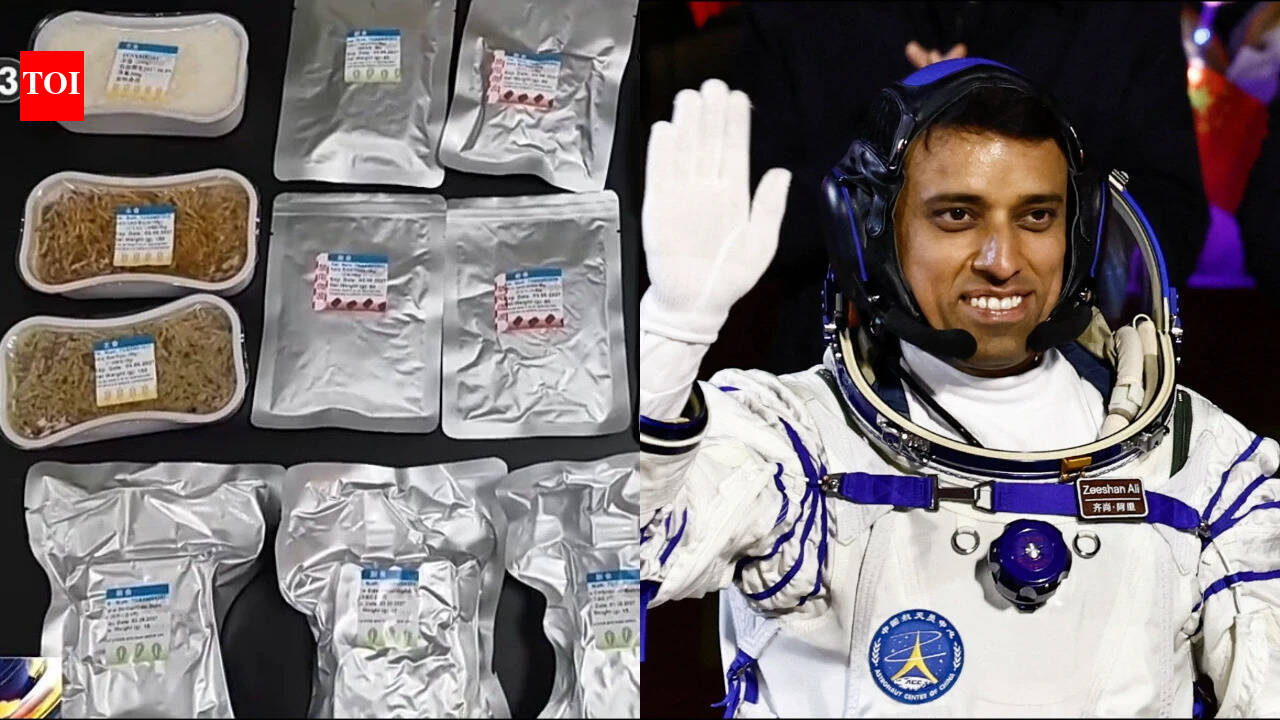
China has launched the Shenzhou-24 mission, carrying the first Pakistani astronaut, Muhammad Zeeshan Ali, to the Tiangong space station. This historic flight marks the first time a foreign national has joined a Chinese crewed mission, highlighting deepening space cooperation between the two nations.
A Historic Milestone in Sino-Pakistani Space Cooperation
On Wednesday, the landscape of international space exploration shifted as China successfully launched the Shenzhou-24 spacecraft from the Jiuquan Satellite Launch Center. Propelled by a Long March 2F Y24 rocket, the mission carries a three-person crew, including Chinese astronauts Tang Hongbo and Wu Yi, alongside Muhammad Zeeshan Ali, who has become the first Pakistani astronaut to reach space. This mission represents a significant evolution in China's manned space program, transitioning from an exclusively domestic endeavor to one that actively incorporates international partners.
Breaking Barriers at the Tiangong Space Station
The arrival of Muhammad Zeeshan Ali at the Tiangong space station is a landmark achievement, marking the first instance of a foreign astronaut participating in a Chinese crewed mission. The Tiangong station, which serves as the centerpiece of China’s orbital infrastructure, has now officially opened its doors to international participants. By integrating a foreign national into the Shenzhou-24 crew, China is signaling a strategic shift toward fostering global scientific partnerships, mirroring the collaborative model long established by the International Space Station (ISS).
Scientific Objectives and Orbital Operations
The Shenzhou-24 mission is not merely a symbolic gesture of friendship; it is a high-stakes scientific undertaking. The mission plan includes over 90 distinct experiments to be conducted during the crew's stay. These experiments are designed to leverage the unique microgravity environment of the Tiangong station, focusing on fields that could have long-term benefits for both Chinese and Pakistani research sectors. For Muhammad Zeeshan Ali, the mission duration is expected to be short, yet intensive, requiring seamless coordination with his Chinese counterparts.
Geopolitical and Strategic Implications
This mission underscores the deep-rooted strategic cooperation between China and Pakistan. By facilitating Pakistan’s entry into human spaceflight, China is cementing its role as a primary partner in the region's technological advancement. This collaboration serves as a testament to the strengthening ties between the two nations, extending their partnership from traditional terrestrial projects and infrastructure development into the final frontier of space exploration.
China’s Long-Term Lunar Ambitions
While the current focus remains on the Tiangong space station, this mission also serves as a operational stepping stone for China's broader aerospace goals. China has explicitly stated its target of achieving a crewed Moon landing by 2030. The proficiency demonstrated in the Shenzhou-24 launch, docking, and multi-national crew integration provides vital data for future deep-space missions. Mastering the complexities of orbital docking and multi-person mission management is essential for the logistical requirements of lunar exploration.
Future Trends in Global Space Diplomacy
Looking forward, the success of the Shenzhou-24 mission suggests that we are entering an era of diversified space alliances. As China continues to expand the capabilities of the Tiangong station, it is likely that we will see further invitations extended to international partners. This trend reflects a broader shift where space-faring nations use orbital access as a tool of soft power and scientific diplomacy, potentially challenging the traditional dominance of existing space coalitions and fostering a more multi-polar approach to exploration.
Multiple Citing Sources