Is America ready for this quirky Jeep-looking EV that can park itself?
Source Entity
Andrew J. Hawkins
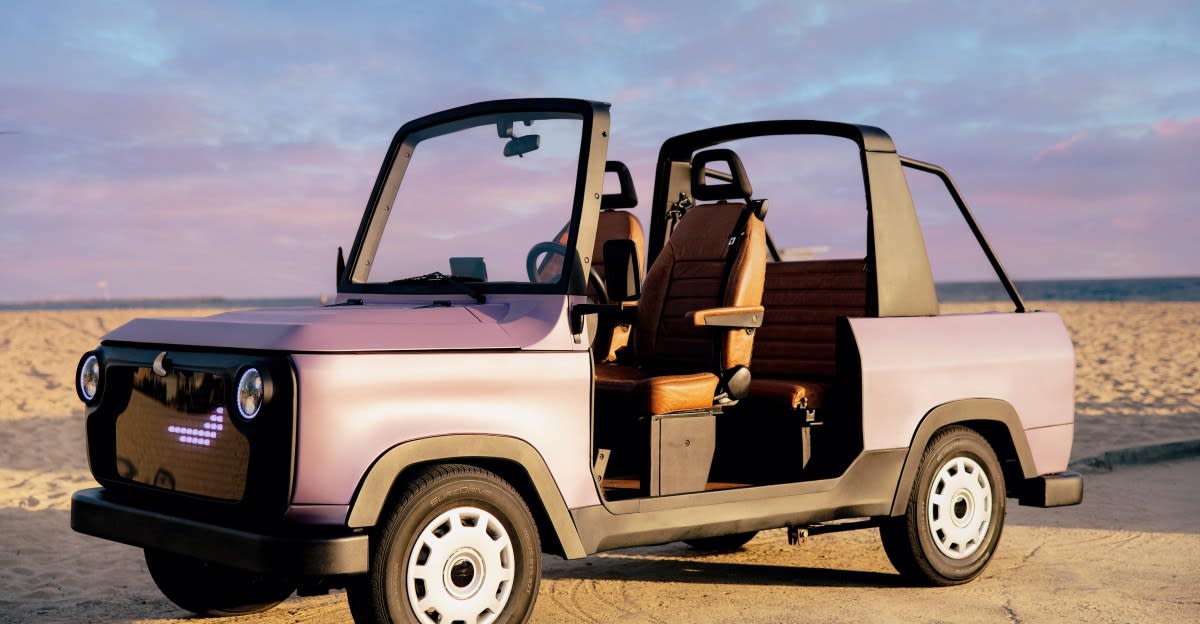
Miami-based startup Chip Motors has introduced a compact, boxy electric vehicle, signaling a potential shift in American attitudes toward micro-mobility. This launch joins a growing trend of small, specialized EVs like the Fiat Topolino and various Japanese kei cars.
The Emergence of the American Microcar Renaissance
The automotive landscape is currently witnessing an intriguing shift as a wave of compact, specialized electric vehicles enters the market. Spearheaded by the arrival of Chip Motors, a Miami-based startup, this movement challenges the traditional American preference for large-scale SUVs and trucks. The debut of their new, boxy, open-air electric vehicle marks a significant moment for urban mobility, suggesting that the industry may be at the precipice of a 'small car renaissance.'
Defining the New Micro-Mobility Segment
Chip Motors' latest offering defies conventional classification, leading many to question whether it functions as a rugged utility cart or a consumer-grade electric vehicle. By echoing the design language of iconic off-roaders like the Jeep Wrangler—albeit in a significantly reduced form factor—the vehicle aims to capture a niche market. This design philosophy mirrors the broader industry trend seen in the Fiat Topolino and the specialized dune buggies produced by companies like Amble, which prioritize agility and aesthetic charm over raw horsepower.
The Influence of Global Trends
While the United States has historically favored larger automobiles, the influence of Japanese 'kei' cars and trucks is becoming increasingly undeniable. These vehicles, built to exact dimensions and efficiency standards, have cultivated a dedicated global fan base. The integration of these design principles into American startups suggests that manufacturers are betting on a cultural shift where urban dwellers may prioritize ease of parking and maneuverability over the towing capacity of traditional vehicles.
Technological Integration and Future Trends
Beyond their physical size, these vehicles are positioning themselves as high-tech solutions to urban congestion. The inclusion of advanced features, such as self-parking capabilities, highlights an attempt to make micro-mobility more accessible and convenient for the modern driver. By blending the utility of a golf cart with the technical sophistication of a modern EV, startups like Chip Motors are attempting to bridge the gap between recreational transport and practical daily commuting.
Market Viability and Consumer Adoption
Despite the excitement surrounding these launches, microcar sales in the United States remain relatively low. The challenge for companies like Chip Motors lies in converting curiosity into sustained consumer adoption. However, as urban centers become more crowded and electric infrastructure improves, the demand for space-efficient, eco-friendly transit is likely to grow. The success of these vehicles will ultimately depend on their ability to navigate regulatory hurdles and prove that they are more than just a passing aesthetic trend in the electric vehicle market.