Citizen Devs: Everyone is an engineer now
Source Entity
Hacker News
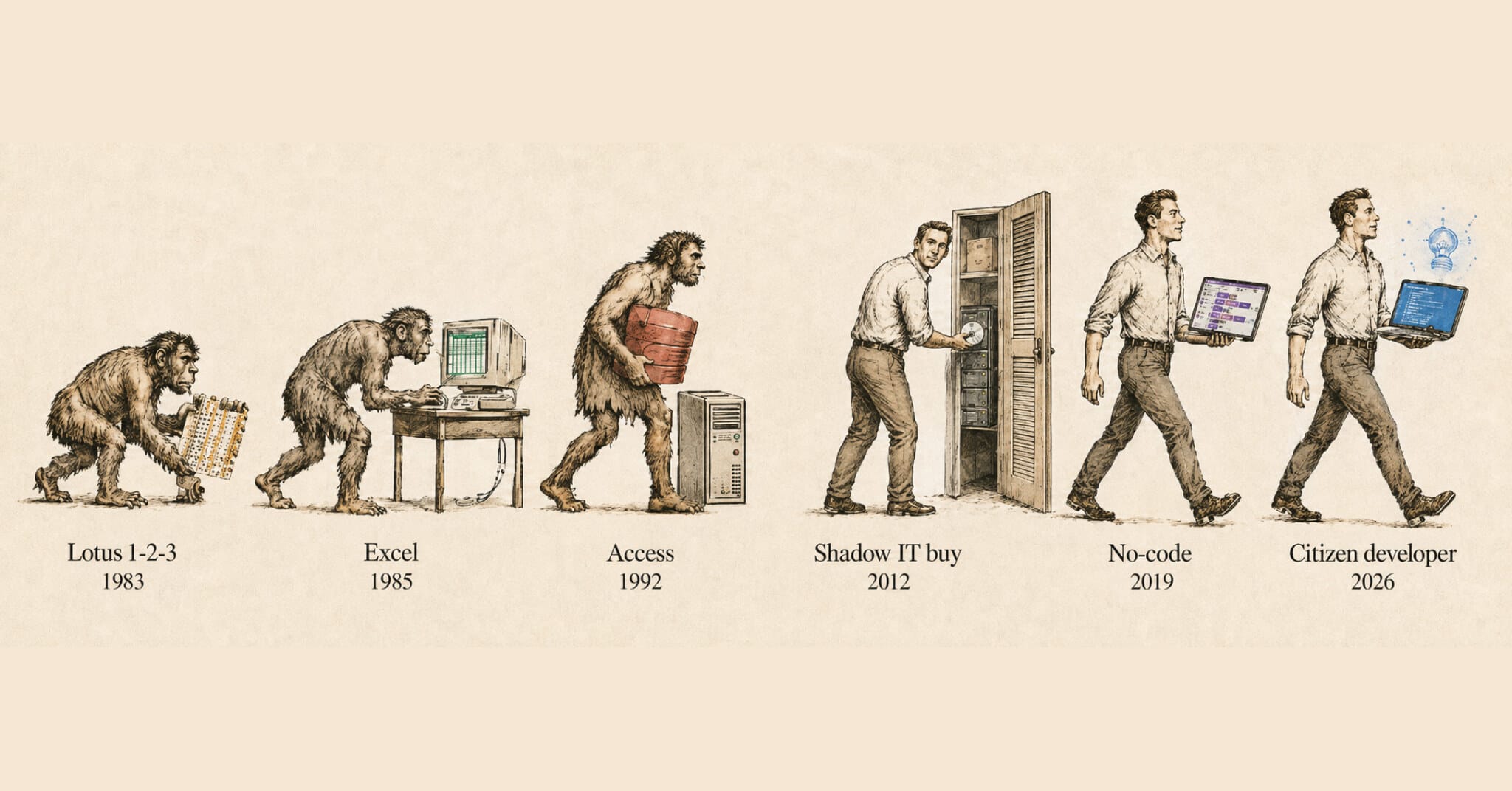
The rise of 'citizen developers' leveraging modern AI tools is formalizing the long-standing practice of shadow IT. Organizations must shift from restrictive control to implementing robust guardrails to manage security risks.
The Evolution of the Citizen Developer
The concept of the 'citizen developer'—non-technical employees building their own software solutions—is not a new phenomenon, but rather a persistent behavior that has evolved alongside technological accessibility. From the spreadsheet power-users of the Lotus 1-2-3 era to today’s employees deploying AI-driven applications like Claude Code, the core drive remains the same: employees are bypassing traditional IT channels to solve immediate business problems. This behavior, historically labeled as 'shadow IT,' represents a fundamental shift in how organizations procure and deploy software.
Historical Context: From Spreadsheets to AI
Historically, shadow IT manifested through departmental software purchases or unmanaged server hardware, such as the accounts payable teams in the nineties installing their own accounting software or marketing departments managing their own web servers. These actions were often born out of necessity, as central IT departments were frequently perceived as bottlenecks. Today, the democratization of powerful AI coding assistants has drastically lowered the barrier to entry, allowing non-engineers to create functional, potentially PII-storing applications in hours rather than months.
The CISO’s Dilemma: Control vs. Agility
For Chief Information Security Officers (CISOs) and IT operations, this trend creates a significant tension between operational agility and security posture. Attempting to completely block these activities is often futile, as employees will simply find other, less visible ways to circumvent restrictions. The challenge lies in the fact that while these tools empower employees, they also introduce significant security risks, particularly concerning data privacy and the handling of Personally Identifiable Information (PII) without proper oversight.
Moving Toward a Guardrail Philosophy
In the modern enterprise, the role of IT is shifting from that of a gatekeeper to an architect of 'guardrails.' Because IT cannot realistically stop the proliferation of citizen-led development, the focus must shift toward providing secure, sanctioned environments where employees can experiment safely. By setting clear parameters—such as pre-approved AI tools and integrated security scanning—organizations can harness the productivity of citizen developers without surrendering control over their data infrastructure.
Future Trends and Organizational Strategy
Looking ahead, the line between professional engineers and citizen developers will continue to blur. As AI capabilities improve, the ability to build software will become a ubiquitous skill, forcing IT departments to adapt to a decentralized development model. Companies that successfully integrate this shift will likely see higher rates of internal innovation, while those that remain focused on rigid, legacy control structures will likely struggle with persistent, unmanaged security gaps.
Conclusion
Ultimately, the rise of the citizen developer is a symptom of a workforce that is eager to leverage modern technology to increase efficiency. Rather than viewing these employees as a threat to be neutralized, successful organizations will treat them as a new class of power users who require specific training, safe tools, and clear regulatory boundaries to ensure their contributions do not compromise the integrity of the firm.