'Govt will try to detain us tonight': Dipke raises alarm, says much bigger crowd expected to join this weekend
Source Entity
Latest News: Todays Latest News Headlines from India & World | Hindustan Times | Hindustan Times
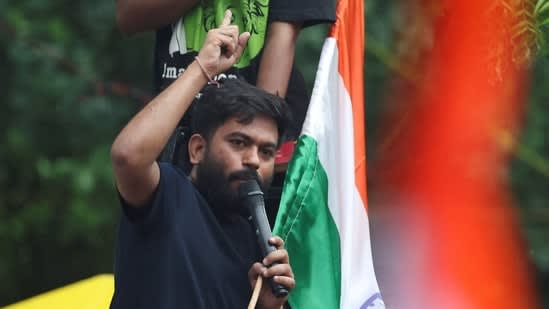
Abhijeet Dipke of the Cockroach Janta Party (CJP) has warned the government against potential detentions of protesters ahead of the weekend. He argues that such repressive tactics historically backfire by strengthening public resolve and intensifying ongoing movements.
Tensions Escalate as CJP Faces Potential Government Action
Abhijeet Dipke, the founder of the Cockroach Janta Party (CJP), has issued a public warning regarding potential government efforts to detain movement leaders and participants. With the weekend approaching, Dipke suggests that authorities are attempting to preemptively stifle a larger expected turnout by clearing the protest site tonight. This development marks a significant escalation in the ongoing standoff between the CJP and government officials, highlighting the fragile state of public assembly rights in the current political climate.
The Backfire Effect of State Repression
Dipke’s analysis of the situation centers on the 'backfire effect,' where state-sponsored suppression fails to achieve its intended result of silencing dissent. He explicitly references the detention of climate activist Sonam Wangchuk at Jantar Mantar as a turning point that galvanized, rather than deterred, public sympathy. By framing the potential arrests as "another major mistake," Dipke argues that the government is miscalculating the psychological impact of its actions, suggesting that each instance of state intervention provides protesters with more leverage and public visibility.
Historical Precedents and Protest Dynamics
Drawing on recent history, Dipke points to the lathi-charge incidents involving students as evidence that physical force often serves as a catalyst for broader movement growth. Historically, protest movements often experience a surge in participation when they are met with heavy-handed tactics, as these actions transform local grievances into symbolic struggles for civil rights. The CJP’s strategy appears to be one of endurance, utilizing the government's own reactive posture to maintain media attention and public interest.
The Strategic Importance of the Weekend
Anticipating a significant increase in crowd size over Saturday and Sunday, the CJP leadership is bracing for a confrontation. The government’s reported desire to clear the area before the weekend suggests a strategic attempt to prevent a logistical challenge, as larger crowds are harder to manage and generate more significant political pressure. For the CJP, the weekend represents a critical window to demonstrate their organizational capacity and the resilience of their grassroots base.
Future Implications for Civil Discourse
The ongoing standoff between the CJP and the authorities raises broader questions about the future of political dissent. If the government proceeds with mass detentions, it risks further alienating segments of the population who view such actions as disproportionate. Conversely, if the government chooses a more conciliatory path, it may signal a shift in its handling of public protests. Regardless, the current trajectory suggests that the CJP is prepared to leverage every instance of state interference to bolster its legitimacy and expand the scope of its movement.
Verification Required?