CJP's Das, Ranka try to sneak into Jantar Mantar, detained by Delhi Police
Source Entity
LAIRENLAKPAM WARLI
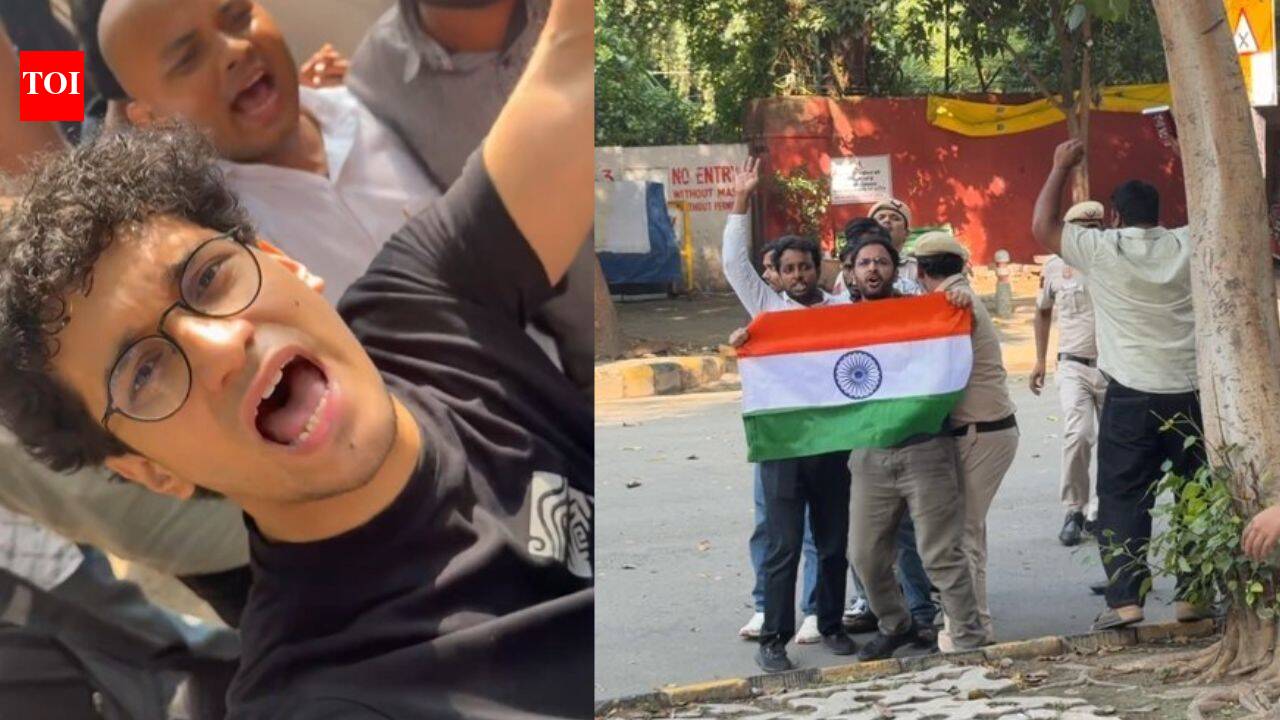
Cockroach Janta Party (CJP) leaders Saurav Das and Ashutosh Ranka were detained by Delhi Police after breaching the gates of Jantar Mantar. The protest aimed to challenge the government and recent restrictions on the protest site.
Analysis of the Cockroach Janta Party Protest at Jantar Mantar
The Incident at Jantar Mantar
On Tuesday, members of the Cockroach Janta Party (CJP), led by chief spokesperson Saurav Das and national spokesperson Ashutosh Ranka, were detained by the Delhi Police after an unauthorized entry into the Jantar Mantar protest site. The group, which included roughly 10 other individuals, successfully breached the locked gates of the venue, an action documented on social media. The participants, seen carrying the national flag and chanting slogans, sought to challenge the administrative decision that stripped Jantar Mantar of its status as a designated protest zone.
Contextualizing the Protest
The confrontation stems from a recent policy shift by the Delhi Police, announced on October 12, which revoked Jantar Mantar’s status as a site permitted for public demonstrations. By physically climbing the gates to enter the location, CJP leadership aimed to perform an act of civil disobedience, effectively attempting to 'reclaim' the space for their movement. This action serves as a direct challenge to the state's tightening control over public spaces in the capital, particularly in Lutyens' Delhi, where protest access is heavily regulated.
Political Motivations and Allegations
The primary objective of the CJP demonstration was to voice dissent against the current government led by Prime Minister Narendra Modi. Furthermore, the protest specifically targeted the Chief Election Commissioner, Gyanesh Kumar, amid allegations of electoral irregularities, which the party has characterized as 'vote chori' (vote theft). The use of the national flag during the breach suggests an attempt to frame their movement within a narrative of patriotism and democratic defense, contrasting their actions against the government's regulatory stance.
The Role of Social Media in Modern Dissent
The incident was heavily documented by party founder Abhijeet Dipke and spokesperson Ashutosh Ranka via the social media platform 'X'. By live-streaming the breach of the gates and the subsequent detentions, the CJP utilized digital channels to bypass traditional media filters and mobilize their base. This digital-first approach highlights a growing trend in Indian political activism, where the optics of 'sneaking' into restricted zones are used to create viral moments that emphasize the party's narrative of resistance.
Broader Implications and Future Trends
The detention of CJP leaders underscores the mounting tension between grassroots political movements and state authorities regarding the right to assemble. As the government continues to restrict traditional protest venues to maintain order, groups like the CJP are increasingly resorting to high-visibility, confrontational tactics to capture public attention. This cycle of restriction and defiance suggests that future protests in the capital may become more volatile as political parties test the boundaries of administrative bans on public gatherings.