HT Morning News Brief October 13: Cops bar all protests at Jantar Mantar; 2 US professors get Nobel recognition
Source Entity
Latest News: Todays Latest News Headlines from India & World | Hindustan Times | Hindustan Times
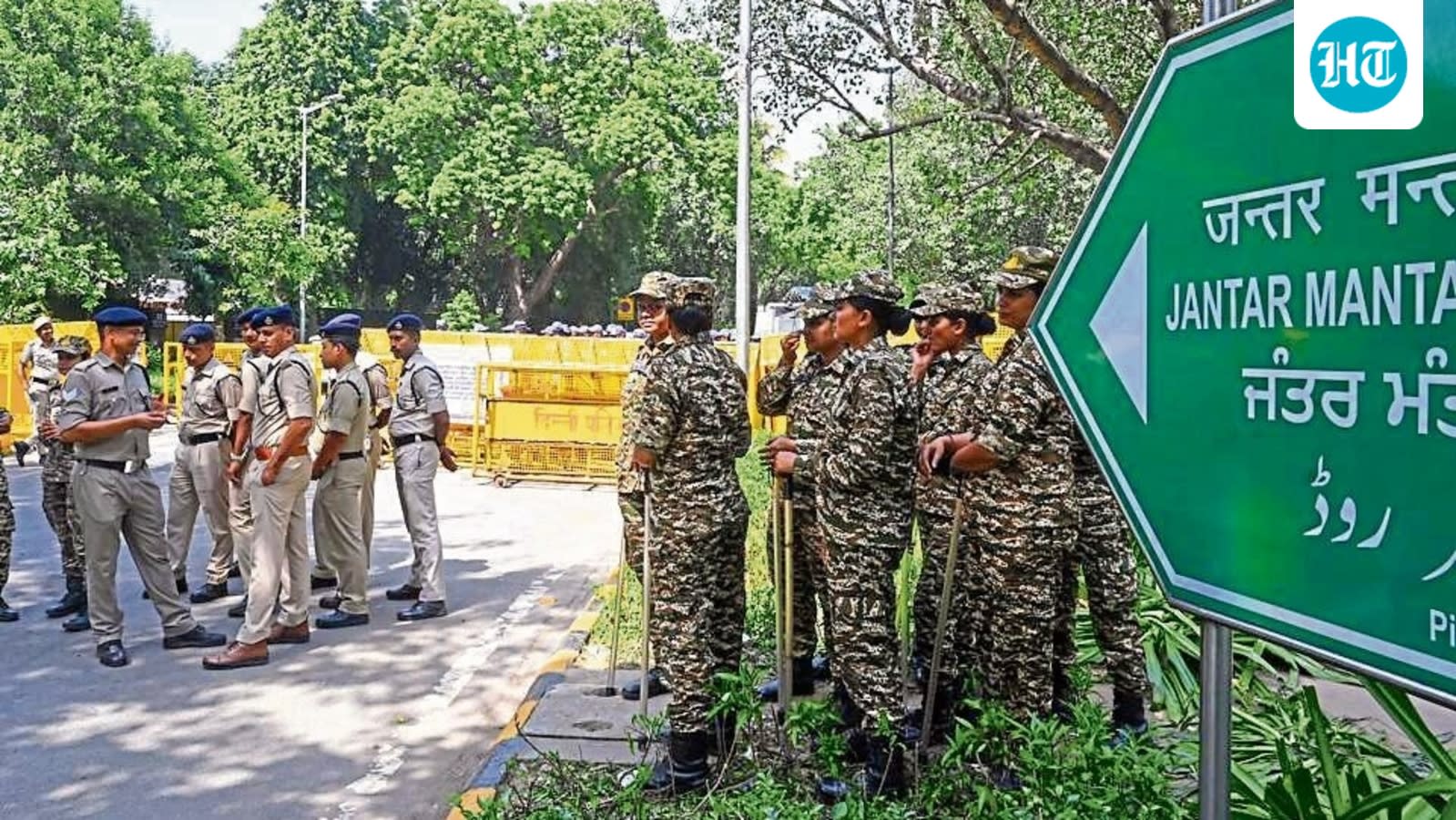
The Supreme Court has deferred a petition from INDIA bloc leaders regarding election irregularities due to administrative defects. Meanwhile, authorities have implemented a ban on protests at Jantar Mantar, impacting a historic site known for decades of civil activism.
Administrative Hurdles and the INDIA Bloc Petition
The recent legal challenge initiated by Congress leader Rahul Gandhi and ten other INDIA bloc representatives against the Election Commission of India (ECI) has hit a procedural stalemate. The Supreme Court registry has refused to list the petition for the upcoming Tuesday hearing, citing 14 distinct administrative defects. Among these, the most notable are a ₹220 shortfall in court fees, the submission of an illegible photocopy of Congress president Mallikarjun Kharge’s identification, and the absence of necessary vakalatnamas for nine of the eleven petitioners. This development highlights the rigorous, often unforgiving nature of judicial filing protocols in India, where even high-profile political litigation is subjected to strict compliance standards.
The Significance of Procedural Compliance
While critics of the opposition may view these filing errors as a lack of meticulous preparation, legal experts often point to the heavy burden of documentation required for public interest litigation. The fact that a coalition of major political leaders failed to meet basic filing requirements—such as the missing authorization documents—underscores the complexity of navigating the Supreme Court’s registry. This delay not only postpones the judicial scrutiny of alleged electoral irregularities but also provides a tactical reprieve for the ECI, allowing the commission to avoid immediate legal confrontation regarding its operational integrity.
Jantar Mantar: A Site of Democratic Expression
Simultaneously, the decision by authorities to bar all protests at Jantar Mantar marks a significant shift in the management of public space in Delhi. For 33 years, this 18th-century astronomical observatory has served as the symbolic epicenter of Indian civil society. It has provided a platform for a vast spectrum of causes, ranging from former soldiers advocating for pension parity to victims of sexual violence seeking justice and members of the queer community demanding dignity. By restricting access to this site, the administration is effectively altering the landscape of protest and dissent in the capital.
The Intersection of Law and Public Protest
The simultaneous occurrence of a legal blockade on a major political petition and the physical closure of a traditional protest site creates a challenging environment for democratic discourse. When avenues for legal redress face procedural delays and traditional spaces for public assembly are restricted, the overall capacity for stakeholders to voice grievances is significantly diminished. This dual pressure creates a narrowing corridor for political and social advocacy, potentially forcing activists and political actors to seek alternative, less visible methods of mobilization.
Future Trends and Democratic Implications
Looking forward, the trend toward stricter regulation of both judicial filings and public assembly spaces suggests a period of transition in how dissent is managed in India. If the INDIA bloc leaders successfully rectify their filing defects, the Supreme Court will eventually have to address the substantive claims regarding the ECI. However, the broader trend of limiting access to historic protest sites like Jantar Mantar may lead to a decentralization of activism. As urban spaces become more controlled, it is likely that future protests will increasingly shift to digital platforms or dispersed, smaller-scale demonstrations, fundamentally changing the traditional 'Delhi protest' culture that has thrived for over three decades.
Verification Required?