Vijay Varma slams those threatening to unfollow him over support for CJP students' march: ‘Chup chap bhi kar sakte ho’
Source Entity
Latest News: Today's Latest News Headlines from India & World | Hindustan Times | Hindustan Times
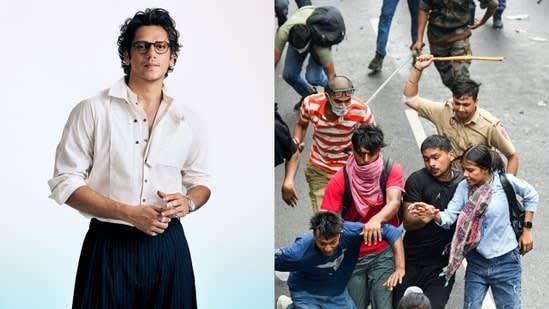
A CJP-led protest march in Delhi demanding the Education Minister's resignation turned violent, resulting in injuries to over 118 police personnel and 60 protesters. Activist Sonam Wangchuk was removed from the site by police and taken to Safdarjung Hospital amid the chaos.
Turmoil at the Capital: Analyzing the CJP-Led Parliament March
On a tumultuous afternoon in Delhi, a demonstration organized by the CJP (Climate Justice/Civil Justice-related entity) calling for the resignation of Education Minister Dharmendra Pradhan escalated into significant civil unrest. The protest, which centered on Parliament Street, saw thousands of participants gather to voice their demands, eventually leading to a tense standoff with law enforcement. As the situation deteriorated, the vicinity of the iconic Gurdwara Bangla Sahib became a critical refuge for protesters attempting to escape the escalating police lathi-charge and the impact of teargas shells.
The Anatomy of the Conflict
The escalation of violence highlights a breakdown in communication between the protest organizers and local authorities. According to official reports from the Delhi Police, the situation shifted from a public assembly to a violent confrontation, with authorities claiming that protesters initiated the aggression. The police statement asserts that 118 personnel, including senior officers, suffered injuries due to stone-pelting and damage to public property. Conversely, protesters reported being the victims of a harsh crackdown, with many fleeing the scene with injuries and emotional distress, describing the environment as an "attack on the country's children."
The Detention of Sonam Wangchuk
A pivotal moment during the chaos was the intervention by Delhi Police regarding activist Sonam Wangchuk, who was a focal point of the demonstration. As the protest site became increasingly volatile, police moved to shift Wangchuk from the protest area to Safdarjung Hospital. This move, while framed as a security measure, underscores the high stakes associated with the involvement of prominent public figures in grassroots movements and the immediate response of state machinery to contain potential flashpoints.
Broader Implications for Public Assembly
The events on Parliament Street reflect the broader challenges of managing large-scale political expression in urban centers. The use of teargas and lathi-charges, followed by the mass detention of approximately 70 protesters, serves as a stark reminder of the fragile balance between the constitutional right to protest and the state's mandate to maintain public order. The presence of protesters in a religious site like Gurdwara Bangla Sahib highlights how civic unrest can spill over into spaces typically reserved for sanctuary, intensifying the moral and social dimensions of the conflict.
Evaluating the Aftermath and Future Trends
Moving forward, the incident is likely to trigger intense scrutiny regarding the conduct of both the demonstrators and the police force. With 118 police personnel injured and a significant number of protesters wounded, the legal fallout is expected to be substantial. The demand for the Education Minister's resignation, which acted as the catalyst for this march, remains an unresolved issue, suggesting that political friction may continue to manifest in future protests. The reliance on heavy-handed security measures may further polarize public opinion, potentially leading to increased radicalization of protest tactics or more stringent government restrictions on future assemblies in the capital.
Multiple Citing Sources
Verification Required?