Government signal: Ready for debate, demand for resignation political
Source Entity
Ritika Chopra
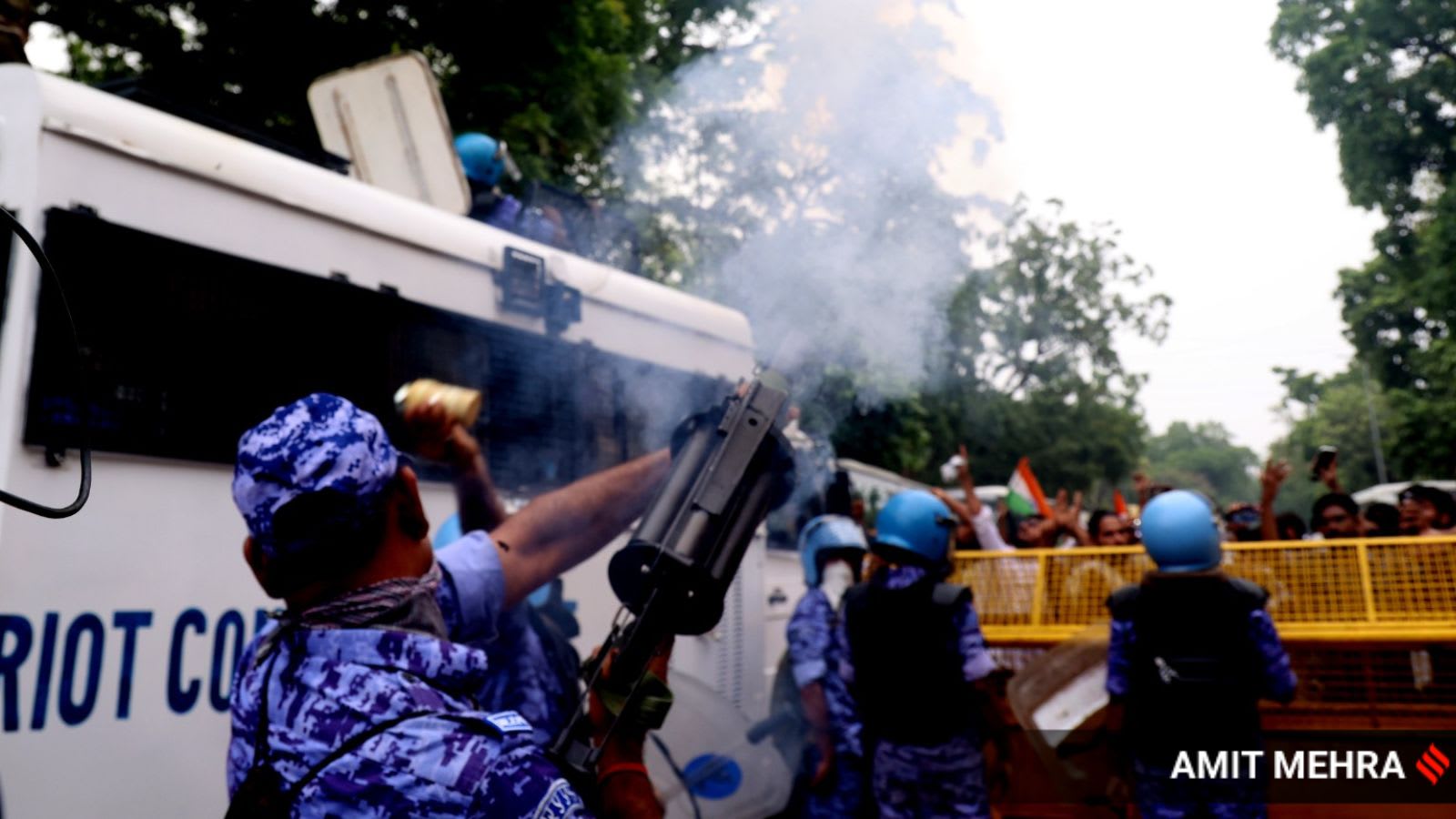
The first day of the Monsoon Session of Parliament was completely disrupted by intense opposition protests over the NEET paper leak and Ayodhya temple donation theft. Simultaneously, tens of thousands of protesters clashed with police in central Delhi, leading to significant unrest and the eventual adjournment of legislative business.
Parliament Paralyzed: Monsoon Session Begins in Chaos
The Monsoon Session of Parliament commenced on July 20, 2026, under an atmosphere of intense political volatility. The proceedings, which were intended to be a productive legislative period, were immediately derailed as Opposition Members of Parliament (MPs) from the Congress, Samajwadi Party, and Trinamool Congress stormed the Well of the House. The primary catalysts for this disruption were the alleged NEET paper leak and reports of donation theft at the Ram Temple in Ayodhya, issues that the Opposition utilized to challenge the government's governance record.
Escalation on the Streets of Delhi
While the parliamentary floor saw significant procedural friction, the streets of Lutyens’s Delhi mirrored the chaos. An estimated 50,000 protesters, largely mobilized by the Cockroach Janta Party (CJP), attempted to march toward Parliament. The scale of the mobilization forced security forces to deploy lathicharges, tear gas, and water cannons across major arterial roads, including Ashoka Road and Janpath. This convergence of parliamentary protest and mass street agitation signals a significant escalation in the political climate surrounding national exam irregularities and administrative oversight.
Legislative Stagnation and Future Implications
Despite the frequent adjournments, the Lok Sabha managed a brief window of activity where Union Law Minister Arjun Ram Meghwal introduced a crucial Bill. This legislation aims to replace an existing Ordinance that increases the total number of Supreme Court judges from 34 to 38, inclusive of the Chief Justice of India. The move reflects the government's intent to address judicial backlog, yet the timing of its introduction during such a volatile session underscores the difficulty of conducting routine legislative business when consensus is absent.
The NEET Controversy and Political Accountability
Central to the unrest is the demand for the resignation of Union Education Minister Dharmendra Pradhan. By framing the NEET exam irregularities as a systemic failure, the Opposition has successfully linked the educational grievances of millions of students with broader political accountability. The fact that the DMK raised the separate issue of the Mekedatu project while opting out of the Congress-led strategy highlights a fractured, albeit coordinated, opposition front that is currently testing the government's resilience.
Strategic Shifts and Seating Dynamics
Beyond the headline-grabbing protests, the session also featured subtle shifts in parliamentary decorum, such as the altered seating arrangements for rebel Trinamool Congress (TMC) MPs. These shifts are often indicators of deeper internal party realignments and suggest that the Monsoon Session will likely be characterized by both external public pressure and internal legislative maneuvering. As the government attempts to navigate these challenges, the ability to maintain order in the House while addressing the underlying public discontent will be the defining metric of this session’s success.
Multiple Citing Sources