40 years ago November 12, 1986: AICC(I) office-bearers resign
Source Entity
The Indian Express
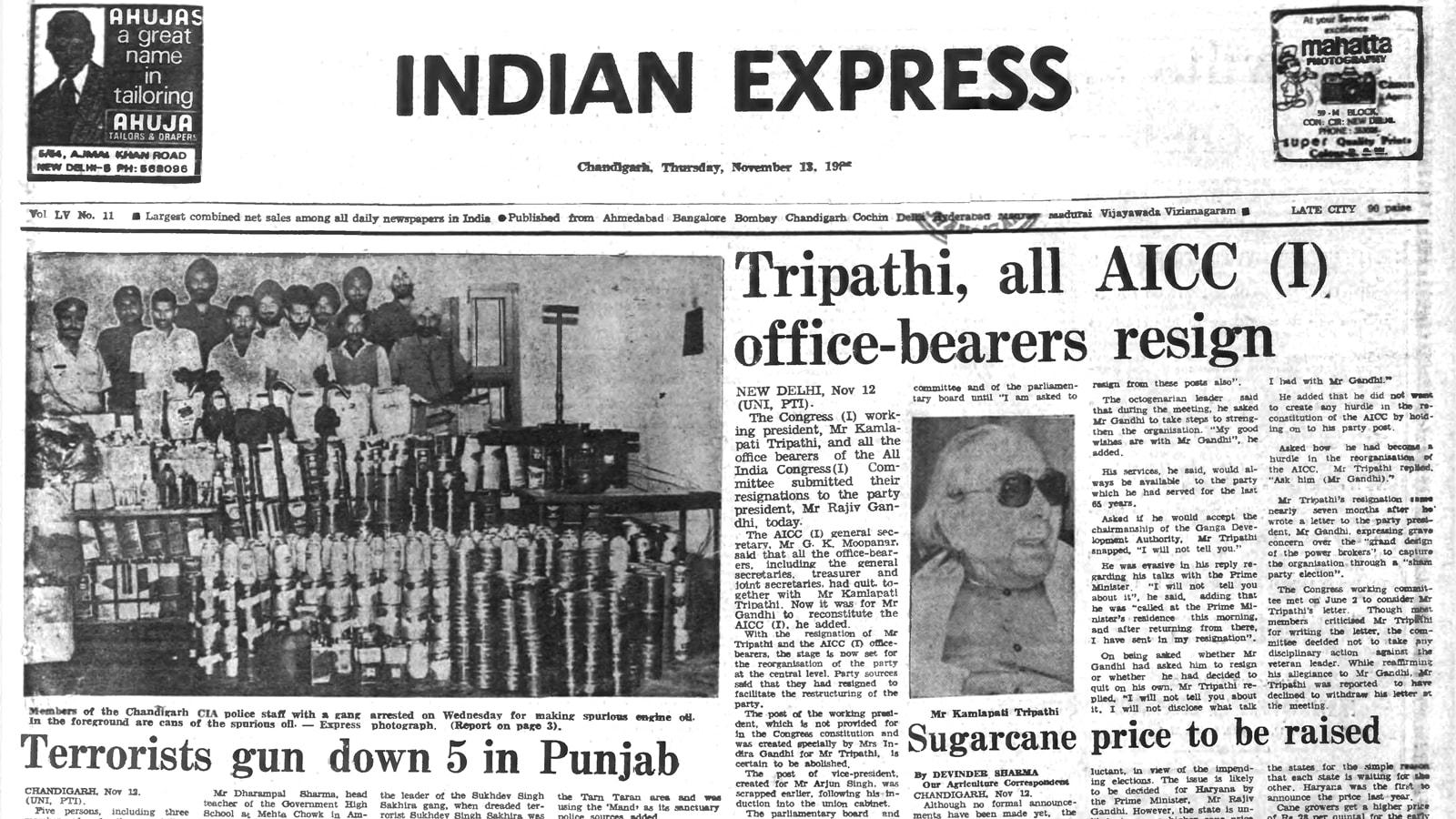
In November 1986, the Congress (I) party underwent a major leadership shakeup as top officials resigned to facilitate organizational restructuring. Simultaneously, Punjab faced a period of intense violence, marked by terrorist attacks and the capture of a militant leader.
The 1986 Political and Security Crisis: A Retrospective Analysis
The Congress (I) Reorganization
On November 12, 1986, the Indian political landscape witnessed a significant internal shift within the Congress (I) party. Working president Kamlapati Tripathi, alongside the entire slate of office-bearers, submitted their resignations to party president Rajiv Gandhi. This move was not merely a symbolic gesture but a strategic maneuver intended to pave the way for a comprehensive reorganization of the party at the central level. The resignation of such high-ranking officials signaled a desire to consolidate power and streamline the party's administrative framework.
The Abolition of the Working President Role
A pivotal detail in this restructuring was the fate of the working president position. Historical context suggests that this role was an anomaly within the Congress constitution, having been specifically created by Indira Gandhi to accommodate Kamlapati Tripathi. By moving to abolish this post, the party leadership under Rajiv Gandhi aimed to return to a more traditional governance structure, effectively ending a unique chapter of organizational hierarchy that had existed since the tenure of his predecessor.
The Security Situation in Punjab
Contrasting the political maneuvering in Delhi, the security situation in Punjab remained dire during this period. Reports from November 1986 highlight a surge in militant activity, with five individuals killed, including three members of a single family. The violence was characterized by brutal acts, such as the shooting of a shopkeeper named Chaman Lal in Kamalpur village, and the brazen snatching of vehicles by suspected terrorists. These incidents underscored the immense instability that plagued the state during the mid-1980s.
The Capture of 'Tat Khalsa' Leadership
Amidst the violence, security forces achieved a notable tactical success by capturing a self-styled “general” of the militant organization known as the “Tat Khalsa.” This arrest was a critical development in the state's ongoing efforts to curb insurgency. The ability of the security apparatus to neutralize key leadership figures within militant ranks was a central pillar of the government's strategy to restore law and order in the region, which had been deeply scarred by years of conflict.
Broader Implications and Trends
The events of November 1986 reflect a nation struggling on two fronts: the internal consolidation of political power and the external battle against regional insurgency. The Congress party's move to reorganize was an effort to project strength and unity, yet this was set against the backdrop of persistent violence in Punjab. Understanding these events is essential for grasping the complexities of Indian governance in the late 20th century, where political transitions and security challenges were inextricably linked, shaping the trajectory of national policy for years to come.