Congress, BJP spar over Pralhad Joshi's pick as education minister
Source Entity
TNN
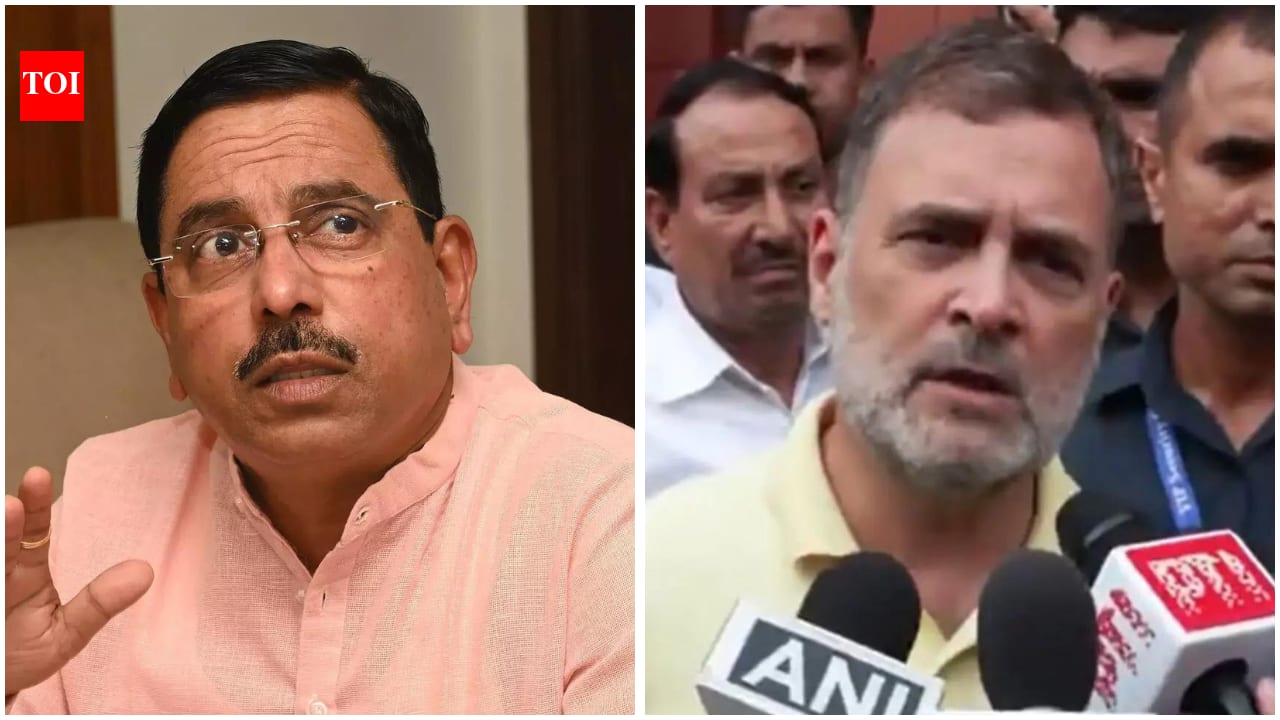
The BJP has strongly condemned recent remarks by Congress leaders Priyanka Gandhi Vadra and Rahul Gandhi regarding Union Education Minister Pralhad Joshi. The dispute centers on allegations that Joshi defended rapists, which the BJP denies as a distortion of his comments on legal remission processes.
Political Tensions Escalate Over Education Minister
Recent parliamentary proceedings have been marked by a heated confrontation between the Bharatiya Janata Party (BJP) and the Indian National Congress regarding the appointment and past conduct of Union Education Minister Pralhad Joshi. The conflict erupted when Congress MP Priyanka Gandhi Vadra made pointed remarks inside the Lok Sabha, leading to their subsequent expungement by Speaker Om Birla. This development underscores the intensifying friction between the ruling party and the opposition, as both sides leverage legislative and public platforms to challenge the integrity of high-ranking cabinet officials.
The Core Allegations and Defense
The controversy hinges on accusations leveled by Rahul Gandhi, who characterized Pralhad Joshi as a "defender of rapists" during public statements. These claims are rooted in a past television interview where the Minister allegedly commented on legal remission processes. The BJP, through media cell convenor Anil Baluni, has categorically rejected these allegations, labeling them as "misleading, condemnable, and unacceptable." The BJP asserts that Joshi’s original remarks were strictly focused on the legal process of remission rather than a defense of criminal acts, accusing the opposition of distorting facts for political gain.
Legal Context of Remission
The background of this political sparring involves the complex legal landscape surrounding the early release of convicts. The context provided highlights that the Supreme Court of India previously intervened in a remission case, canceling an early release order on the grounds that the initial authority lacked the competence to grant it. By tethering his criticism to these legal precedents, Rahul Gandhi aims to cast doubt on the moral standing of the Minister. Conversely, the BJP maintains that the Minister's commentary was procedural and not a commentary on the merits of specific cases, highlighting a fundamental disagreement on the interpretation of legal discourse.
Legislative Conduct and Parliamentary Decorum
The fact that Priyanka Gandhi Vadra’s remarks were expunged from the Lok Sabha records by Speaker Om Birla reflects the severity of the parliamentary breach as viewed by the chair. Expungement is a significant procedural action, usually reserved for unparliamentary language or unsubstantiated allegations against members who cannot defend themselves on the floor. This act serves as a flashpoint, demonstrating how legislative rules are being utilized as a tactical tool in the broader political battle between the BJP and the Congress.
Broader Political Implications
This confrontation represents more than a personal attack on a cabinet minister; it is a manifestation of the current political climate where the opposition seeks to frame the government’s appointments through the lens of moral and social accountability. For the BJP, the defense of Pralhad Joshi is essential to maintain the narrative of administrative legitimacy. As the government navigates its policy agenda, these personality-driven disputes are likely to continue, potentially stalling legislative business and heightening the polarization within the House.
Future Trends in Parliamentary Discourse
Moving forward, we can expect this trend of "fact-checking" and historical scrutiny of ministerial pasts to intensify. As both parties prepare for future electoral cycles, the utilization of past interviews and legal commentary as political ammunition will likely become a standard, albeit contentious, feature of parliamentary debate. This cycle of allegation and refutation underscores the ongoing struggle to define the ethical boundaries of political discourse in India’s democratic institutions.
Multiple Citing Sources