Opposition is to oppose, expose, depose: Congress Pranab reminder to Rajnath Singh
Source Entity
India Latest News: Top National Headlines Today & Breaking News | The Hindu
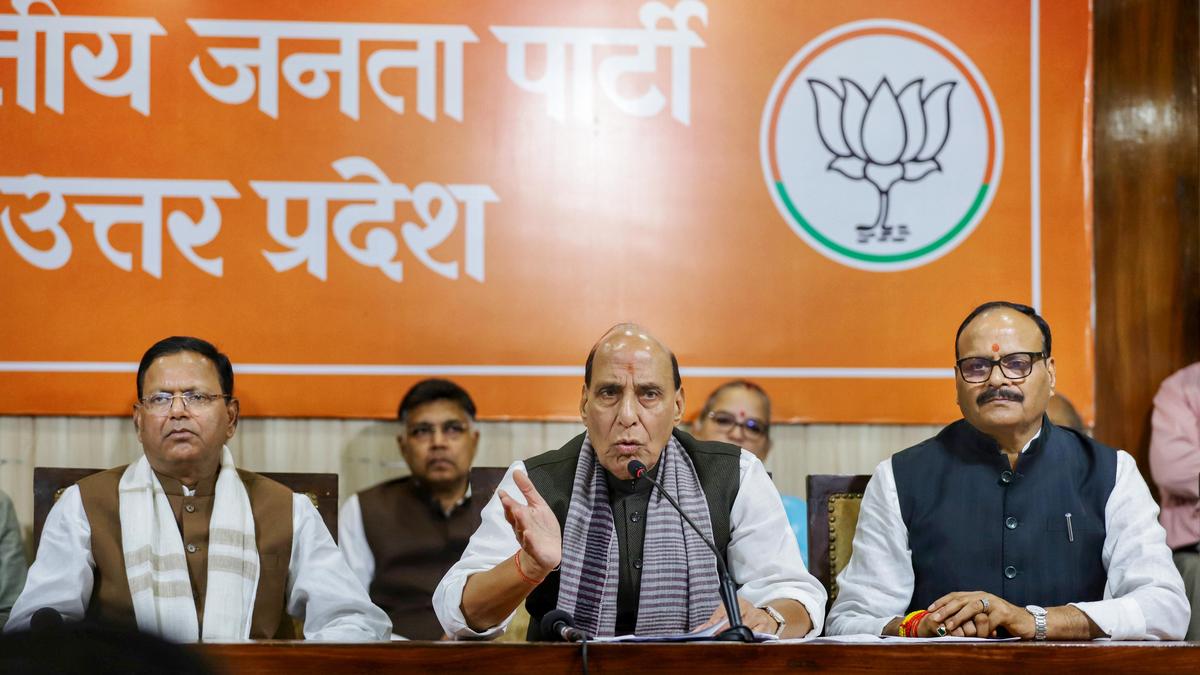
The Congress party has hit back at Defence Minister Rajnath Singh, who accused the opposition of inciting anarchy. Congress invoked the late President Pranab Mukherjee to assert that opposing, exposing, and deposing the government is a fundamental democratic duty.
The Clash of Democratic Philosophies
The recent political exchange between Union Defence Minister Rajnath Singh and the Congress party highlights a profound ideological divide regarding the role of political opposition in India. The friction began when Mr. Singh, while addressing a press conference in Lucknow, accused the Congress and its allies of orchestrating protests in the national capital aimed at fostering 'anarchy' and seeking a 'regime change' similar to the recent political upheavals in Bangladesh. This rhetoric signals a hardening stance from the ruling establishment against dissent, framing current protest movements not merely as legitimate political disagreement, but as existential threats to institutional stability.
The Pranab Mukherjee Doctrine
In a sharp rebuttal, Congress General Secretary Jairam Ramesh invoked the words of the late President Pranab Mukherjee, a statesman widely respected across the political aisle. By citing Mukherjee’s dictum that the role of an opposition party is to 'oppose, expose, and depose,' the Congress is attempting to reclaim the moral high ground of parliamentary democracy. This reference serves as a strategic counter-narrative, suggesting that the government’s criticism of the opposition is an attempt to stifle the constitutional mechanisms that ensure accountability and the peaceful transfer of power.
Analyzing the 'Bangladesh' Comparison
Mr. Singh’s comparison of Indian protest movements to the situation in Bangladesh is a significant escalation in political discourse. By invoking the specter of regional instability, the government is framing the opposition’s activities as a potential catalyst for civil disorder. This tactic serves to delegitimize street-level protests by linking them to the collapse of constitutional order, thereby placing the onus on the opposition to prove their commitment to democratic norms rather than focusing on the substantive issues that triggered the initial protests.
The Tension Between Order and Dissent
At the core of this debate is the tension between the maintenance of public order and the right to political agitation. Rajnath Singh’s assertion that democracy does not grant a 'licence to create disorder' reflects a vision of governance where institutional credibility is paramount. Conversely, the Congress’s reliance on the 'oppose, expose, and depose' framework suggests a belief that when democratic institutions are perceived as being compromised, the opposition’s primary duty is to challenge the status quo, even if such efforts result in social friction.
Future Implications for Indian Politics
As the political climate intensifies, the use of historical references and international comparisons suggests that the upcoming electoral cycles will be defined by these conflicting visions of democracy. If the government continues to characterize opposition dissent as a threat to national stability, we can expect further legal and political scrutiny of protest movements. Simultaneously, the opposition’s insistence on its right to 'depose' the ruling party underscores an increasingly adversarial political culture where the boundaries between legitimate dissent and state-defined 'anarchy' remain dangerously blurred.
Conclusion
Ultimately, this exchange underscores the fragility of political consensus in a polarized environment. By grounding their arguments in the legacy of a national icon like Pranab Mukherjee, the Congress seeks to institutionalize their dissent, while the government’s focus on the 'Bangladesh' analogy aims to warn the electorate of the dangers of unchecked opposition. As both sides dig in, the discourse appears set to remain highly combative, reflecting deep-seated disagreements on what constitutes a healthy democratic process in modern India.
Verification Required?