Abhijeet Dipke Detained Before March, Neha Bora Picked Up Near Jantar Mantar
Source Entity
NDTV News Search Records Found 1000
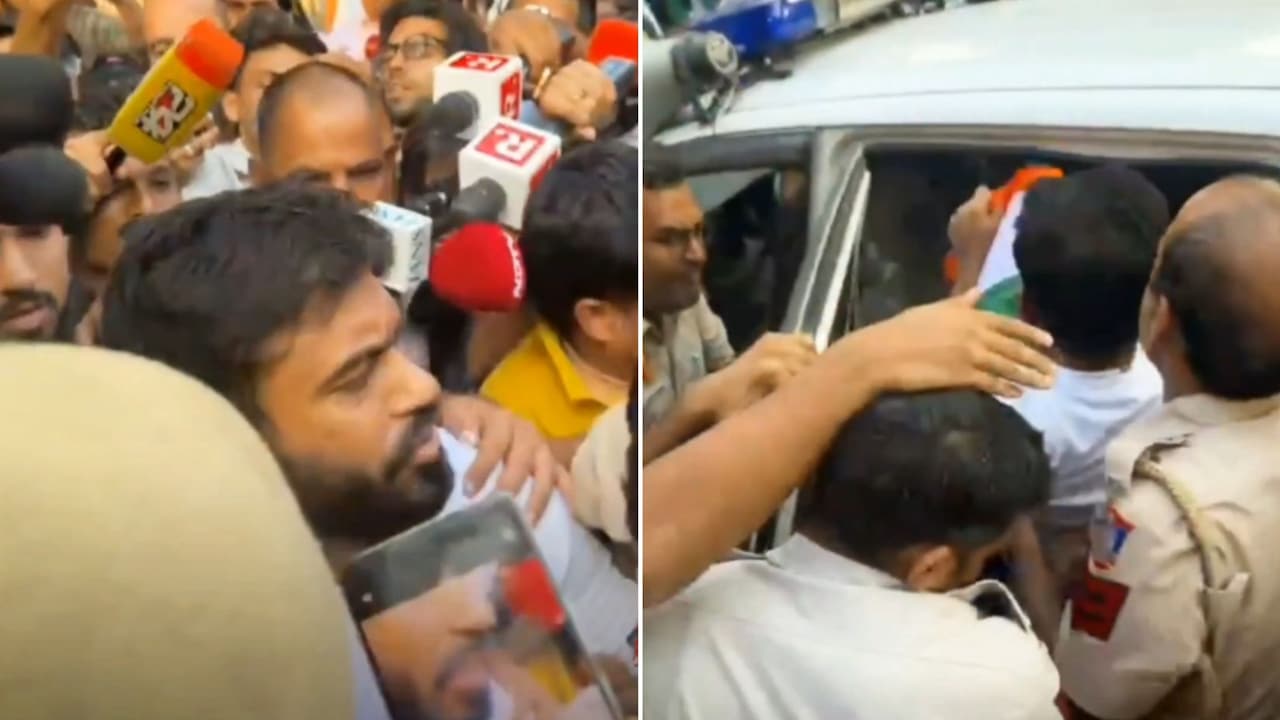
CJP activist Abhijeet Dipke has accused the central government of suppressing protests against Chief Election Commissioner Gyanesh Kumar. The demonstrations, which involved student leaders and opposition figures, have been met with detentions and severe mobility restrictions in Delhi.
The Growing Crisis of Electoral Integrity and Public Dissent
Recent developments in Delhi have signaled an intensifying confrontation between civil society organizations and the central government regarding the administration of the Election Commission of India. Abhijeet Dipke, founder of the Cockroach Janta Party (CJP), has leveled serious allegations against the state, claiming that sweeping administrative curbs—including the suspension of rail services and the closure of key Metro stations—have been deployed specifically to stifle protests demanding the resignation of Chief Election Commissioner (CEC) Gyanesh Kumar.
Allegations of Institutional Overreach
At the heart of this controversy is the assertion by Dipke that the state’s reaction is disproportionate and engineered to protect a single individual. The protests, which have persisted for over two weeks, center on allegations regarding the deletion of over 13 crore voters from electoral rolls. Dipke has characterized these deletions as a calculated "setting" to influence future electoral outcomes, raising fundamental questions about the transparency and neutrality of the current election management process.
The Suppression of Political and Civil Voices
The crackdown has extended beyond student activists to include high-profile political figures. Reports indicate that prominent opposition leaders, including former Chief Ministers Mamata Banerjee, Arvind Kejriwal, and Pinarayi Vijayan, were among those detained while attempting to support the demonstrations. This intersection of student-led activism and mainstream political opposition underscores the gravity of the grievances being aired at Jantar Mantar and other protest sites across the capital.
Media Freedom and Human Rights Concerns
Parallel to the physical suppression of protesters, there is growing alarm regarding the treatment of the press. Neha Bora of the All India Students' Association (AISA) has explicitly raised concerns about the intimidation of journalists attempting to cover these events. When the state restricts the movement of the public and the observation of the press, it creates a vacuum of information that further exacerbates public distrust in democratic institutions.
Broader Implications for Indian Democracy
The ongoing conflict represents a significant friction point in the Indian democratic landscape. The involvement of diverse groups—ranging from CJP and AISA to figures like actor Prakash Raj—illustrates a broad-based movement questioning the legitimacy of the CEC. By labeling these protests as an attempt to influence the integrity of the electoral process, the organizers are effectively framing the current administration's actions as a structural threat to the democratic framework of the country.
Future Trends and Outlook
As the government continues to enforce extraordinary restrictions to maintain order in the capital, the likelihood of a de-escalation appears low. If the allegations regarding the mass deletion of voters remain unaddressed by the Election Commission, the political divide is expected to widen. The future of this movement will likely depend on the judiciary's role in balancing public order with the fundamental right to protest, as well as the ability of opposition parties to maintain a unified front against what they perceive as an existential threat to electoral fairness.
Multiple Citing Sources
Verification Required?