Jantar Mantar was democracy’s safety valve. What happens now?
Source Entity
Neerja Chowdhury
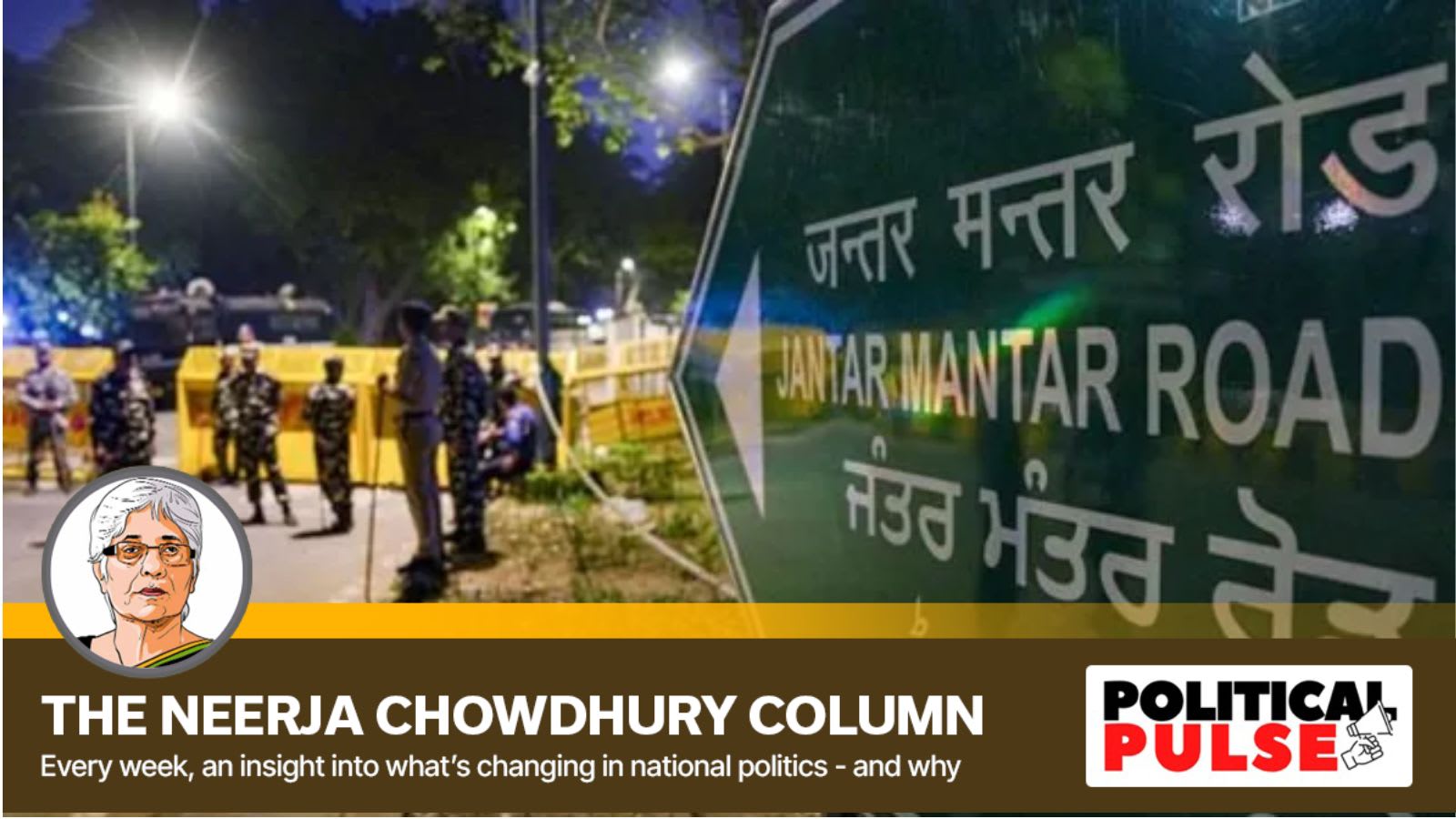
The de-notification of Jantar Mantar as a designated protest site marks a significant shift in India's democratic landscape. By marginalizing public dissent, these policy changes threaten the traditional spaces that once facilitated dialogue between the state and its citizens.
The Erosion of Democratic Spaces in India
For over three decades, Jantar Mantar served as more than just an 18th-century astronomical observatory; it functioned as a vital safety valve for India’s democracy. By providing a centralized, accessible location in the heart of Delhi, it allowed citizens to voice grievances, challenge policies, and participate in the democratic process. The recent decision to 'de-notify' this historic site as a protest zone represents a profound shift in how the state interacts with public dissent.
The Symbolic Importance of Proximity
The significance of Jantar Mantar lay in its proximity to the centers of power. When protest sites are moved to the peripheries of a city, the visibility of dissent is drastically reduced, effectively silencing the voices of those with 'lost causes.' This spatial displacement is not merely a logistical change; it is a symbolic act that signals a growing distance between the political establishment and the governed. When citizens are pushed to the fringes, the ritual of protest loses its capacity to influence the national discourse.
A Broader Trend of Institutional Change
This de-notification mirrors other recent architectural and procedural shifts in India’s democratic infrastructure, such as the removal of the Central Hall from the new Parliament building. These spaces historically facilitated informal, cross-partisan interactions—such as Holi Milans and Iftar parties—that softened the edges of hard political discord. As these shared physical spaces disappear, the opportunities for leaders across the political spectrum to engage in civil exchange diminish, potentially leading to a more polarized and rigid political environment.
The Political Economy of Dissent
Experts argue that democracy in India is facing new pressures from changing political economy and technological fault lines. As the state reconfigures the physical geography of protest, it reflects an underlying trend where popular mandates are increasingly difficult to reconcile with governance. The removal of central protest venues suggests a preference for administrative control over the messy, often inconvenient, reality of public engagement.
Future Implications for Indian Democracy
Moving forward, the challenge for Indian civil society will be to find new ways to maintain visibility and accountability in an environment that is increasingly hostile to physical protest. If the 'safety valve' of public dissent is closed, there is a risk that frustration will manifest in less constructive ways. The loss of Jantar Mantar as a protest site is a critical indicator of a shrinking space for democratic expression, forcing a re-evaluation of how citizens can effectively hold power to account in an increasingly centralized political landscape.
Multiple Citing Sources