Gurugram Congress protests, seeks CEC resignation over poll process
Source Entity
Latest News: Todays Latest News Headlines from India & World | Hindustan Times | Hindustan Times
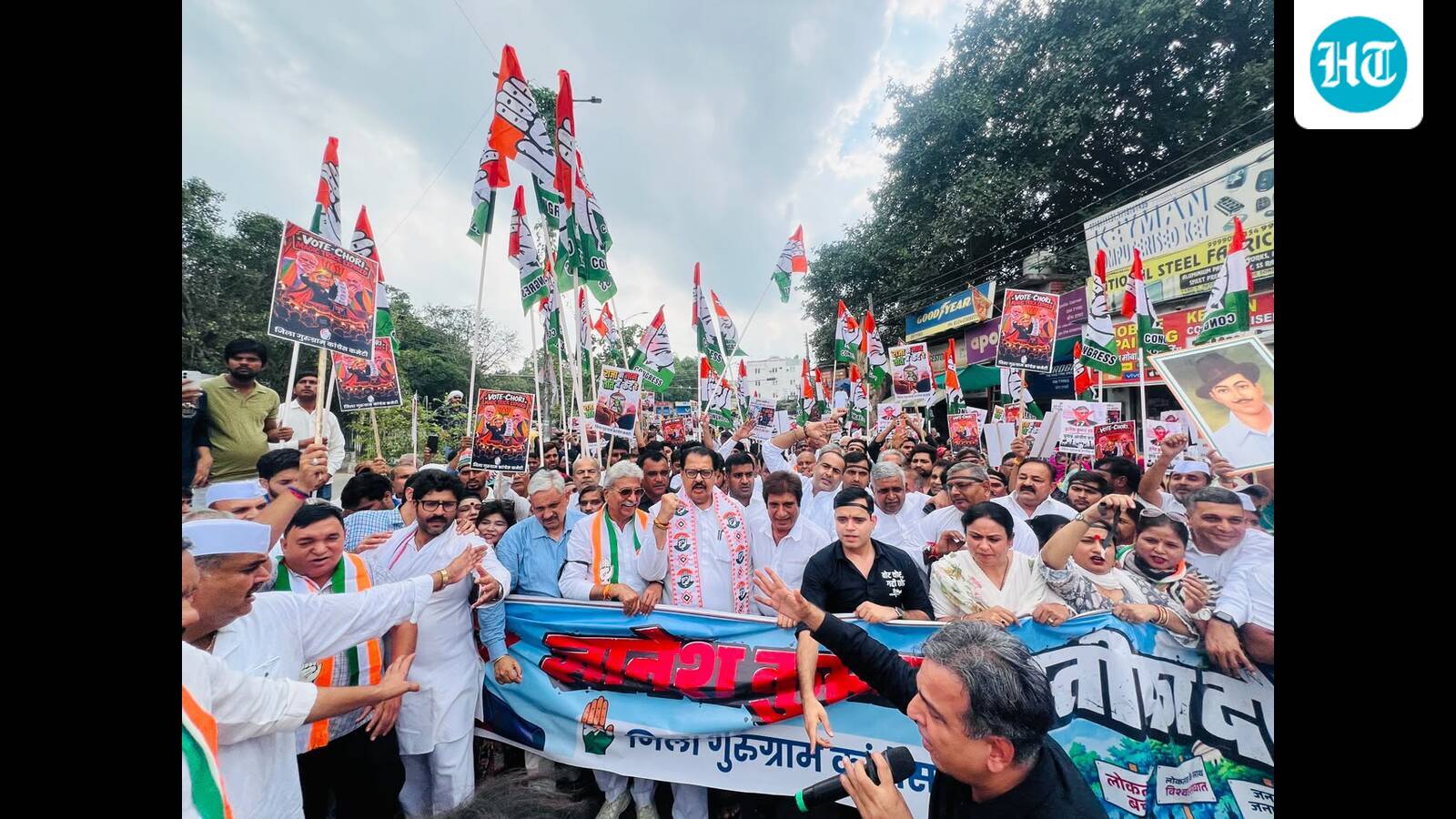
Congress party workers are staging nationwide protests demanding the resignation of Chief Election Commissioner Gyanesh Kumar. The demonstrations, marked by arrests in Uttar Pradesh and organized marches in Haryana, allege irregularities in electoral roll revisions.
Growing Tensions: Congress Protests Against the Election Commission
Recent days have seen a surge in coordinated demonstrations by the Indian National Congress across multiple states, specifically targeting Chief Election Commissioner (CEC) Gyanesh Kumar. These protests, spanning from Gurugram in Haryana to Agra in Uttar Pradesh, represent a significant escalation in the party's ongoing campaign against the administrative handling of electoral processes. The core of the grievance centers on allegations of irregularities during the Special Intensive Revision (SIR) of electoral rolls, which the Congress claims has compromised the impartiality of the election cycle.
The Gurugram Mobilization
In Gurugram, the protest was characterized by a high-profile presence, with senior Congress leaders including Raj Babbar, Sanjay Dutt, and Rao Narender Singh joining local unit heads Vardhan Yadav and Pankaj Dawar. The march from Kaman Sarai to Sadar Bazaar served as a public demand for transparency and an independent probe into the functioning of the Election Commission. By utilizing public demonstrations, the party is attempting to shift the narrative from internal political discourse to a broader public debate regarding the integrity of democratic institutions.
Escalation in Agra and Uttar Pradesh
The situation took a more confrontational turn in Agra, where protesters targeted the parental residence of CEC Gyanesh Kumar. The act of painting slogans on the gate of the official's private property led to immediate police intervention and the subsequent arrest of key figures, such as former state general secretary Anil Yadav and Mathura district president Mukesh Dhangar. This incident highlights the intensity of the party's frustration and the willingness of local leadership to engage in direct action, despite the potential for legal repercussions and the sensitivities surrounding the private lives of public officials.
Broader Political Implications
These protests are not isolated incidents but appear to be part of a wider, organized strategy. The mention of parallel meetings by the Citizens for Justice and Peace (CJP) in Hyderabad suggests that the Congress is attempting to build a broader coalition of civil society actors to pressure the Election Commission. This alignment reflects a growing trend where political parties seek external validation from advocacy groups to challenge constitutional bodies on procedural grounds.
Internal Dynamics and Opposition Response
The political landscape surrounding these protests is further complicated by the response from opposing factions. For instance, BJP’s Arun Yadav has publicly urged the Congress to introspect, suggesting that the party's focus on the Election Commission is a diversionary tactic to mask internal failures. This creates a polarized environment where the legitimacy of the electoral process becomes a primary battleground rather than a settled constitutional matter.
Future Trends and Conclusion
Looking ahead, the sustainability of these protests will likely depend on the Election Commission’s response to the allegations regarding electoral rolls. If the Congress continues to face arrests and administrative pushback, the movement may either lose momentum or radicalize into more frequent, localized agitations. As the nation moves toward future electoral cycles, the demand for an 'independent and impartial probe' is likely to become a central pillar of the opposition's platform, signaling a sustained period of friction between the Congress and the Election Commission.
Verification Required?