Dead fish in Yamuna again: Government says filing FIR to investigate ‘fake’ info, ‘role’ of AAP workers
Source Entity
Sophiya Mathew
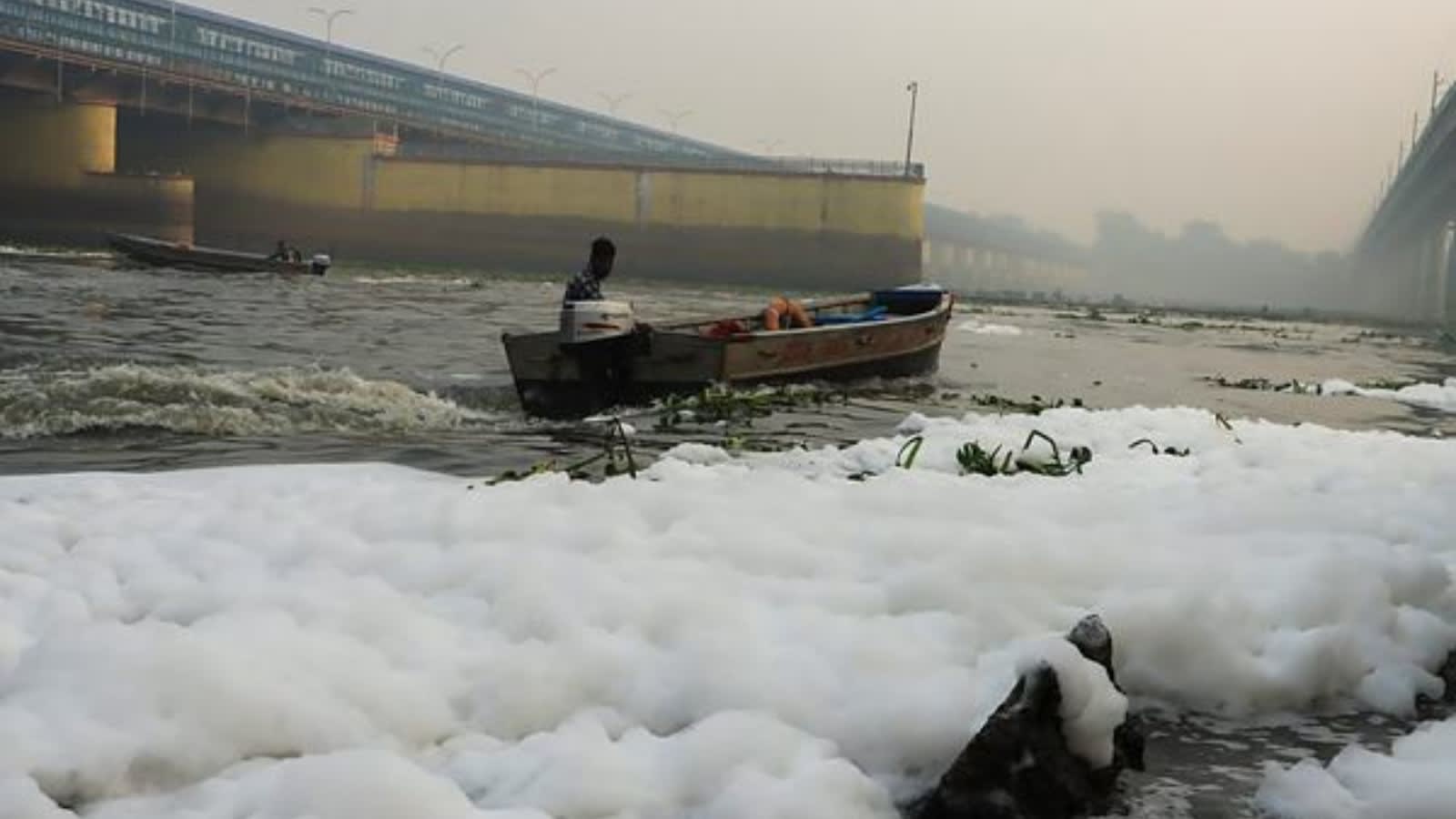
The Yamuna river has seen a surge in dead fish near Sonia Vihar, sparking a heated political confrontation. Government officials claim the event is a staged act to sabotage Chhath Puja, while opposition leaders vehemently deny these accusations.
The Yamuna Crisis: Environmental Disaster or Political Theater?
Recent reports from Sonia Vihar have revealed a disturbing sight: hundreds of dead fish floating in the Yamuna River. This incident marks the second such occurrence within a single month, raising urgent questions about both the ecological health of the river and the integrity of the information surrounding these events. As the capital prepares for the significant cultural and religious festival of Chhath Puja, the discovery has triggered a volatile political standoff.
Official Responses and Allegations of Sabotage
The Delhi Irrigation and Flood Control department has taken formal action, approaching the police to file an FIR. The government characterizes the viral social media claims—which suggest that chemicals are being sprayed into the river—as "fake information" disseminated with "malafide intentions." Officials argue that these narratives are designed to manufacture panic and tarnish the administration’s reputation ahead of the November 15 and 16 festivities.
The Accusation of Manufactured Discord
The political discourse has shifted from environmental concern to direct accusations of sabotage. Ministers have explicitly alleged that the dumping of dead fish is a deliberate act, timed to coincide with the commencement of ferry services on the river. By framing the incident as a calculated plot, the government seeks to divert the narrative away from potential systemic pollution and toward the actions of political rivals, specifically accusing the Aam Aadmi Party (AAP) of orchestrating the event to defame the current leadership.
Opposition Rebuttal and Skepticism
In response to these grave accusations, the opposition has categorically rejected any involvement. Their rebuttal centers on the logistical impossibility of such a large-scale dumping operation occurring undetected by authorities. The opposition argues that if the river were being monitored as claimed, such a significant volume of biological waste could not be introduced without immediate detection, suggesting that the government’s narrative may be a deflection from ongoing environmental mismanagement.
Broader Implications for the Yamuna
The Yamuna remains one of the most polluted river systems in India, and the recurrence of mass fish mortality events underscores the fragility of its ecosystem. While political bickering takes center stage, the underlying reality of the river's toxicity remains a critical concern for the local population. The tension between the need for environmental remediation and the use of the river as a political battleground highlights a recurring trend where ecological crises are weaponized for short-term electoral or reputational gain.
Future Trends and Conclusion
Moving forward, the investigation into the FIR will be a litmus test for accountability. If the authorities can prove that the fish were indeed dumped, it would signify a new and dangerous low in political rivalry. However, if the investigation fails to produce concrete evidence, the public may continue to view the incident as evidence of the government's failure to maintain the river’s health. Regardless of the outcome, the incident serves as a stark reminder that the Yamuna's recovery remains hostage to the complex and often antagonistic political environment of Delhi.