Dehradun cave party: Men with large speaker dance inside Robber's Cave
Source Entity
PRISHA ROY
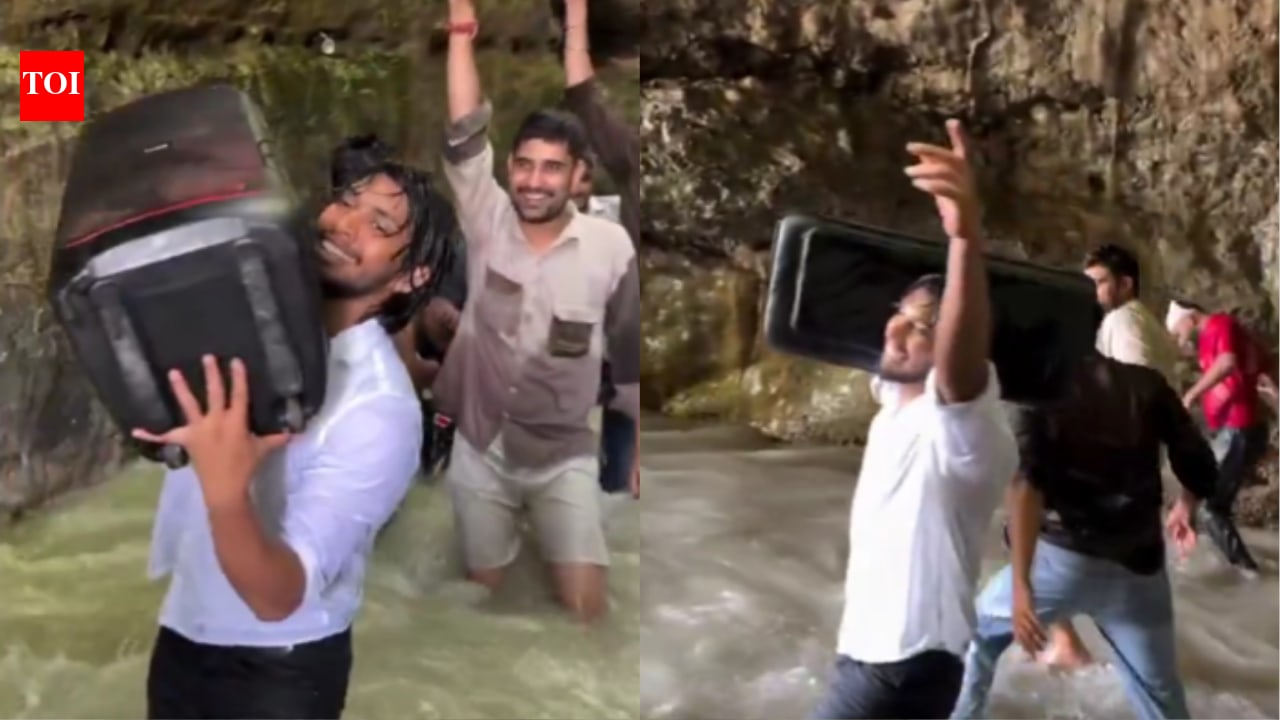
A viral video of men playing loud music and dancing inside Dehradun's Gucchu Paani cave has sparked public outrage. Critics are highlighting the incident as a clear failure of civic responsibility at a popular tourist destination.
The Incident at Gucchu Paani: A Breach of Public Conduct
A recent viral video circulating on social media platform X has brought the popular tourist destination of Robber's Cave, also known as Gucchu Paani, in Dehradun, Uttarakhand, into the spotlight for all the wrong reasons. The footage captures a group of men trekking through the cave’s signature knee-deep water while carrying a large, portable speaker blaring loud music. Their behavior, which included singing and dancing in the confined natural space, has ignited a fierce debate regarding the conduct of tourists at ecologically sensitive and shared public sites.
The Erosion of Civic Sense in Tourist Hubs
The primary grievance expressed by online observers, catalyzed by the account @himalayanhindu, centers on the perceived lack of civic sense. Robber's Cave is a natural river cave formation that draws thousands of visitors seeking tranquility and the unique experience of walking through narrow, water-filled limestone passages. By introducing high-decibel audio equipment into this environment, the group arguably disrupted the experience for other visitors and potentially disturbed the local ecosystem, which relies on a degree of quietude that is antithetical to a 'party' atmosphere.
Ecological and Cultural Implications
Beyond the immediate annoyance factor, such behavior raises concerns about the preservation of natural heritage sites. Caves are delicate geological structures; loud vibrations and the introduction of artificial noise can impact the wildlife that may inhabit these crevices. Furthermore, the transformation of a scenic, natural landmark into a venue for boisterous social gathering reflects a growing trend where the 'experience' of visiting a location is prioritized over respecting the inherent nature of the site itself. This incident serves as a case study for the challenges faced by tourism management in Uttarakhand.
The Role of Social Media in Public Accountability
Social media has become a double-edged sword in modern tourism. While it promotes destinations, it also serves as a digital watchdog. The rapid spread of this video demonstrates how public sentiment can quickly mobilize against perceived antisocial behavior. By labeling the act as a 'cave party,' the online community is actively policing the boundaries of acceptable behavior, effectively demanding that tourists recognize their responsibility to maintain the sanctity of shared public spaces.
Future Trends and Management Challenges
This incident highlights a pressing need for stricter regulation at popular sites like Gucchu Paani. As domestic tourism continues to surge in India, local authorities may need to implement more robust enforcement of 'no-noise' zones or restrict the entry of large audio equipment into sensitive natural areas. Without clear guidelines and better oversight, the risk of similar incidents occurring increases, potentially leading to the degradation of the very natural beauty that attracts tourists in the first place.
Conclusion: A Call for Mindful Tourism
Ultimately, the Robber's Cave incident is a reminder that tourism is a collective activity that requires mutual respect. While the men in the video may have viewed their actions as harmless recreation, the public backlash confirms a societal shift toward valuing environmental and social decorum. Moving forward, both visitors and site managers must prioritize the preservation of these natural landmarks to ensure they remain accessible and enjoyable for future generations.