CJP protest: How government pre-empted 'plot to incite violence'
Source Entity
RAJ SHEKHAR JHA
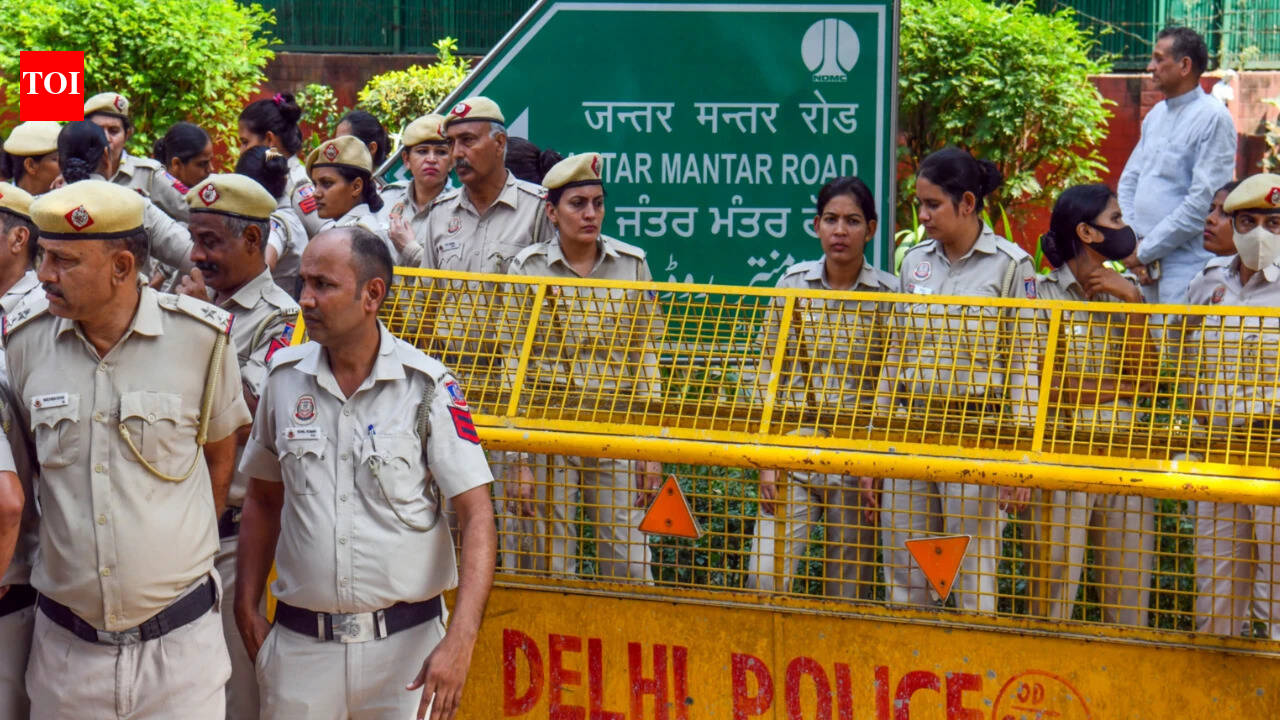
Authorities in New Delhi deployed 35,000 security personnel to thwart a planned march by the Cockroach Janta Party (CJP). Key figures including Yogendra Yadav and Prashant Bhushan were detained as the government moved to prevent potential unrest.
The Delhi Security Clampdown: Analyzing the CJP Protest Response
An Unprecedented Security Mobilization
In a massive display of state authority, New Delhi witnessed an extraordinary security operation aimed at neutralizing a planned march by the Cockroach Janta Party (CJP) toward Jantar Mantar. With approximately 35,000 police and paramilitary personnel deployed across the capital and its borders, the government effectively created a security cordon that paralyzed movement. This deployment, characterized by the suspension of metro services and train disruptions, highlights the state's proactive strategy to prevent public gatherings that it deems a risk to law and order.
The Detention of Key Figures
The scope of the crackdown extended to high-profile activists and political figures associated with the movement. Reports confirm the detention of Yogendra Yadav, Prashant Bhushan, and Neha Bora, alongside CJP members Abhijeet Dipke, Ashutosh Ranka, and Saurav Das—some of whom were intercepted as early as the airport. These detentions suggest a targeted effort to decapitate the organizational leadership of the protest before it could gain momentum, reflecting a broader trend in administrative responses to civil unrest.
Government Justification and Pre-emption
The official narrative framing this massive deployment centers on the prevention of a 'plot to incite violence.' By utilizing a preemptive strike strategy, the government sought to contain the protest by 'foiling the stir' before it reached the designated site. This approach demonstrates a shift toward high-intensity containment, where the perceived threat of public disorder is met with total administrative lockdown, effectively confining thousands and restricting the fundamental right to assemble.
Impact on Civil Liberties and Public Order
The scenes from the ground, depicting young protesters being forcibly removed and detained, raise significant questions regarding the balance between security imperatives and civil liberties. The 'choke' on public transport and the extensive confinement of individuals to their homes underscore the severity of the state's intervention. Such measures, while argued to be essential for maintaining peace, create a chilling effect on democratic discourse and the ability of political outfits to challenge government policies in the public square.
Future Implications and Trends
Looking ahead, this event signals a hardening of the state's stance toward organized dissent. The trend of 'restrained, detained, and contained' protests suggests that the administrative apparatus is increasingly comfortable with deploying overwhelming force to preemptively silence opposition. As security arrangements remain in place, it is likely that the government will continue to prioritize total control over public space, potentially leading to further polarization between political groups and the state machinery in the capital.