NEET row: Centre airlifts more CRPF companies to Delhi as CJP protest continues
Source Entity
TOI CITY DESK
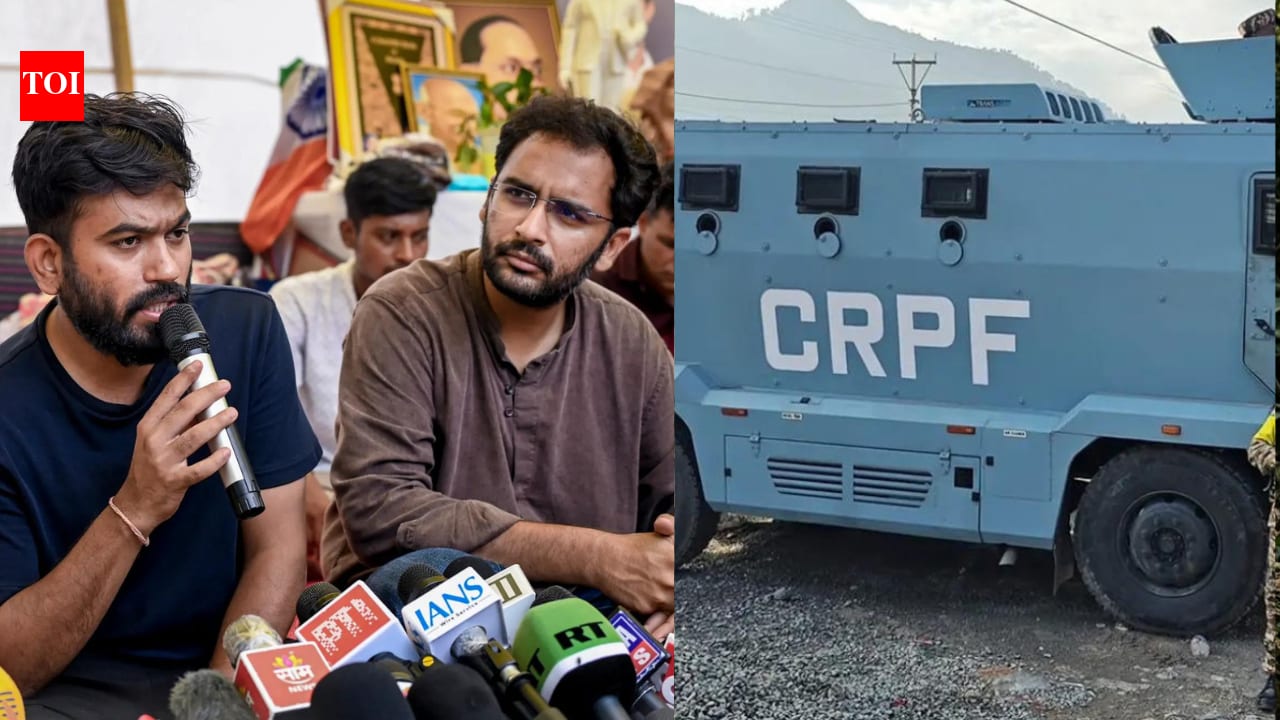
The Delhi High Court dismissed a PIL seeking an NIA probe into the Cockroach Janta Party's recent 'Chalo Sansad' march. Meanwhile, security in Delhi remains heightened as student-led protests demanding the Education Minister's resignation continue.
Judicial Stance on the 'Chalo Sansad' March
On July 24, 2026, the Delhi High Court issued a definitive ruling regarding the civil unrest surrounding the Cockroach Janta Party (CJP) march to Parliament on July 20. A Division Bench, comprising Chief Justice D. K. Upadhyaya and Justice Tejas Karia, refused to entertain a Public Interest Litigation (PIL) that had requested an investigation by the National Investigation Agency (NIA) or another specialized agency into alleged vandalism during the protest. The court's decision underscores the separation of powers, as it explicitly noted that the referral of cases to the NIA is a prerogative of the central government, not the judiciary.
The Legal and Administrative Context
The court emphasized that the authorities are already cognizant of the alleged incidents of vandalism and are empowered to take action under the existing legal framework. By refusing to intervene in the investigative process, the judiciary has signaled its intention to avoid encroaching upon the administrative domain of the executive branch. Solicitor General Tushar Mehta’s intervention, which prompted the petitioner to withdraw the plea, highlights the government's stance that standard law enforcement procedures are sufficient to address the disturbances caused during the march.
Escalating Tensions and Security Measures
Parallel to the legal proceedings, the national capital is witnessing a significant escalation in security. The ongoing month-long protest, spearheaded by students and activists, continues to center on the NEET-UG paper leak controversy. The persistence of the CJP and its supporters at Jantar Mantar, where they have declared the demand for Education Minister Dharmendra Pradhan’s resignation as non-negotiable, has necessitated a robust security response. The government has responded by airlifting additional Central Reserve Police Force (CRPF) companies to Delhi to bolster the existing security perimeter.
Broader Implications for Governance
The convergence of a high-stakes protest and the approach of Independence Day has created a fragile security environment in New Delhi. The deployment of paramilitary forces serves as a clear indicator of the government's concern regarding the potential for further civil unrest. As the CJP maintains its rigid stance on ministerial accountability, the government faces the dual challenge of managing public order while attempting to navigate the political fallout of the NEET-UG examination irregularities.
Future Outlook and Resolution
Moving forward, the situation remains fluid. While judicial intervention has been ruled out regarding an NIA probe, the government is currently engaged in ongoing discussions with protest leaders in an attempt to reach a peaceful resolution. The coming days will be critical, as authorities balance the maintenance of public safety with the democratic right to dissent. The outcome of these dialogues will likely determine whether the protests remain confined to Jantar Mantar or if they evolve into a broader political crisis as the national holiday approaches.
Multiple Citing Sources